
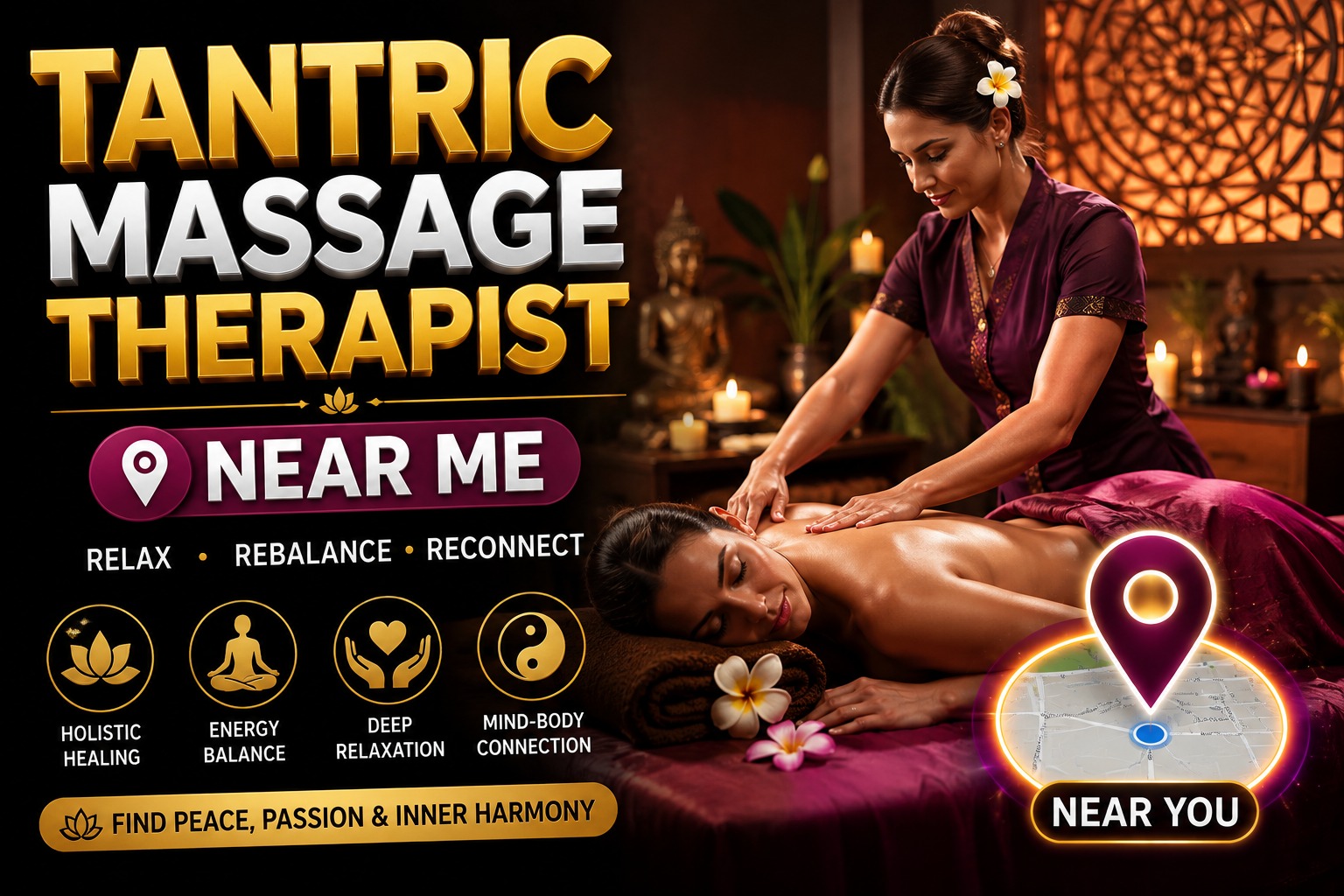
I still remember the first time I typed “tantric massage therapist near me” into a search bar. It was late, the house was quiet, and I was tired of the same old stress-relief massages that left my shoulders looser for a day or two and then faded. Something deeper felt missing. Not just physical tension—emotional armor, a kind of disconnection from my own body that had built up over years of deadlines, screens, and half-hearted relationships. That search wasn’t about chasing some exotic fantasy. It was a quiet admission that ordinary approaches weren’t reaching the places that actually needed attention.
What followed was a careful, sometimes awkward process of learning what genuine tantric work involves, how to locate practitioners who treat it with seriousness, and how to tell the difference between thoughtful bodywork and something that merely borrows the name. If you’re reading this because you’ve also searched for a tantric massage therapist near me, you’re probably looking for more than a list of names. You want clarity on what the practice can offer, how to approach it safely, and whether it might actually fit into a grounded, adult life. That’s what this piece aims to give you—practical insight drawn from observation, conversations with practitioners, and the realities of seeking this kind of support in a world that often misunderstands it.
Understanding Tantric Massage Beyond the Stereotypes
Tantric massage, at its best, draws from traditions that view the body as a field of energy rather than a collection of tight muscles. The word “tantra” itself points to expansion and weaving—practices meant to integrate breath, sensation, and awareness. In contemporary settings, a skilled practitioner works with slow, intentional touch, often involving the whole body, including areas most massages deliberately avoid. The goal is not mechanical release or performance. It is presence: helping someone feel more fully in their skin, notice subtle shifts in breath and sensation, and sometimes move through emotional material that has settled into tissue.
This is different from a standard Swedish or deep-tissue session. Those excel at addressing muscular knots and improving circulation. Tantric approaches tend to emphasize the nervous system’s capacity to settle, the relationship between breath and arousal (broadly understood, not only sexually), and the possibility of experiencing the body as whole rather than segmented into “acceptable” and “private” zones. When people search for a tantric massage therapist near me, many are responding to a sense that conventional wellness has left certain territories unexplored.
Practitioners who work with integrity usually emphasize consent, clear boundaries, and the client’s right to stop or adjust at any moment. Sessions may include guided breathing, slow strokes that follow the body’s natural curves, and periods of stillness. Some clients describe a noticeable quieting of the usual mental chatter. Others notice heat, tingling, or unexpected emotion rising and then settling. None of these experiences are guaranteed, and results vary widely depending on the individual, the practitioner’s skill, and the quality of the container they create together.
Why Location Still Matters: The Reality of Finding a Tantric Massage Therapist Near Me
Even in a digital age, proximity counts. Traveling long distances for intimate bodywork adds logistical stress and can make it harder to return for follow-up sessions if the work proves useful. Searching “tantric massage therapist near me” is therefore both practical and sensible. Local practitioners can more easily build ongoing relationships, adjust to a client’s evolving needs, and operate within the same cultural and legal context.
That said, the search itself can feel fraught. Online directories mix genuine professionals with ambiguous listings. Social media profiles range from thoughtful to heavily stylized. Word-of-mouth referrals, when available, often carry more weight than polished websites. In larger cities the options are more plentiful; in smaller places the field may be thinner, which can mean longer waits or the need to expand the search radius slightly while still prioritizing safety and credentials.
A useful starting point is to treat the phrase “tantric massage therapist near me” as an invitation rather than a shopping list. Read descriptions carefully. Look for language that emphasizes training, ethics, and the client’s autonomy. Vague promises of “transcendence” or “ultimate pleasure” without corresponding discussion of boundaries and preparation are usually worth approaching with caution.
What to Look For in a Practitioner
Credentials in this field are uneven. Some practitioners come from formal massage therapy backgrounds and have completed additional specialized training. Others arrive through yoga, somatic experiencing, or dedicated tantra study. Neither path automatically guarantees quality. What matters more is the combination of technical skill, emotional maturity, and clear communication.
When evaluating someone after searching for a tantric massage therapist near me, consider asking:
- How do they describe the purpose of their work?
- What training or mentorship informs their approach?
- How do they handle consent and ongoing communication during a session?
- What is their policy around touch of genitals or other intimate areas, and how is that negotiated?
- Do they maintain professional boundaries around dual relationships or social media contact?
A solid practitioner will answer these questions without defensiveness. They will also make clear that the work is not a substitute for therapy when significant trauma or mental health concerns are present, though it can sometimes complement therapeutic processes under appropriate guidance.
Red flags include pressure to book immediately, reluctance to discuss boundaries, overly sexualized marketing that seems aimed at fantasy rather than mutual respect, or any suggestion that the client’s comfort is secondary to the practitioner’s agenda. Trust your gut. If something feels off in the initial conversation, it is rarely a good idea to override that signal.
Preparing for a First Session
Once you have located a tantric massage therapist near me who seems aligned, preparation helps. Many people arrive with a mix of curiosity and nervousness. That is normal. Practical steps include:
- Clarifying your own intentions. Are you seeking relaxation, greater body awareness, support with intimacy challenges, or simply a different quality of touch? You do not need a perfect answer, but some reflection reduces the chance of mismatched expectations.
- Asking about practical details: length of session, clothing (or lack of it), whether oils or other substances are used, and what happens if you need to pause.
- Arranging your schedule so you are not rushing afterward. The effects of this work can linger—sometimes as calm, sometimes as unexpected emotion or heightened sensitivity.
- Communicating any physical limitations, injuries, or areas that feel particularly sensitive.
During the session itself, the most useful skill is often the willingness to stay present with sensation rather than performing or analyzing. A good practitioner will guide rather than dictate. You remain the authority on your own experience.

Common Misconceptions and Realistic Expectations
One persistent misconception is that tantric massage is primarily a sexual service dressed in spiritual language. While arousal can and often does arise, the intentional framing is usually broader: cultivating capacity for sensation, presence, and self-connection. Another misconception is that results are dramatic and permanent after a single session. More commonly, the value accumulates through repeated, carefully paced work and through the client’s own willingness to integrate what arises.
People who search for a tantric massage therapist near me sometimes hope the experience will resolve long-standing relationship difficulties or heal deep trauma. While skilled touch can support those processes, it is not a complete solution on its own. Pairing bodywork with appropriate talk therapy or other support is often wiser when the material is complex.
On the positive side, many clients report practical benefits: improved sleep, reduced chronic tension that conventional massage had only partially addressed, a clearer sense of personal boundaries, and greater ease in intimate relationships. These outcomes are not universal, but they appear often enough to explain why interest in the work continues.
Building a Sustainable Practice Around the Work
If the first few sessions with a tantric massage therapist near me prove useful, the next question becomes how to integrate the insights. Some people return regularly for maintenance and deeper exploration. Others use the experience as a catalyst for changes in daily habits—more attentive breathing, slower transitions between activities, greater honesty in communication with partners.
The practitioner relationship itself benefits from clear agreements. Professional boundaries protect both parties. Clients who treat the work as collaborative rather than purely transactional tend to get more from it. Practitioners who continue their own training and peer consultation tend to offer more consistent quality.
Navigating the Practical Side: Cost, Legality, and Discretion
Rates for this specialized work are generally higher than standard massage, reflecting the additional training and the intensity of the container. Sessions often run longer. Payment structures and cancellation policies should be transparent.
Legal status varies by location. In some places, any massage that includes genital touch sits in a gray or restricted zone. Reputable practitioners stay informed about local regulations and structure their work accordingly. Discretion is usually part of the professional ethic; clients have a right to privacy, and good practitioners protect it.
Searching for a tantric massage therapist near me can also surface ethical questions about power dynamics, gender, and cultural appropriation. These are worth sitting with. The traditions that inform the work have complex histories. Contemporary practitioners vary in how thoughtfully they engage those histories. Asking about a practitioner’s relationship to the lineage or influences they claim is reasonable.
A Closing Perspective
The decision to seek a tantric massage therapist near me is rarely trivial. It often signals a quiet readiness to meet the body on different terms—less as a problem to fix and more as a living system capable of greater ease, sensation, and self-knowledge. When approached with clear eyes, good boundaries, and realistic expectations, the work can offer something ordinary stress-relief modalities rarely reach.
Not every search will lead to the right match on the first try. That is part of the process. The useful attitude is one of informed curiosity rather than urgency. Read carefully, ask direct questions, listen to your own responses, and leave room for the experience to be whatever it actually is rather than what marketing language promises.
If you are still sitting with the question of whether this kind of support might be relevant, the most practical next step is simply to refine the search: look for practitioners whose language matches the seriousness of the work you hope to do. The right fit tends to feel steady rather than flashy. And once found, the real value usually reveals itself not in dramatic breakthroughs but in the quieter accumulation of presence, safety, and renewed connection to your own physical self.
That, more than any single session, is what makes the search worthwhile.