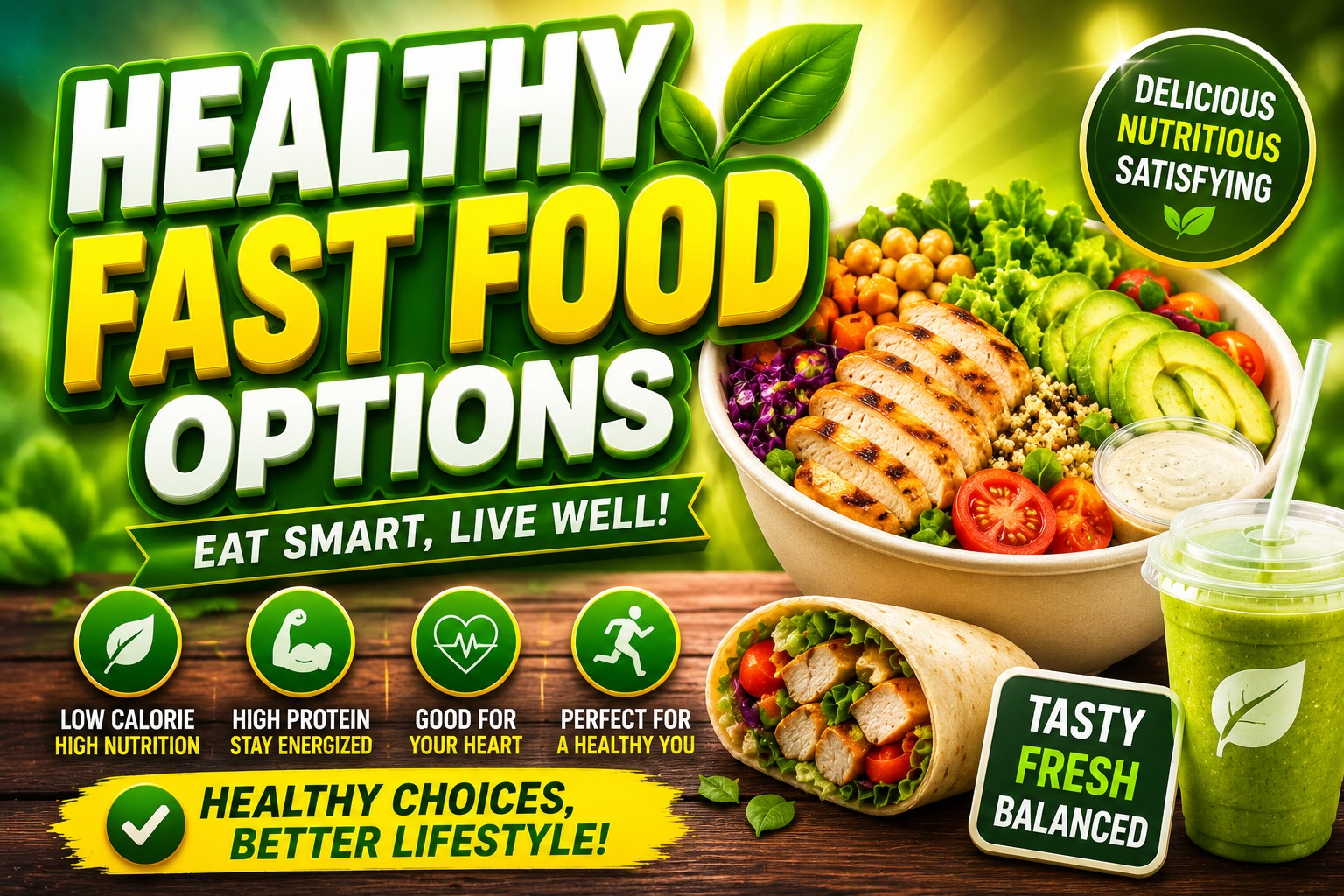
Finding healthy fast food options no longer means settling for bland salads or skipping meals entirely. Busy professionals, students, families, and fitness enthusiasts increasingly seek meals that deliver solid nutrition without long preparation times. Healthy fast food options have become a trending topic because they bridge the gap between convenience and better eating habits. When chosen wisely, these meals support energy, weight goals, and overall wellness while fitting into hectic schedules.
People turn to healthy fast food options for practical reasons. Workdays run long, school and activities fill evenings, and cooking from scratch is not always realistic. At the same time, awareness of nutrition has grown. More diners want high-protein, vegetable-rich, lower-calorie choices instead of the classic fried, high-sodium, high-sugar items that once defined the industry. Healthy fast food options now appear on menus at major chains and independent spots, making it easier than ever to eat better on the go.
This article explores what healthy fast food options really mean, their key features, how to select them, benefits, popular examples, practical tips, pros and cons, common challenges, and where the trend is headed. Throughout, you will see how smart choices turn ordinary drive-thru or counter service into support for long-term health.
What Are Healthy Fast Food Options?
Healthy fast food options are menu items designed or customizable to deliver better nutritional balance than traditional fast food. They emphasize lean proteins, vegetables, whole grains, controlled portions, and reduced amounts of added sugars, unhealthy fats, and excess sodium. These are not “diet foods” that leave you hungry. Instead, they aim to satisfy while providing meaningful nutrients.
Definition
At their core, healthy fast food options are meals and sides that prioritize nutrient density over empty calories. A grilled chicken sandwich on a whole-grain bun with plenty of vegetables qualifies. A large burrito bowl loaded with beans, salsa, grilled protein, and greens does too. The focus is on real ingredients prepared in ways that preserve nutritional value.
Background
Fast food began as an efficient way to feed growing populations quickly and cheaply. Over decades, menus leaned heavily on frying, refined carbs, and flavor-boosting additives. Rising rates of obesity, heart disease, and diabetes, combined with greater public knowledge of nutrition, created demand for change. Chains responded by adding grilled proteins, salads, fruit, and customizable bowls. The result is a wider range of healthy fast food options available at places many people already visit.
Why Healthy Fast Food Has Become Popular
Several forces drive interest in healthy fast food options. Time scarcity is the biggest. People want speed without the nutritional penalty. Social media and fitness culture highlight better choices. Parents look for ways to feed kids something decent between activities. Athletes and gym-goers need convenient high-protein fuel. Even casual diners notice they feel better after a balanced meal than after a heavy, greasy one. As a result, healthy fast food options continue to expand.
Importance of Making Healthier Food Choices
Consistent better choices support steady energy, easier weight management, and lower long-term risk of chronic conditions. Occasional traditional fast food is not the problem; frequent reliance on the least nutritious items is. Choosing healthy fast food options more often helps tip the balance toward better habits without requiring a complete lifestyle overhaul.
Who Can Benefit from Healthy Fast Food Options
Almost everyone can. Busy professionals gain time and nutrition. Students get fuel that supports focus. Families introduce better defaults for kids. Fitness enthusiasts meet protein and recovery needs on the road. Older adults benefit from controlled sodium and higher nutrient density. Anyone who eats away from home regularly stands to gain from knowing how to identify healthy fast food options.
Key Features of Healthy Fast Food Options
Understanding what sets these items apart helps you recognize them quickly.
Balanced Nutrition
Healthy fast food options aim for a mix of protein, complex carbohydrates, fiber, and healthy fats rather than heavy reliance on refined starch and saturated fat.
High-Protein Meals
Lean grilled chicken, turkey, fish, eggs, Greek yogurt, beans, and plant-based proteins appear frequently. Higher protein supports fullness and muscle maintenance.
Fresh Vegetables and Fruits
Salads, bowls, wraps, and sides that include substantial greens, tomatoes, cucumbers, peppers, berries, or apple slices increase volume and micronutrients without many calories.
Whole Grains
Whole-wheat buns, brown rice, quinoa, or oatmeal provide more fiber and sustained energy than refined white versions.
Lower Calorie Choices
Many healthy fast food options stay under typical fast-food calorie loads by using grilling instead of frying and by controlling sauces and cheese.
Healthy Fats
Avocado, nuts, seeds, and olive-oil-based dressings appear more often than large amounts of fried oils or creamy high-calorie dressings.
Reduced Sodium and Added Sugars
While fast food still tends to be higher in sodium than home cooking, better options limit extreme levels and skip sugary drinks and desserts.
Portion Control
Some items are sized more reasonably, or the structure (bowls, wraps) makes it easier to stop at a sensible amount.
What Makes Healthy Fast Food Different from Traditional Fast Food
Traditional items often center on deep-frying, large refined-carb bases, heavy sauces, and minimal produce. Healthy fast food options reverse those priorities: grilling or baking, more produce, better protein sources, and room for customization. The difference shows up in both nutrient profiles and how you feel afterward.
How Healthy Fast Food Options Work
Selecting well is a skill that improves with practice.
Step-by-Step Explanation
- Decide your main goal for the meal (protein focus, lower calorie, more vegetables).
- Scan the menu for grilled, baked, or fresh items first.
- Look at available nutrition information.
- Build or customize the plate around protein and produce.
- Choose sides and drinks that support rather than undermine the meal.
How to Choose Healthier Menu Items
Prioritize words such as grilled, baked, steamed, fresh, or bowl. Avoid defaulting to “crispy,” “fried,” “loaded,” or “double.” Many chains now label better-for-you items clearly.
Reading Nutrition Information
Most large chains post calories, protein, fat, carbs, sodium, and fiber online or in-app. Use these numbers as guides, not absolute rules. A meal with solid protein and fiber is usually more satisfying than a slightly lower-calorie item that leaves you hungry an hour later.
Selecting Healthier Drinks and Sides
Water, sparkling water, unsweetened iced tea, or black coffee are safest. Fruit cups, side salads with light dressing, or steamed vegetables beat fries and sugary desserts most of the time. Some places offer yogurt or oatmeal as better sides.
Customizing Meals for Better Nutrition
Ask for sauces and dressings on the side. Add extra vegetables. Swap white buns or tortillas for whole-grain versions when available. Skip or reduce cheese and creamy toppings. These small changes turn average items into stronger healthy fast food options.
Simple Nutrition Overview for Beginners
Aim for a plate that includes a palm-sized portion of protein, a generous amount of non-starchy vegetables, a moderate serving of whole grains or starchy vegetables if desired, and a bit of healthy fat. That basic template works across many restaurants and helps you evaluate healthy fast food options quickly.
Benefits of Choosing Healthy Fast Food Options
Supports Weight Management
Higher protein and fiber plus lower overall calorie density help with satiety, making it easier to stay in a reasonable calorie range without constant hunger.
Saves Time Without Sacrificing Nutrition
You still get speed and convenience, yet the meal contributes meaningful nutrients instead of mostly empty calories.
Increases Energy Levels
Balanced meals with steady-release carbs, protein, and some fat avoid the sharp blood-sugar spikes and crashes that follow very high-sugar or highly refined meals.
Helps Maintain a Balanced Diet
When most of your meals away from home follow better patterns, overall diet quality improves even if home cooking is limited some days.
Convenient for Busy Lifestyles
Healthy fast food options fit real schedules. No need to pack elaborate lunches every day or skip meals when time is short.
Suitable for Fitness and Wellness Goals
High-protein choices support training recovery. Controlled sodium and better ingredients align with broader health aims. Many active people rely on these meals between workouts or during travel.
Popular Healthy Fast Food Options
Here are common items that frequently rank among the better choices. Actual nutrition varies by chain and exact preparation, so check current information when possible.
Grilled Chicken Sandwiches
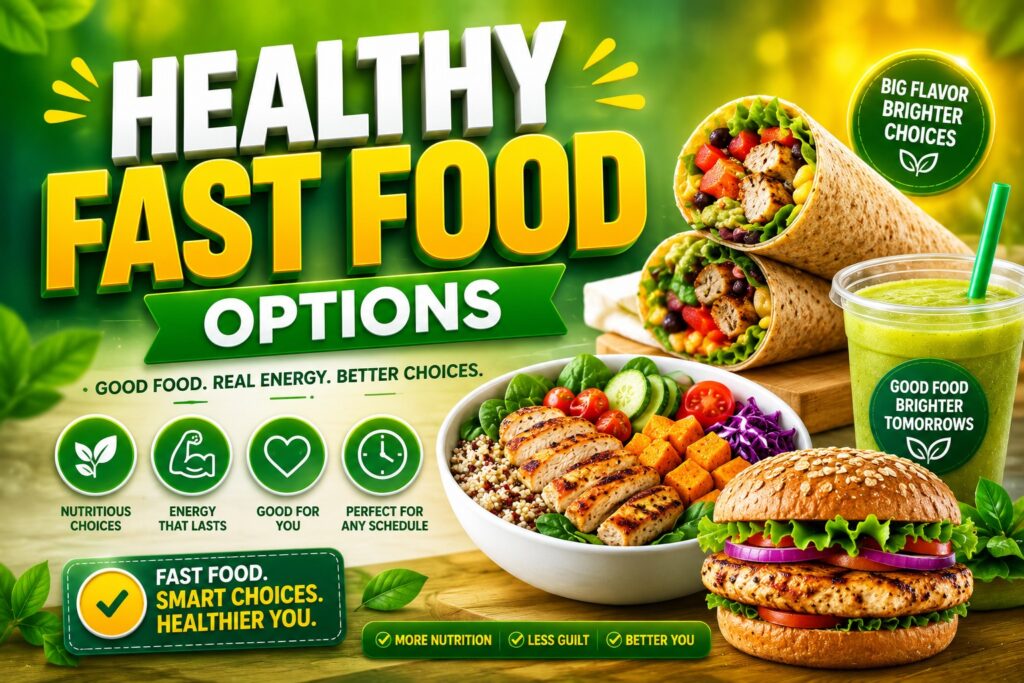
A grilled chicken breast on a whole-grain or standard bun with lettuce, tomato, and minimal sauce delivers solid protein with far less fat than fried versions. This is one of the most reliable healthy fast food options at many chains.
Fresh Salads with Lean Protein
Salads topped with grilled chicken, shrimp, or beans and dressed lightly provide volume, fiber, and protein. Watch creamy dressings and heavy cheese or croutons.
Burrito Bowls
Skip the tortilla and load a bowl with grilled protein, beans, salsa, lettuce, and controlled amounts of rice and guacamole. These customizable meals are among the most flexible healthy fast food options.
Grilled Wraps
Whole-grain or standard tortillas filled with grilled chicken or vegetables and modest spreads can be satisfying and portable.
Veggie Burgers
Modern plant-based or bean-based burgers on a sensible bun with plenty of vegetables offer a meat-free route to protein and fiber. Quality varies, so check ingredients.
Smoothies with No Added Sugar
Blends based on fruit, yogurt or milk, and perhaps protein powder or greens, without syrups, can serve as a quick nutrient-dense option.
Fruit Cups
Simple fresh fruit provides natural sweetness, fiber, and vitamins with almost no downside as a side or snack.
Oatmeal
Plain or lightly topped oatmeal available at some breakfast-focused locations supplies whole grains and can be elevated with fruit or nuts.
Yogurt Parfaits
Greek yogurt layered with fruit and a measured amount of granola delivers protein and probiotics when sugar content stays reasonable.
Protein Snack Boxes
Boxes containing hard-boiled eggs, cheese, nuts, and vegetables or fruit make convenient high-protein mini-meals.
These examples show the range of healthy fast food options now widely available. The common thread is emphasis on protein, produce, and controlled preparation methods.
6 Fast Food Items That Are Surprisingly Healthy
While many items fit the broader category, six stand out for consistently delivering better nutrition than people expect:
- Grilled chicken sandwich (simple preparation, high protein).
- Build-your-own burrito bowl with extra vegetables and lean protein.
- Fresh side salad with grilled protein added.
- Veggie or bean burger with vegetable toppings.
- Plain oatmeal or yogurt parfait with fruit.
- Protein-focused snack box or fruit-and-yogurt combination.
Each of these can qualify as a strong healthy fast food option when ordered thoughtfully. They demonstrate that fast food and better nutrition can coexist.
How to Get Started with Healthy Fast Food Options
Research Restaurant Nutrition Menus
Most major chains publish full nutrition data online or in apps. Spend a few minutes reviewing common items before you arrive. Look for healthy fast food options that match your protein and calorie needs.
Choose Grilled Instead of Fried Foods
This single swap dramatically reduces calories and unhealthy fats while preserving protein.
Add More Vegetables
Request extra lettuce, tomato, onion, peppers, or a side salad. Volume and nutrients rise with almost no calorie penalty.
Select Water or Unsweetened Beverages
Eliminating sugary sodas and juices removes a major source of empty calories in one step.
Watch Portion Sizes
Even good items can become excessive if oversized. Consider sharing larger meals or saving half for later.
Tips for First-Time Healthy Eaters
Start with one or two changes rather than overhauling everything at once. Try a grilled sandwich instead of a fried one. Add a fruit cup. Order sauce on the side. Small wins build the habit of seeking healthy fast food options.
Pros and Cons of Healthy Fast Food Options
Pros
- Convenient and time-saving: Ready in minutes.
- Better nutritional value: More protein, fiber, and micronutrients than classic fast food.
- Supports healthy lifestyle goals: Easier weight management and energy balance.
- More menu choices than ever: Chains continue expanding better options.
- Available at many restaurant chains: Accessibility is high in most areas.
Cons
- Healthier options may cost more: Premium ingredients and preparation sometimes raise the price.
- Portion sizes can still be large: Even “healthy” items may exceed needs if not managed.
- Sodium levels may remain high: Fast food preparation often relies on salt for flavor.
- Healthy choices vary by restaurant: Quality and availability differ widely between locations and brands.
Awareness of both sides helps set realistic expectations. The advantages usually outweigh the drawbacks when you select carefully.
Common Issues and Troubleshooting
Finding Healthy Menu Items
Solution: Check the restaurant website or app ahead of time. Look for filter or “better choices” sections. Ask staff for grilled or fresh recommendations.
Understanding Nutrition Labels
Solution: Focus first on protein, fiber, calories, and sodium. Compare similar items rather than aiming for perfection. Many apps summarize the data simply.
Avoiding Hidden Calories
Solution: Sauces, dressings, cheese, and creamy toppings are common sources. Request them on the side and use sparingly. Watch for “loaded” or “supreme” language.
Choosing Healthier Sauces and Dressings
Solution: Opt for salsa, mustard, vinegar-based dressings, or light vinaigrettes. Creamy and sweet sauces add calories quickly.
Managing Portion Sizes
Solution: Order the smaller size when available. Share larger items. Use a mental plate template (protein + vegetables first). Stop when comfortably satisfied rather than cleaning every plate out of habit.
These practical fixes remove most barriers to consistently choosing healthy fast food options.
Future of Healthy Fast Food Options
The category continues to evolve rapidly.
Plant-Based Menu Expansion
More sophisticated plant proteins, vegetable-forward bowls, and meat alternatives will broaden choices for different dietary preferences.
High-Protein Meal Innovations
Expect continued focus on protein density through better chicken preparations, egg items, Greek yogurt applications, and fortified plant options.
AI-Powered Nutrition Recommendations
Apps and kiosks may soon suggest personalized healthy fast food options based on past orders, dietary goals, or even real-time preferences.
Sustainable Ingredients
Sourcing improvements, reduced food waste, and more transparent supply chains will matter to many diners alongside nutrition.
Health-Focused Restaurant Trends
Some chains are redesigning core menus around better defaults rather than treating healthier items as side experiments.
Personalized Meal Planning
Integration with fitness trackers and nutrition apps could make ordering healthy fast food options more precise and automatic.
These developments suggest that healthy fast food options will become even more accessible, varied, and tailored in the years ahead.
Conclusion
Healthy fast food options prove that convenience and better nutrition can coexist. By prioritizing grilled proteins, vegetables, controlled sauces, and sensible portions, you gain meals that support energy, weight management, and long-term health without demanding hours in the kitchen. The growing availability of these choices at mainstream restaurants removes many former barriers.
The key is consistent, informed selection rather than perfection. Research menus, favor grilled over fried, add produce, choose smarter drinks, and manage portions. Over time these habits compound into meaningful improvements in how you feel and function.
On your next outing, take a moment to explore the healthy fast food options available. Compare nutrition information, try one new better choice, and notice the difference. Small, repeated decisions to favor nutritious fast food choices build a practical path toward better health that fits real life. Start today—your energy levels and long-term wellness will thank you.