
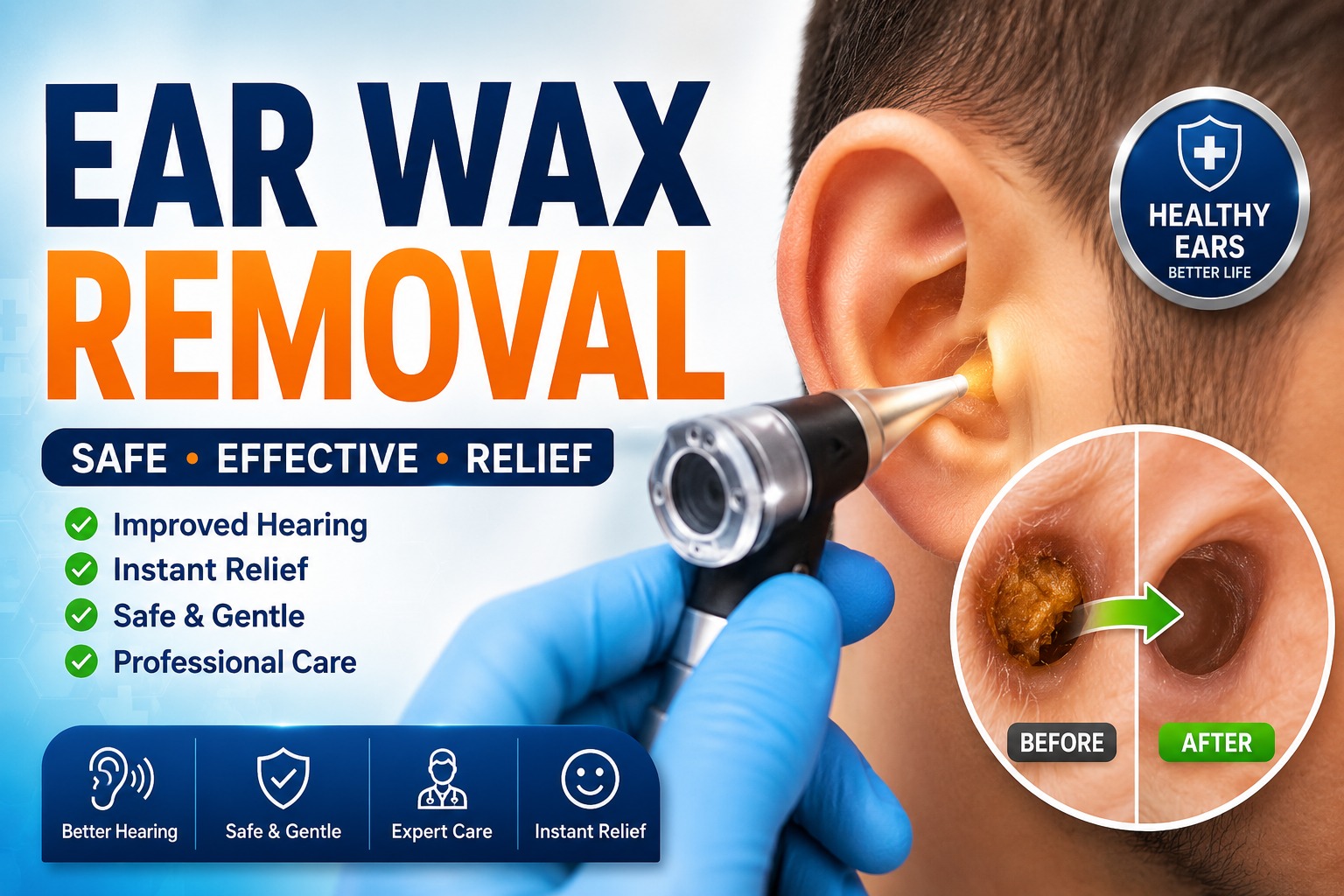
I still remember the first time I watched someone dig around in their ear with a cotton swab like they were excavating a precious artifact. We were sitting in a coffee shop, and my friend casually pulled one from her bag, tilted her head, and went to work while talking about her weekend plans. The little brown flecks that came out made her smile. “See? Clean,” she said. I didn’t have the heart to tell her that what she was removing was only the tip of the problem—and that the swab itself had probably pushed the rest deeper.
That moment stuck with me because it happens every day, in bathrooms and cars and offices across the world. People treat ear wax removal like a simple hygiene chore, the same way they brush their teeth or wash their face. But the reality is more complicated. Your ears are not meant to be spotless tunnels. The sticky, protective substance inside them exists for good reasons, and the way most of us go after it can create more trouble than it solves. If you’ve ever felt that temporary relief after a swab session only to deal with muffled hearing or irritation a day later, this is for you. By the end, you’ll understand why ear wax removal needs a smarter approach, what actually works, and how to keep your ears healthy without turning them into a DIY project that backfires.
What Ear Wax Actually Does (And Why “Clean” Isn’t Always Better)
Ear wax, or cerumen, is not dirt. It’s a carefully engineered mix of dead skin cells, hair, and secretions from glands in the outer ear canal. Its job is practical: it traps dust, bacteria, and small insects before they reach the eardrum. It also keeps the skin of the canal from drying out and cracking. In most people, the ear is self-cleaning. Jaw movement from talking and chewing slowly migrates the wax outward, where it flakes away or gets washed during a shower.
Problems start when that natural process slows down. Some people simply produce more wax. Others have narrower canals, or they wear earbuds and hearing aids that block the exit route. Age plays a role too—wax tends to become drier and stickier as we get older. When it builds up, you get the classic symptoms: a feeling of fullness, temporary hearing loss, tinnitus, or even dizziness in severe cases. At that point, ear wax removal becomes necessary. The mistake most people make is assuming the solution is aggressive cleaning rather than careful management.
I’ve spoken with audiologists who see the same pattern weekly. Patients arrive convinced their hearing has suddenly declined, only to discover a solid plug of wax sitting against the eardrum. After professional ear wax removal, the improvement is immediate and dramatic. One patient told me it felt like someone had turned the volume of the world back up. That kind of result is satisfying, but it also highlights how preventable many of these visits are.
The Cotton Swab Trap and Other Common Mistakes
Let’s address the elephant in the bathroom: cotton swabs. They feel precise. They give you the satisfying sight of removed wax. And they are one of the most reliable ways to create impaction. The swab pushes softer wax deeper into the canal while removing only the outer portion. Over time, that deeper wax hardens and forms a plug that is harder to dislodge. Many emergency rooms and ENT clinics still see patients who have perforated their eardrums this way, though it’s less common than the chronic irritation and reduced hearing that result from repeated use.
Other popular home approaches have their own risks. Candling—the practice of inserting a hollow cone into the ear and lighting the other end—has been thoroughly studied and found to be ineffective at best. The residue that appears in the cone is usually candle wax, not ear wax. At worst, it can cause burns or leave debris in the canal. Hairpins, paperclips, and car keys are even worse ideas. Anything that can scratch the delicate skin of the ear canal raises the chance of infection.
A quieter but equally common problem is over-cleaning. Some people perform ear wax removal so frequently that the canal becomes dry and itchy. The body responds by producing more wax, creating a cycle that feels productive but is actually self-defeating. If your ears feel constantly itchy or you find yourself reaching for a swab several times a week, that is usually a sign to stop rather than dig harder.
Safer Ways to Handle Ear Wax Removal at Home
When mild buildup starts to bother you, the goal is to soften and encourage the natural outward movement rather than extract everything at once. Over-the-counter drops containing carbamide peroxide or simple mineral oil work well for many people. A few drops twice a day for three to five days can loosen the wax enough that it migrates out on its own or rinses away during a shower. Warm water irrigation with a bulb syringe is another option once the wax has softened, but it should be done gently and only if you know your eardrum is intact. People with a history of perforated eardrums, ear tubes, or recent surgery should skip irrigation entirely.
Here’s a practical routine that has helped patients I know stay out of the clinic:
- Once or twice a week, place two or three drops of olive oil or a commercial softening agent in each ear before bed. Lie on your side for a few minutes so the drops can work.
- Avoid inserting anything into the canal. Let the oil do the work and the natural motion of your jaw finish the job.
- After a shower, dry the outer ear carefully with a towel. Do not poke.
- If you wear earbuds or hearing aids daily, wipe them regularly and give your ears a few hours of free air each day.
These steps are not dramatic, but they respect the ear’s design. They also reduce the chance that you’ll need more aggressive ear wax removal later.
When Home Methods Aren’t Enough
There are clear signals that it’s time to stop self-treatment. Sudden or significant hearing loss, pain, discharge, bleeding, or dizziness after attempted cleaning all warrant a professional visit. So does a feeling of complete blockage that doesn’t improve after a few days of softening drops. Children, older adults, and people with diabetes or weakened immune systems should be especially cautious; infections can develop more quickly in these groups.
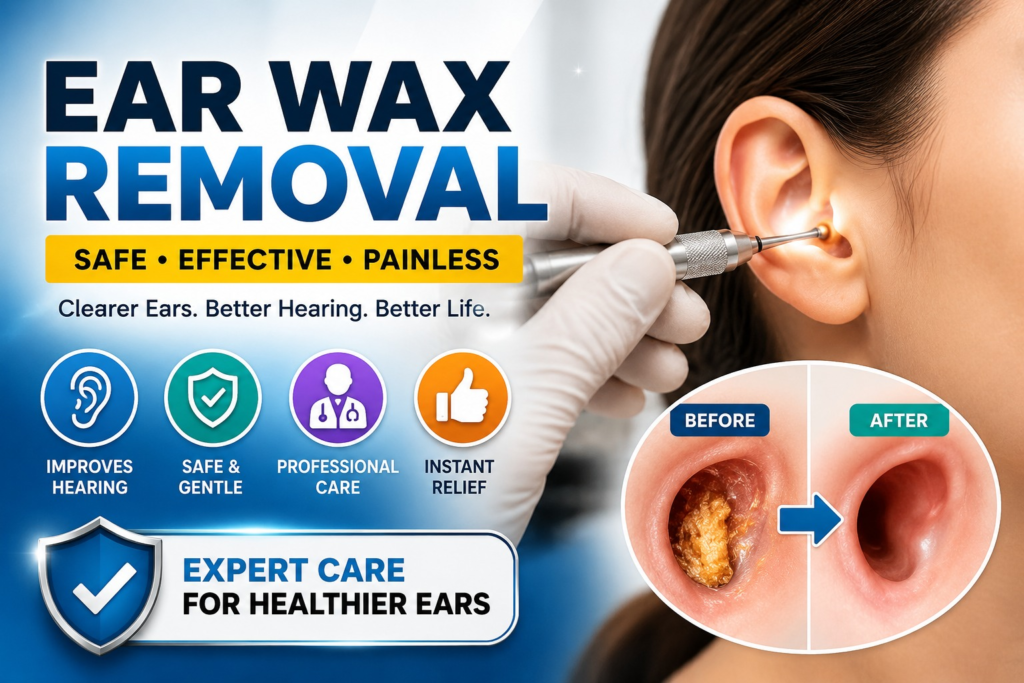
In a clinic, ear wax removal is usually straightforward. An ENT or trained nurse may use specialized instruments under magnification, a controlled water jet, or suction. The process takes minutes and is generally painless when done correctly. Some offices now offer microsuction as a preferred method because it is precise and avoids the risk of water-related complications. Whatever the technique, the key advantage is visibility. The practitioner can see exactly what is happening and stop before any damage occurs.
I’ve watched the difference this makes. One older patient had been using cotton swabs for decades and arrived with nearly complete occlusion in both ears. After professional removal, he not only heard better—he realized he had been missing parts of conversations with his grandchildren for months. That kind of quiet loss is easy to overlook until it’s reversed.
Building Better Habits Around Ear Health
Long-term success with ear wax removal is less about technique and more about restraint. Most healthy ears need very little intervention. If you produce a lot of wax, regular softening is usually enough. If you notice recurring problems, an audiologist can check whether your canal shape or other factors are contributing and suggest a maintenance schedule.
It also helps to think about the tools you put in or near your ears. Noise-cancelling headphones, custom molds, and even certain styles of hearing aids can alter how wax moves. Cleaning those devices regularly and giving your ears recovery time prevents secondary buildup. Swimming is another consideration. Water that remains trapped in the canal can soften wax excessively and encourage infection; a few drops of a 50/50 mix of white vinegar and rubbing alcohol after swimming can help dry the area safely for most people, though anyone with tubes or a history of eardrum issues should check with a doctor first.
The bigger cultural shift we need is simply this: stop treating the ear canal like a surface that must be scrubbed. The presence of some wax is normal and protective. The goal of any ear wax removal strategy should be comfort and clear hearing, not the visual satisfaction of a perfectly empty canal.
A Final Thought on Listening to Your Own Body
Ears are remarkably good at telling you when something is off—if you pay attention. That subtle pressure, the slight muffling, the occasional itch that doesn’t resolve with a light wipe of the outer ear. These are early signals. Responding with patience and the right tools usually keeps the problem small. Reaching for the nearest sharp or absorbent object turns a minor issue into a longer one.
Next time you feel the urge to “just clean them out quickly,” pause. Soften first. Wait. Let the ear do what it evolved to do. And if the fullness or hearing change persists, get professional ear wax removal instead of improvising. Your hearing is too valuable to risk on habits that feel productive in the moment but create quiet damage over time. Clear ears are not the ones that look empty under a flashlight. They are the ones that still work the way they were designed to.