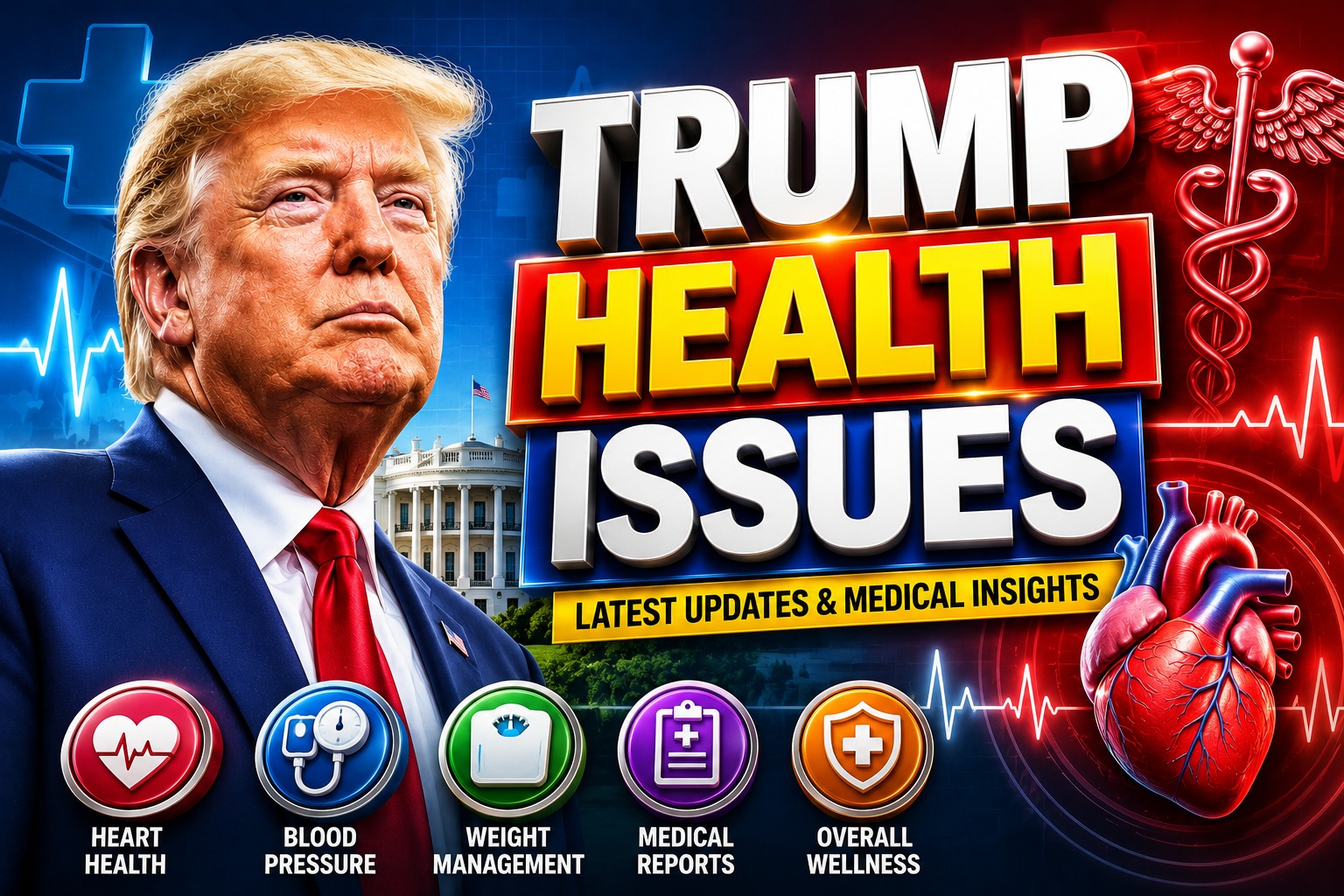
You know that moment when a public figure you follow—love him or loathe him—starts showing the ordinary wear of age on camera, and suddenly every photo, every pause, every slightly swollen ankle becomes a national referendum? That’s where we are with the 80-year-old president. Trump health issues have moved from campaign-trail whispers to a constant undercurrent of his second term. People aren’t just curious about one man’s body. They’re asking what fitness for the most demanding job on earth actually looks like when the occupant is deep into his ninth decade.
This piece digs into the documented record, the official medical summaries, the visible signs that have fueled speculation, and the broader questions about aging leadership. You’ll walk away with a clearer picture of what’s confirmed, what’s contested, and why the topic refuses to fade—no matter which side of the aisle you sit on.
What Official Records Actually Say About Trump Health Issues
In late May 2026, White House physician Capt. Sean Barbabella released a memo after Trump’s annual exam at Walter Reed. The bottom line was unambiguous: the president “remains in excellent health, demonstrating strong cardiac, pulmonary, neurological, and overall physical function.” He was declared fully fit for the duties of commander-in-chief.
Key numbers from that report: weight 238 pounds (up 14 pounds from the previous year), blood pressure 105/71, resting heart rate 73, perfect 30/30 on the Montreal Cognitive Assessment. An AI-assisted ECG analysis put his “cardiac age” roughly 14 years younger than his chronological age. Coronary CT angiography showed no arterial obstruction. Cholesterol was well-controlled on medication.
None of that erased the items that had already drawn attention. The memo acknowledged “slight lower leg swelling” linked to chronic venous insufficiency—a common condition in older adults where leg veins struggle to return blood efficiently—and continued hand bruising attributed to frequent handshaking plus daily low-dose aspirin for cardiovascular prevention. A neck rash was described as being managed with a common cream.
These details matter because they represent the rare instances when the administration has confirmed specific Trump health issues rather than simply declaring everything perfect. Chronic venous insufficiency is not rare at 80. Hand bruising on aspirin is medically plausible. Perfect cognitive screening scores are notable, though critics point out that a short screening tool is not a full neuropsychological battery.
The Visible Signs That Keep Fueling Debate
Photographs have done more than any leak. Swollen ankles appearing over dress shoes. Bruises on the back of the hands that sometimes looked darker than expected. Occasional moments when the president’s eyes closed for longer than a blink during meetings or events. Reports in books by journalists who cover the White House closely have described aides noticing fatigue, cupped hands behind ears, and a preference for seated press conferences in the Oval Office over standing ones in larger rooms.
These observations sit alongside the official clean bill of health. That tension is the engine of the ongoing discussion about Trump health issues. Supporters see a man still golfing, still holding long events, still dominating the news cycle at an age when many peers have long since retired. Critics see cumulative signs of decline that official summaries downplay. Both can point to real data points. The interpretation is where the fight lives.
Hearing difficulty has also surfaced in reporting. Aides have allegedly noticed the president asking people to repeat questions. Joint appearances have sometimes been staged in acoustically friendlier settings. None of this rises to the level of a formal diagnosis of significant impairment in the released medical documents, but it feeds the larger narrative that age is no longer invisible.
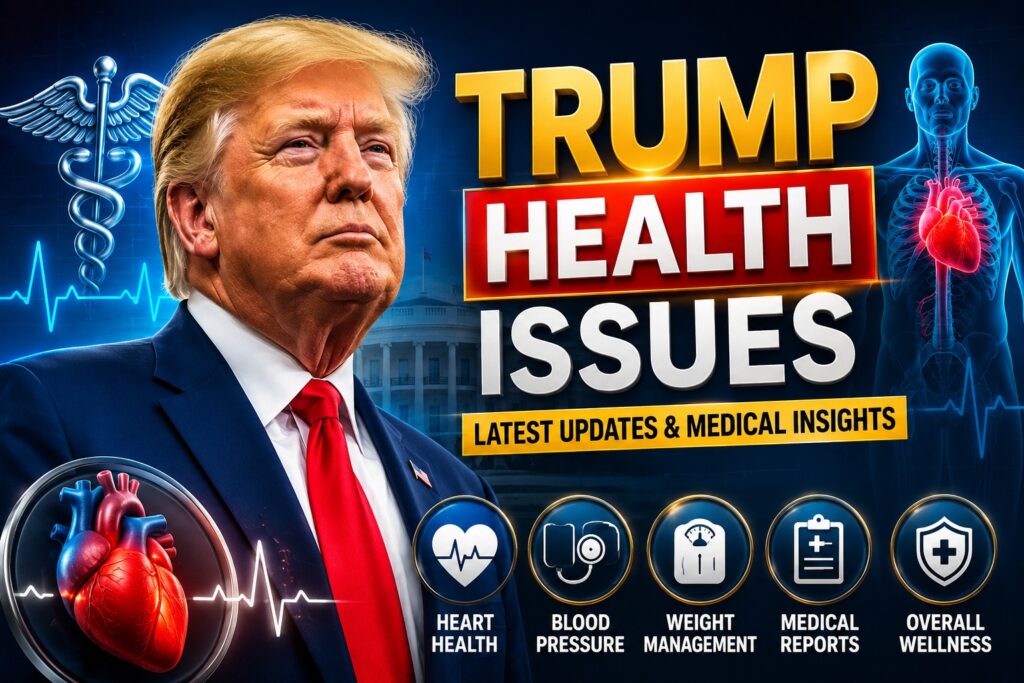
Cognitive Concerns and the Limits of Public Testing
Trump has repeatedly highlighted his perfect MoCA scores—scoring 30/30 on multiple occasions—and framed the test as evidence of superior mental sharpness. The test is a legitimate screening instrument used in clinical settings to detect possible cognitive impairment. A perfect score is reassuring. It is not, however, a comprehensive assessment of executive function under stress, memory over long periods, or the kind of sustained judgment required in high-stakes decision-making.
Outside clinicians have publicly expressed unease. Some point to meandering speech patterns, name confusions in public remarks, or moments of apparent disengagement as potential red flags. Others counter that many high-functioning people in their eighties show similar patterns without meeting criteria for dementia. The public simply does not have access to the fuller neurological workups that 22 specialists reportedly contributed to during the Walter Reed visit. That information gap itself has become part of the story around Trump health issues.
Transparency in presidential health has always been uneven. Past presidents have minimized everything from heart disease to cancer. The difference now is the intensity of real-time visual scrutiny and the polarized information environment. Every bruise or closed-eye moment travels instantly.
Why Age Alone Is Not the Full Story
Turning 80 does not automatically disqualify anyone. Plenty of people remain sharp, energetic, and capable well past that milestone. Life expectancy tables show that a man who reaches 80 in reasonably good health still has years ahead of him. The relevant question for the presidency is not chronological age but functional capacity under extreme, sustained pressure—sleep disruption, constant travel, high-stakes decisions, and the physical demands of the schedule.
Trump’s physicians emphasize that his demanding routine itself supports his well-being. He continues public engagements, meetings, and physical activity (primarily golf). At the same time, weight has trended upward, and doctors have counseled diet, increased activity, and continued weight loss. The combination of official optimism and visible ordinary aging creates the persistent focus on Trump health issues.
Comparisons to the previous administration are inevitable and often unhelpful. Every president faces questions about fitness as they age. The standard should be consistent: clear medical disclosure, independent verification where possible, and honest acknowledgment of limitations. The public deserves better than competing narratives of “perfect health” versus “imminent collapse.”
Practical Lessons from Watching Presidential Health Closely
For ordinary people watching this unfold, there are takeaways that extend beyond politics:
- Visible signs of aging in high-profile figures often prompt overdue conversations about our own health. Chronic venous insufficiency, for example, is common and manageable with movement, compression, and elevation. Aspirin-related bruising is a known trade-off many older adults accept for heart protection.
- Cognitive screening tools have limits. A perfect short test does not equal comprehensive brain health. Anyone concerned about memory or focus in themselves or a loved one should seek fuller evaluation rather than relying on viral anecdotes.
- Transparency builds or erodes trust. When official summaries acknowledge specific conditions (venous insufficiency, bruising) while still asserting fitness, it is more credible than blanket denials. The same principle applies in families and workplaces.
- Fatigue in demanding roles is real at any age. Long meetings, late nights, and constant performance take a toll. Observing a president doze briefly is less shocking when you remember how many people in high-stress jobs experience the same.
Looking Ahead Without the Hype
Trump health issues will remain a live topic for the remainder of this term. New photos will surface. New medical summaries will be released. Outside experts will continue offering interpretations. The official position remains that the president is fit for duty, with strong cardiac function, normal neurological screening, and manageable age-related conditions.
What matters most is not winning the daily argument over whether a particular bruise or closed-eye moment proves something dramatic. It is whether the people closest to the decision-making—and the broader public—have enough accurate information to assess capacity honestly. Aging is not a scandal. Secrecy around its effects can become one.
The conversation around Trump health issues ultimately forces a larger reckoning: how we evaluate leadership when the leaders themselves are living longer than previous generations. Clearer standards for disclosure, less partisan medical commentary, and more realistic expectations about what an 80-year-old body and mind look like under pressure would serve everyone better than the current cycle of revelation and rebuttal.
The presidency has always been a physical and mental endurance test. Watching one of its oldest occupants navigate that test in real time is uncomfortable, fascinating, and—if we pay attention—instructive.