You’re mid-conversation on Snapchat. The vibe feels decent. You’ve swapped a few voice notes, laughed at the same meme, maybe even shared a late-night story about your day. Then it lands: “wyll.” Four lowercase letters. No emoji. No follow-up. Just that.
Your stomach does a tiny flip. Is this curiosity or something colder? Do you send the photo? Describe yourself? Pretend you didn’t see it? If you’ve ever stared at those letters and wondered what does wyll mean in the moment it arrives, you’re far from alone. The phrase has become one of the most loaded shortcuts in modern texting, and understanding it goes deeper than a simple dictionary entry.
This piece unpacks the real meaning, where it came from, how it lands differently depending on who’s asking, and the practical ways people navigate it without overthinking or underprotecting themselves. You’ll walk away knowing exactly how to read the room (or the chat) and decide your next move.
The Straight Answer: What Does Wyll Mean in Everyday Texting
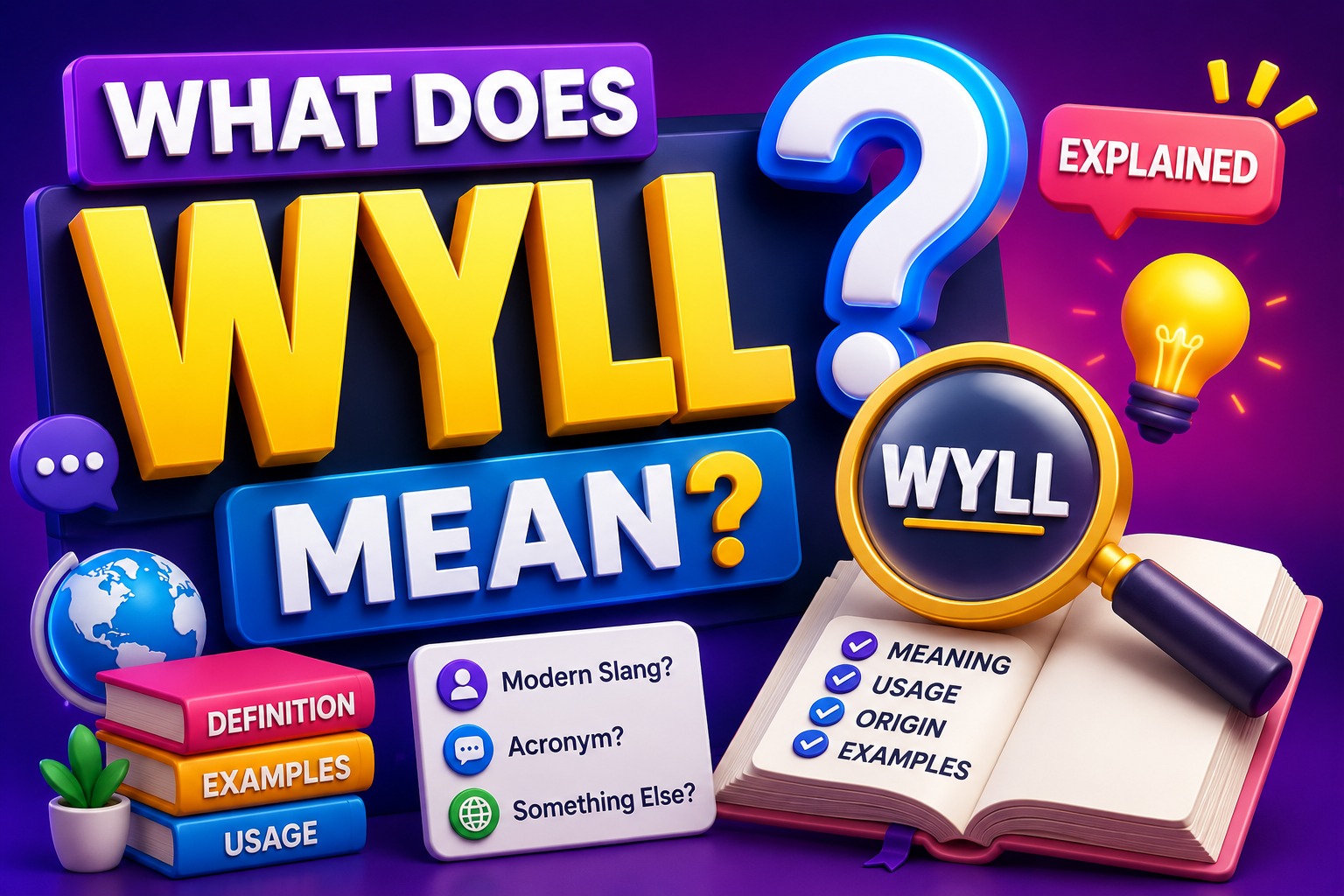
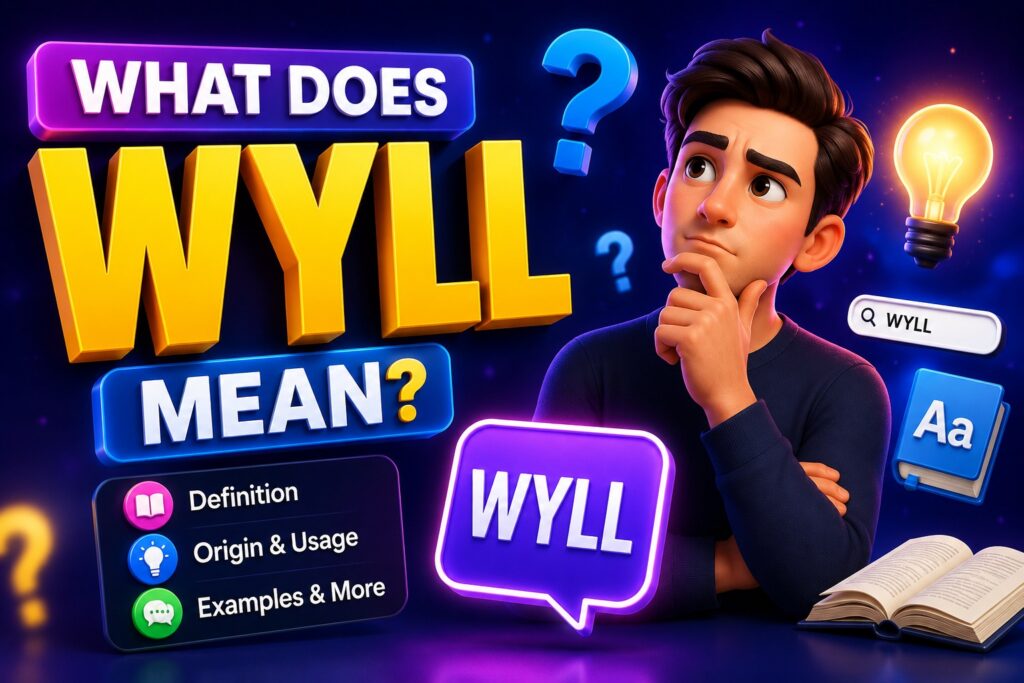
At its core, wyll stands for “what you look like” or the fuller “what do you look like?” It is almost always a request for a photo, a selfie, or at least a verbal description of appearance. People drop it when they’ve been talking to someone they haven’t seen in person—or whose profile pictures feel incomplete, filtered, or outdated.
It shows up most often on Snapchat, but it travels easily to Instagram DMs, TikTok comments, Discord, regular text threads, and dating apps. The question mark is optional. Sometimes it’s “wyll,” sometimes “wyll?,” sometimes “wyll rn.” The tone shifts with context and emojis, yet the expectation usually stays the same: the other person wants a visual.
Unlike older chatroom classics such as ASL (age/sex/location), wyll zeroes in on looks alone. That focus is precisely why it can feel abrupt. One second you’re discussing music or weekend plans; the next, the conversation pivots to your face.
Why the Acronym Spread So Fast
Texting rewards brevity. Typing “what do you look like?” takes effort and can sound formal or intense. Compressing it to wyll softens the ask while still delivering the demand. It feels casual, almost throwaway, which makes it easier to send and harder to refuse without seeming overly serious.
The term gained traction around 2020–2021 and exploded on Snapchat by late 2022. Platforms built around disappearing photos and quick visual exchanges gave it the perfect habitat. Once TikTok users started stitching and duetting reactions to receiving a “wyll,” the slang left private chats and entered public conversation. People began sharing screenshots of the messages, complaining about them, joking about them, and turning the whole exchange into content.
Merriam-Webster eventually added it to their slang coverage, noting that while young men often send it, many of the public complaints come from women tired of the question arriving too early or too bluntly. That tension is part of what keeps the phrase alive in discussions.
Different Flavors of the Same Four Letters
Not every “wyll” carries the same weight. Context matters more than the letters themselves.
In a brand-new chat with a stranger, it often signals pure curiosity or low-effort flirting. On a dating app after matching, it can feel like a natural next step once conversation has some momentum. Between friends who already know each other, it can be playful teasing—“wyll after that gym session?” or “wyll in that outfit you mentioned.”
Sometimes the ask is less about attraction and more about verification. Online spaces are full of catfish stories and filtered realities. A carefully timed “wyll” can be someone’s way of confirming the person on the other side matches the energy or photos already shared.
Yet the same letters can also feel reductive. When it arrives as the first or second message, many people read it as surface-level interest that skips personality entirely. That is why reactions range from cheerful photo dumps to dry replies like “more important question, how tall are you?” or simply leaving the message on read.
Real-Life Scenarios and How People Actually Respond
Imagine you’ve been trading messages with someone for a few days. The conversation has flow. Then: “you seem cool. wyll?”
Options people use:
- Send a clear, recent selfie and ask for one in return. Reciprocity often keeps the exchange balanced.
- Reply with a short description first (“brown hair, average height, currently in a hoodie”) and see if they push for a photo.
- Mirror the question: “I’ll show you if you go first.”
- Decline politely: “I’m not really sending pics yet, still getting to know people.”
- Ignore it and continue the previous topic. Silence is a valid boundary.
Another common situation happens on Snapchat stories. Someone watches a video of you from the side or the back and drops “wyll” in the reply. Here the ask is more specific—they already have some visual but want the full face. Many users treat these as lower pressure because the other person has already engaged with existing content.
Gaming chats and Discord servers produce a slightly different version. Players who have only heard each other’s voices or seen avatars sometimes use wyll when the group decides to meet up in person or when curiosity finally wins. The tone tends to be lighter and more communal.
The Emotional Side Most Guides Skip
Receiving a “wyll” can trigger a quick internal calculation. Do I look the way I sound? Will this change how they treat me? Am I being sized up before I’ve even decided if I like this person?
Sending one carries its own risks. Ask too early and you look shallow. Ask too late and the other person may wonder why it took so long. Timing and prior rapport decide whether the question feels natural or extractive.
There is also a gender pattern that shows up in public complaints. Many women report receiving “wyll” from men they barely know, sometimes as an opening line. That pattern fuels the sense that the acronym can slide into objectification. At the same time, people of every gender use and receive it. The discomfort is less about who types the letters and more about whether the relationship has earned the visual ask.
Older and Lesser-Known Meanings of Wyll
While the slang dominates search results today, the string of letters has history.
In older English, “wyll” appears as an obsolete spelling of “will”—both the verb of intention and the noun of determination or legal testament. Middle English texts use similar forms. Old English had “wyll” related to springs or wells in some contexts. These archaic uses rarely surface outside historical linguistics or name studies.
As a given name, Wyll functions as a rare variant of Will, itself a short form of William. The Germanic roots point toward “will” or “desire” combined with protection. You will occasionally meet someone named Wyll, though it remains uncommon.
Gamers may also think of Wyll Ravengard from Baldur’s Gate 3—the charismatic warlock known as the Blade of Frontiers. That character has nothing to do with the texting acronym, yet the shared spelling means some searches pull both results. The article title “what does wyll mean” usually points people toward the slang, but the game character has its own dedicated fandom discussions.
Practical Tips for Navigating the Ask
If you want to use the phrase yourself, wait until the conversation has some substance. A light “been chatting a while—wyll?” lands better than an opening salvo. Pair it with genuine interest in the other person’s answers about hobbies or opinions so the request feels like part of getting to know them rather than the entire point.
When you receive it and feel unsure:
- Check the overall tone of previous messages.
- Notice whether the other person has already shared their own photos.
- Decide what level of visibility feels comfortable for you right now.
- Remember you can change your mind later. Sharing one picture does not obligate you to keep sending more.
Privacy tools help. Snapchat’s disappearing photos, Instagram’s close-friends lists, and temporary profile pictures give people more control. Some users keep a neutral or group photo ready for these moments so they can respond without revealing a highly personal image.
Why the Question Keeps Mattering
Online connection still runs on incomplete information. Voices, writing styles, and carefully chosen photos create partial portraits. The desire to fill in the visual gap is human. At the same time, reducing someone to their appearance too quickly can short-circuit the slower work of discovering personality, humor, and values.
The phrase “what does wyll mean” has become a small cultural flashpoint precisely because it sits at that intersection. It is efficient. It is also revealing—about the asker’s priorities and about how ready the receiver feels to be seen.
People who treat the exchange with a bit of care—timing, reciprocity, respect for boundaries—usually keep the conversation going. Those who treat it as a demand often watch the chat go cold.
Closing Thoughts
The next time those four letters appear on your screen, you will know exactly what they are asking and why the request can feel charged. You will also know you have options beyond an automatic yes or an automatic block. Context, timing, and your own comfort level still get the final vote.
Understanding what does wyll mean is less about memorizing an acronym and more about reading the human impulse behind it. In a digital world that constantly asks us to present versions of ourselves, that small piece of clarity helps. Whether you send the photo, describe the vibe, or simply keep talking about something else, the choice stays yours.