
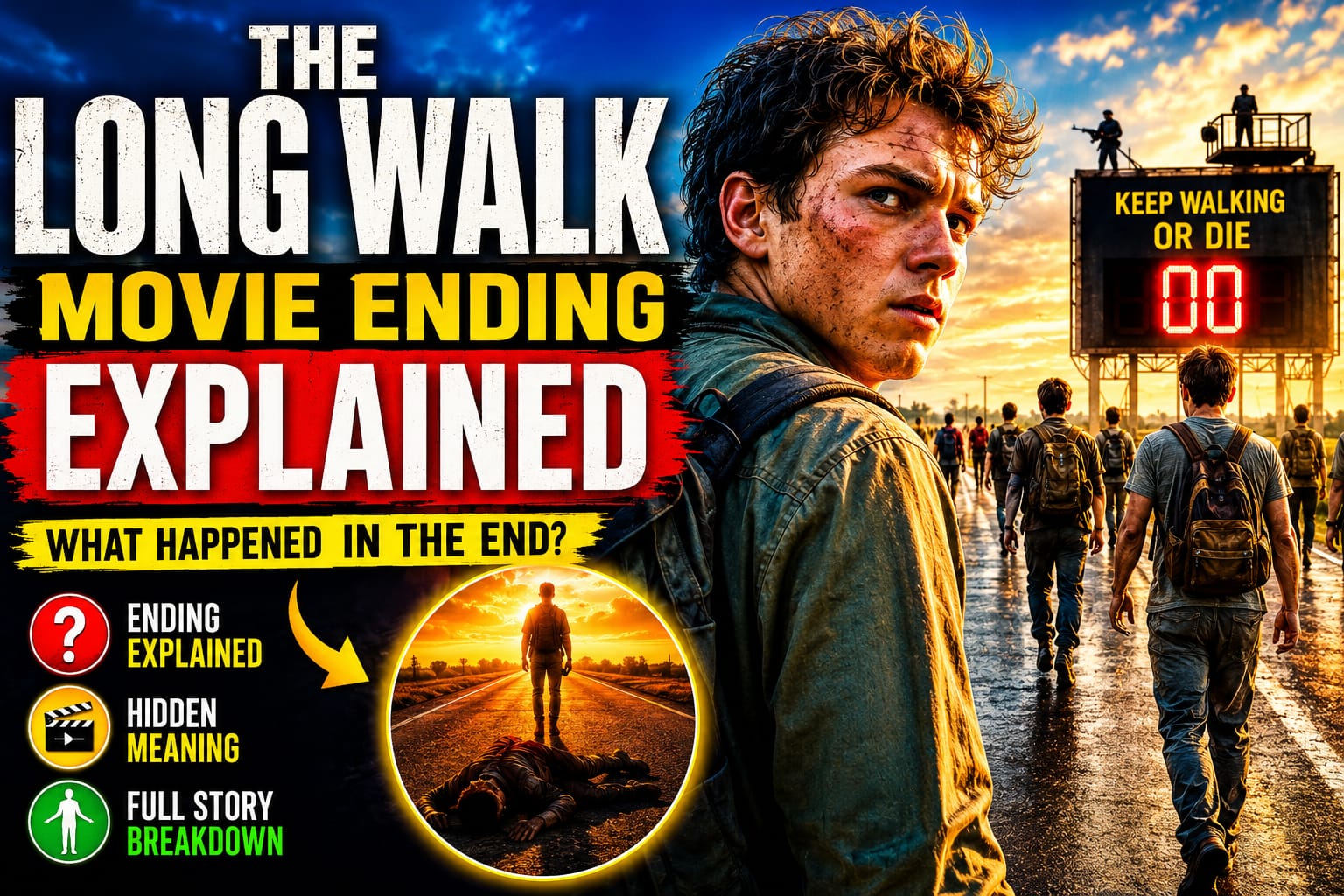
I remember the first time I watched a group of friends argue late into the night about whether survival at any cost is worth it. One guy insisted winning changes everything. Another said the game itself breaks you long before the finish line. That conversation came rushing back as the credits rolled on The Long Walk. Because this isn’t just another Stephen King adaptation—it’s a brutal meditation on endurance, friendship, and the hollow promise of victory in a rigged system. And that ending? It hits different.
If you’ve just finished the film and you’re sitting there replaying those last minutes in your head, you’re not alone. Let’s dive deep into the long walk movie ending explained, unpack what changes from the book, and explore why those final choices linger long after the screen goes dark.
The Setup: A Dystopian Ritual That Feels Too Real
In a near-future America under totalitarian rule, the Long Walk is the ultimate national spectacle. Fifty young men, one from each state, chosen by lottery after volunteering, set out from the Maine-Canada border. Rules are merciless: keep moving at least three or four miles per hour. Three warnings for slowing down, and the soldiers put you down with a carbine. No stops. No mercy. The last one walking claims unimaginable wealth and a single wish—anything he wants.
Ray Garraty (Cooper Hoffman) enters with a clear, dark purpose. His father was disappeared and likely executed by the enigmatic Major (Mark Hamill, almost unrecognizable in his chilling authority). Ray’s plan? Win the Walk, request a gun, and take his shot at the man who destroyed his family. Along the way, he forms a profound bond with Peter “Pete” McVries (David Jonsson), among others like the enigmatic Stebbins.
What starts as a test of physical limits quickly becomes something far more psychological. The Walk strips away everything—exhaustion turns boys into ghosts, camaraderie clashes with self-preservation, and the crowd cheers while young lives end on the roadside. Director Francis Lawrence, fresh off The Hunger Games prequel, knows how to make systemic horror feel intimate.
Building to the Breaking Point: Friendships Forged in Hell
The middle stretch of the film is where it earns its emotional weight. As bodies drop—one by one, in increasingly harrowing ways—the survivors reveal their true selves. Scramm’s quiet determination for his pregnant wife. Barkovitch’s ugly provocations. Stebbins’ cold calculations. But it’s the evolving relationship between Ray and Pete that carries the heart of the story.
They save each other more than once. They share vulnerabilities under the stars. Pete becomes the voice of reason and humanity when Ray’s vengeance threatens to consume him. These aren’t just plot devices; they’re the reason the long walk movie ending explained feels so personal. In a world designed to pit people against each other, genuine connection is the real rebellion.
I found myself thinking about real-world “endurance tests”—marathons, survival challenges, even grinding careers. We tell ourselves we’ll push through for the prize, but the journey reshapes our priorities. King (writing as Richard Bachman) understood this decades ago, and the movie honors that insight while making its own choices.
The Climax and That Devastating Sacrifice
As the field narrows to just a handful, tensions peak. Stebbins delivers his revelations and meets his end with a strange dignity. Then it’s down to Ray and Pete. The moment Pete falters—ready to kneel and let his friend win—Ray refuses to accept it.
Instead of letting Pete sacrifice himself, Ray urges him forward, then deliberately falls back. He takes the bullets meant for his friend. Pete, devastated but propelled by Ray’s final act of love, becomes the last man standing.
This is the pivot point where the movie diverges sharply from the book, and it’s one of the smartest changes. In King’s novel, Ray ultimately “wins” in a nightmarish, ambiguous haze—possibly hallucinating, possibly dying, with the victory feeling utterly meaningless. The film gives us something more active, more human.
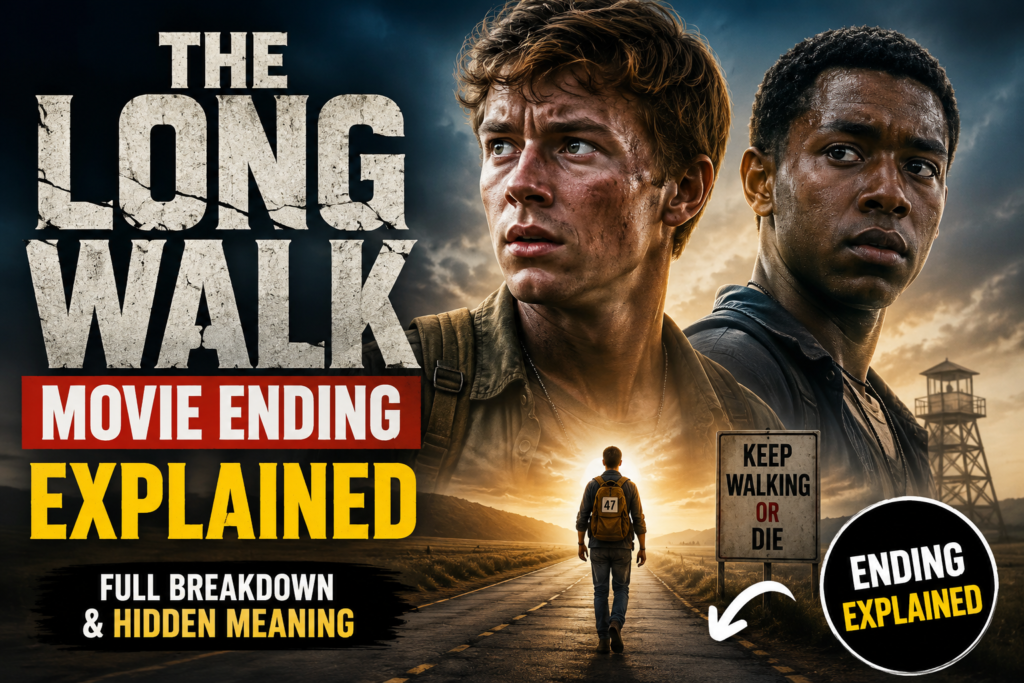
The Long Walk Movie Ending Explained: Pete’s Choice and the Final Walk
Here’s where it gets profound. Pete wins. The Major approaches with the expected pomp, offering riches beyond imagination. But Pete remembers Ray’s original plan. He requests a carbine—just like Ray intended.
The Major scoffs, confident in the system’s power. Why would anyone throw away everything for revenge? Pete hesitates for a heartbeat as the Major tries to talk him down. Then he fires. The shot echoes. Silence falls. No immediate retaliation. The world seems to hold its breath.
Pete begins walking again as the credits roll. Is he free? Is the system broken? Or is this the start of another cycle? The film leaves room for interpretation, but the power lies in the gesture itself.
The long walk movie ending explained boils down to this: Pete doesn’t choose personal glory or escape. He chooses love—and justice—in the only way left to him. By honoring Ray’s wish, he rejects the false promise of the prize. In a society that commodifies suffering for entertainment and control, that single act of defiance reclaims agency.
Some viewers debate whether Pete survives the aftermath. Does shooting the Major trigger instant execution, or does the film suggest a crack in the regime’s armor? Lawrence’s direction keeps it elegantly ambiguous, forcing us to sit with the uncertainty, much like the characters had to walk with theirs.
Book vs. Movie: Why the Changes Work
King’s original The Long Walk (his first novel, written young) ends on a note of existential horror. Ray’s victory is pyrrhic at best; he’s broken, possibly already gone. The movie’s choice to let Pete win and act on vengeance feels more cinematic while staying true to the spirit. It emphasizes friendship and moral choice over pure nihilism.
This isn’t “Hollywood softening” the material—it’s evolving it. In 2025, amid real-world exhaustion from endless cycles of spectacle and division, Pete’s final walk resonates as quiet resistance rather than total despair.
Expert tip for fellow King fans: Watch the book and movie back-to-back. Notice how the film amplifies the crowd’s role and the soldiers’ detachment. These directorial choices make the ending land with even more emotional force.
Themes That Stick With You Long After
At its core, the long walk movie ending explained isn’t just about who lives or dies. It’s about what we’re willing to endure—and for whom. The Walk mirrors any system that demands constant performance: hustle culture, political theater, social media marathons. We keep moving because stopping means erasure.
- Friendship as rebellion: Ray and Pete’s bond proves that even in dehumanizing circumstances, connection matters more than individual triumph.
- The illusion of choice: The “prize” is bait. True freedom comes from rejecting the game’s terms.
- Legacy over victory: Ray’s sacrifice ensures his values outlive him through Pete.
Practical takeaway? Next time you’re in your own grind—whether a tough project, strained relationship, or personal limit—ask: Who am I walking for? What principles am I willing to carry to the end?
Avoid the mistake of treating endurance as the only virtue. The film shows how rest, support, and deliberate pauses (metaphorical ones) can be radical acts.
Why This Adaptation Feels Timely
Francis Lawrence and screenwriter JT Mollner crafted something that honors the source while speaking to now. Cooper Hoffman’s Ray carries the weight of legacy beautifully, while David Jonsson’s Pete brings warmth and steel. Mark Hamill’s Major is quietly terrifying—the banality of evil in dress uniform.
In an era of endless content consumption and real political tensions, The Long Walk reminds us that spectacles often distract from the machinery behind them. The ending doesn’t offer easy catharsis, but it does offer hope in human stubbornness and love.
Final Thoughts on The Long Walk Movie Ending Explained
The long walk movie ending explained ultimately celebrates the power of choosing others when the world demands selfishness. Pete’s shot isn’t just vengeance—it’s a declaration that some things are worth walking (or dying) for, even when the road seems endless.
If this story shook you, that’s the point. Go discuss it with friends. Revisit the book. Question the “walks” in your own life. And remember: sometimes the most profound victories aren’t about crossing the finish line first, but about ensuring the people who mattered get to keep going.
What’s your take on that final scene? Did Pete’s choice feel earned, or do you prefer the book’s ambiguity? Drop your thoughts below—I’m genuinely curious how it landed for you. In the meantime, keep walking your own path with intention. The road is long, but you’re not alone on it.