
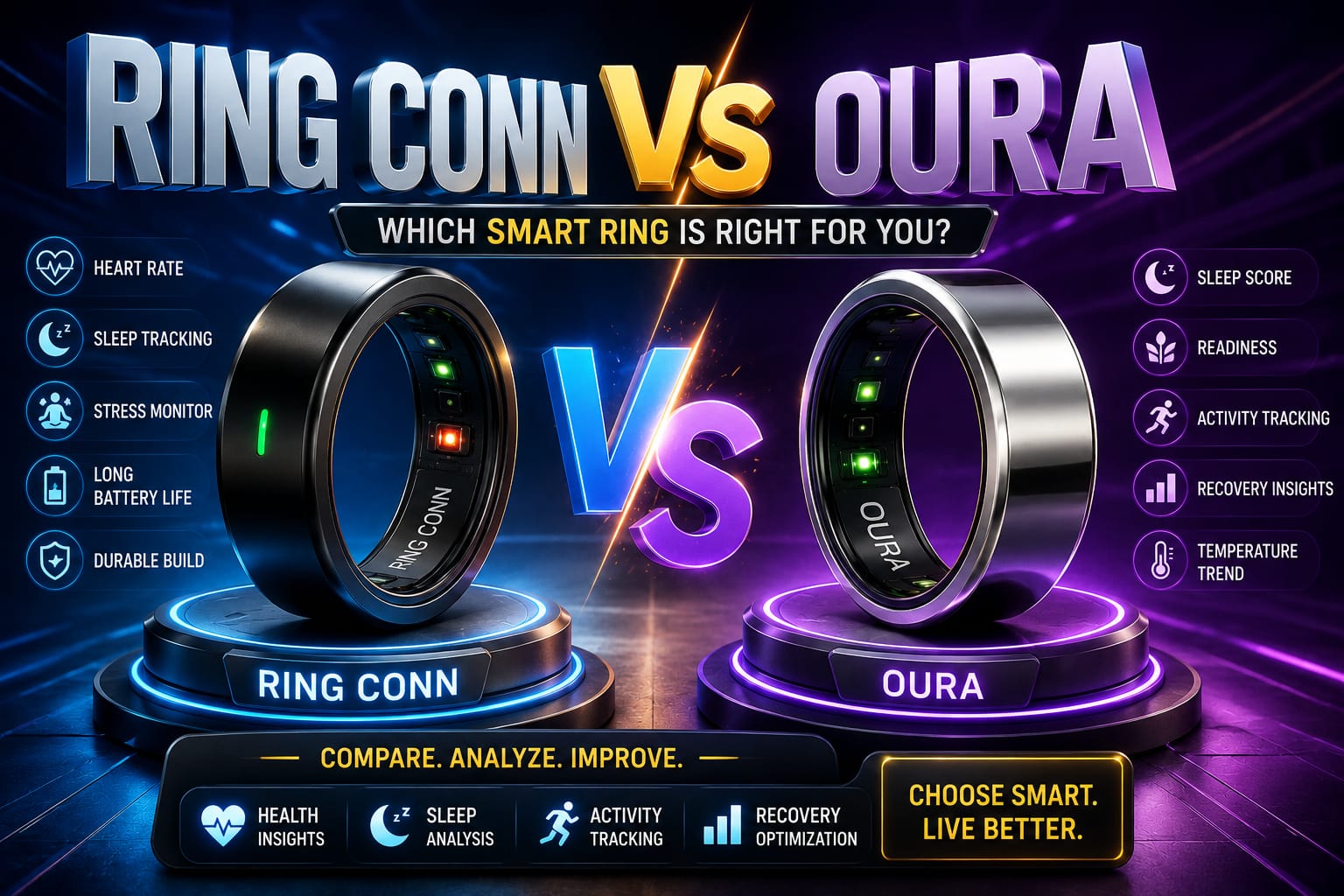
Last month I caught myself staring at my nightstand at 2 a.m., trying to decide which ring to charge first. The sleek titanium one that costs extra every month, or the lighter one that just quietly works for nearly two weeks straight. That moment of decision fatigue is exactly why so many people are searching ring conn vs oura right now. I’ve lived with both on my fingers through travel, stressful deadlines, recovery weeks, and even a nasty bout of food poisoning. This isn’t theory — it’s real life experience from someone who geeks out on wearables but hates wasting money.
If you’re trying to figure out which smart ring deserves your finger (and your hard-earned cash), you’re in the right place. I’ll break down the real differences in comfort, data you can actually trust, long-term costs, and which one finally won a permanent spot on my hand.
The Moment I Realized Size and Feel Matter More Than You Think
I still remember sliding the Oura Ring onto my finger for the first time. It felt substantial. Premium. Like a piece of intentional jewelry. But after a few weeks, I noticed myself taking it off during certain workouts because the wider band was just… there. Noticeable.
Then I tried RingConn. The Gen 2 version especially feels almost invisible. Thinner profile, lighter weight — sometimes I genuinely forget I’m wearing it. For someone like me who hates anything that draws attention or causes discomfort during sleep, this difference became huge.
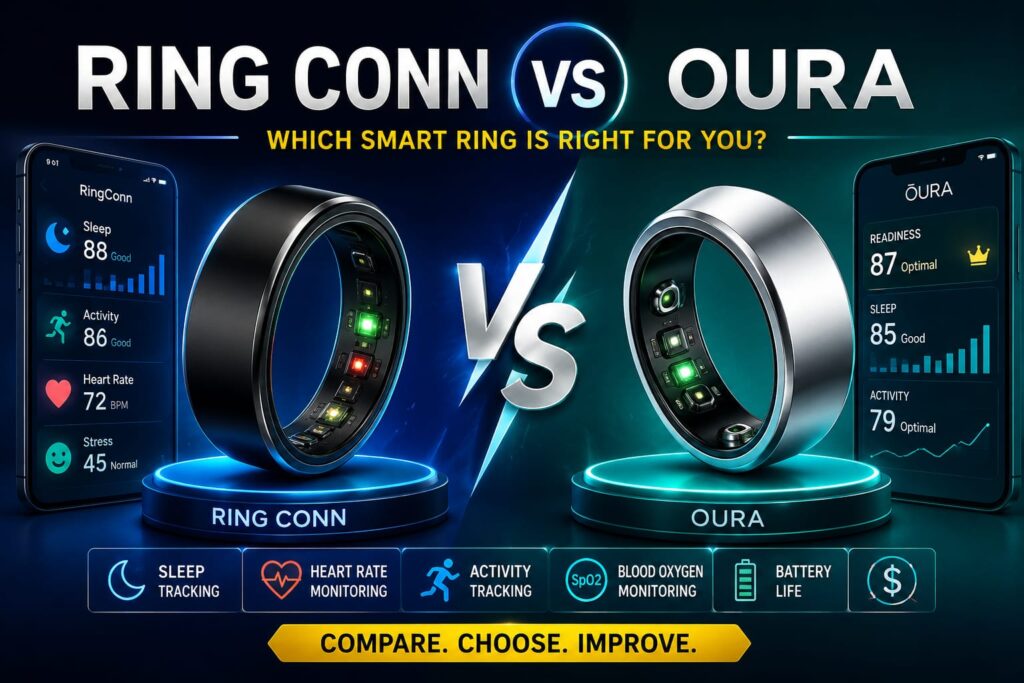
Ring conn vs oura on comfort comes down to lifestyle. If you have smaller hands or prefer something that disappears into your daily routine, RingConn often wins. Oura feels more like a statement piece that also happens to track your health. Neither is bad, but the one that stays on your finger consistently is the one that actually delivers value.
Battery Life: The Silent Killer of Good Habits
Nothing kills a tracking habit faster than constant charging.
RingConn routinely gives me 10–12 days between charges. I charge it while I’m in the shower or making coffee and I’m good. That reliability means unbroken data streaks, which matter when you’re trying to spot patterns in your recovery or stress levels.
Oura has improved, but you’re still looking at 7–9 days max on the newer models. It’s respectable, but the difference adds up. One less charging session per week might not sound revolutionary until you realize how many times you skip logging data because the ring was dead.
The Money Conversation Nobody Wants But Everyone Needs
This is where ring conn vs oura gets spicy.
Oura starts higher and then hits you with that subscription fee — roughly $6 a month for the full experience. Over three years, you’re looking at hundreds of extra dollars. Some people happily pay it because the insights feel worth it. Others see it as nickel-and-diming for data your body already generated.
RingConn? No subscription. Ever. You buy it once and the advanced features stay unlocked. For many practical people I talk to — freelancers, parents, athletes on tight budgets — this single factor tips the entire decision.
Sleep Tracking: Where Both Shine (But Differently)
I’ve had nights where both rings called out terrible sleep. The difference was in the “why” and “what now.”
Oura’s app turns raw numbers into coaching that actually changed my behavior. It told me my late caffeine habit was destroying deep sleep and suggested a cutoff time that worked with my schedule. The Readiness Score became something I checked every morning like a weather report for my body.
RingConn gives excellent raw data and strong sleep apnea detection, which Oura doesn’t emphasize as much. Its AI insights are solid but more straightforward. Less hand-holding, more raw information.
If you want a gentle but firm coach in your pocket, Oura edges ahead. If you prefer owning your data and making your own calls, RingConn feels more empowering.
Accuracy, Features, and Real-World Reliability
After months of cross-checking both against each other and occasional medical-grade tools, here’s my honest read:
- Heart rate and HRV are close enough that most people won’t notice major differences.
- Temperature trends and recovery signals are both useful.
- Activity tracking is where Oura feels a bit smarter at automatically detecting different efforts.
- Women’s health and cycle insights are deeper on Oura right now.
But here’s what actually surprised me: RingConn’s continuous monitoring often captured subtle daytime stress spikes that Oura sometimes smoothed over. Different strengths, not a clear winner.
Pro tip: Fit is everything with both rings. Spend the time getting the right size. A slightly loose ring kills accuracy on either device. Order sizing kits and live with them for a few days before committing.
Who Should Actually Buy Which?
Go with Oura if:
- You value polished, evolving insights and beautiful app design
- The subscription feels like a worthwhile investment in your health
- You want the widest size range and premium finishes
- You love feeling like you have a high-end wellness coach
Choose RingConn if:
- You hate recurring fees with a passion
- Maximum comfort and battery life matter most
- You want strong performance without complexity
- You’re buying your first smart ring and want to test the waters
I’ve recommended both to different friends based on their personalities and budgets. The tech nerd who obsesses over every metric? Oura. The busy mom who just wants reliable sleep data without extra bills? RingConn.
Mistakes I Made So You Don’t Have To
Don’t buy either ring expecting it to fix your sleep or stress by itself. These are awareness tools, not magic. The real work still happens in your habits.
Also, don’t obsess over nightly scores. I did that for a couple weeks and it made my sleep worse. Use the data as gentle guidance, not judgment.
Finally, consider your return window seriously. Wear the ring during a normal week — including travel or stressful days — before deciding.
The Unexpected Lesson from Living with Both
After all the testing, the ring conn vs oura debate taught me something deeper about health tech. The “best” device is the one that stays on your finger and fits your life without friction.
Some mornings I still miss Oura’s thoughtful coaching. Other days I’m grateful for RingConn’s set-it-and-forget-it reliability. They’ve both made me more aware of how my body responds to travel, alcohol, intense training, and even arguments with my partner.
In the end, both rings prove that small, consistent data points can lead to meaningful changes if you actually pay attention.
So… Which One Did I Keep?
I rotate them now depending on the week, but if I had to choose only one permanently? RingConn has earned the daily spot for its comfort and freedom from subscriptions. The data is good enough that the extra polish from Oura doesn’t always justify the ongoing cost for me personally.
Your answer might be different — and that’s exactly the point.
What matters most to you right now: saving money long-term, getting the most beautiful insights, or maximum comfort? Drop your priorities in the comments. I read every one and often reply with specific recommendations.
Your health journey deserves a tool that actually supports it instead of complicating it. Whether you go RingConn or Oura, the real win is finally having clear data to make better daily decisions.
Here’s to fewer 2 a.m. charging dilemmas and more restful nights ahead.