
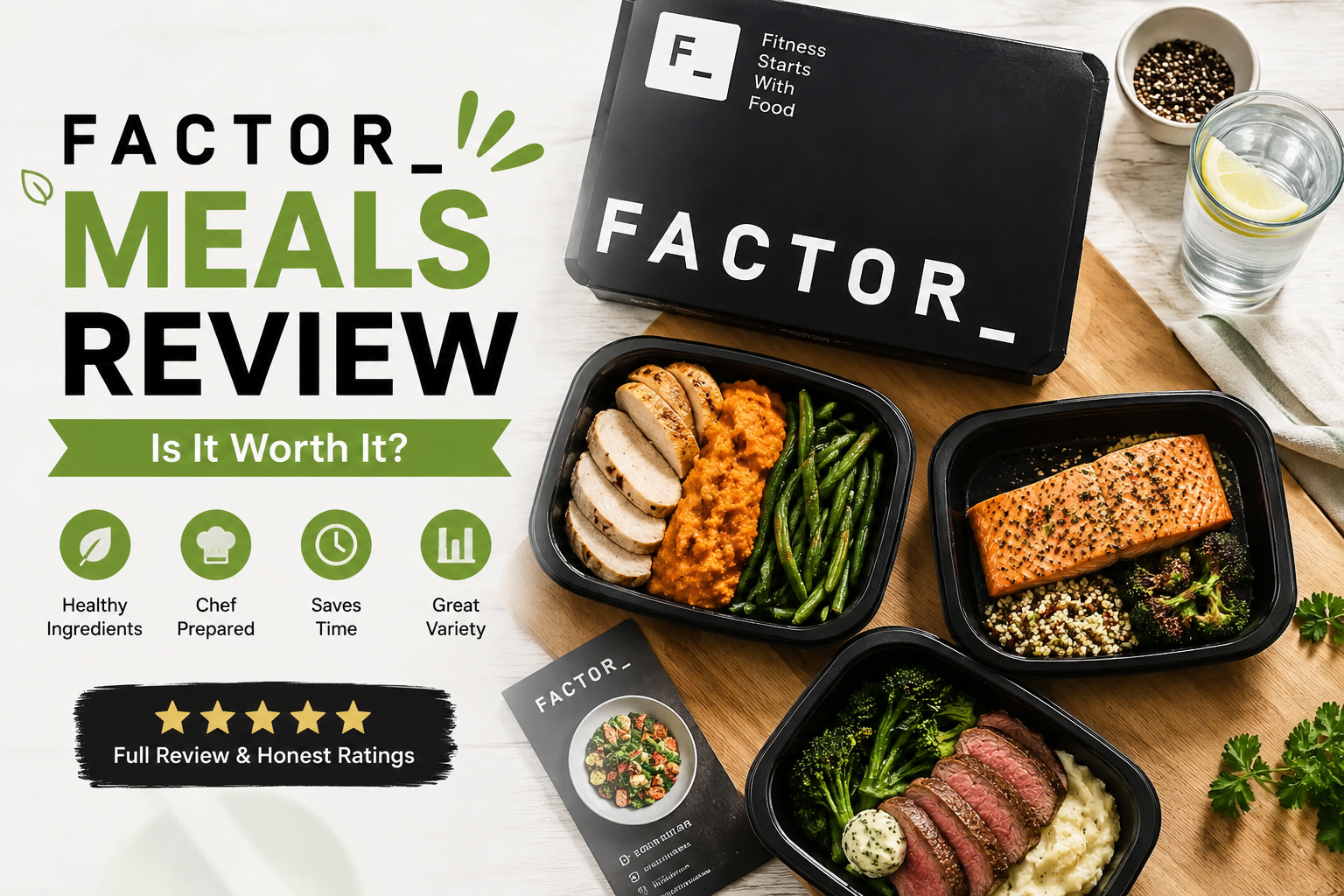
You know that moment when it’s 7 p.m., you’re hungry, the fridge contains half a lemon and three questionable condiments, and cooking suddenly feels like a major life decision? That is exactly the kind of situation meal-delivery services are built for. But convenience alone isn’t enough to make a meal service worth paying for every week.
In this factor meals review, I’m looking beyond the glossy photos and the promise of “chef-prepared” food. The real questions are simpler: Does the food actually taste good? Are the portions satisfying? Is the menu varied enough to prevent boredom? And, perhaps most importantly, does Factor make eating well easier without turning dinner into another subscription you eventually resent?
Whether you’re considering Factor for busy workdays, fitness goals, easier portion control, or simply because you’re tired of cooking, this guide breaks down what deserves your attention before you place that first order.
What Is Factor, Exactly?
Factor is a prepared meal delivery service designed around convenience. Unlike traditional meal kits, where you receive raw ingredients and recipe cards, Factor sends meals that are already cooked and generally require little more than reheating.
That distinction matters.
A meal kit might save you a trip to the supermarket, but you still have to chop vegetables, measure ingredients, wash pans, and stand around waiting for dinner. Factor takes most of that work out of the equation.
For someone working long hours, traveling frequently, or trying to avoid defaulting to takeout, that can be a surprisingly meaningful advantage.
The service also puts considerable emphasis on different eating preferences and nutritional goals. Depending on the current menu, customers may encounter meals designed around categories such as high-protein, calorie-conscious, keto-friendly, or other dietary preferences.
The important word here is preference. A label on a meal does not automatically make it the right choice for your individual nutritional needs.
Factor Meals Review: The Taste Test Is the Real Test
Nutrition information is useful. Calories matter. Protein matters. Ingredients matter.
But none of those things can rescue a meal you genuinely dislike eating.
That’s where Factor has an interesting advantage over many convenience-focused food services: the meals are intended to feel like actual prepared dishes rather than emergency food you tolerate because you’re too busy to cook.
Some meals can be surprisingly satisfying after reheating, particularly dishes built around sauces, roasted vegetables, seasoned proteins, or creamy components. Those elements tend to hold up better than foods whose appeal depends heavily on crispness.
And that brings us to one of the unavoidable compromises of prepared meals.
Reheating changes the experience
A freshly cooked chicken breast with crisp vegetables is one thing. A refrigerated meal reheated several days later is another.
Microwaving can soften vegetables. Sauces may separate slightly. Certain proteins can lose some of their texture if overheated.
This isn’t necessarily a Factor-specific problem. It’s a fundamental challenge of refrigerated prepared food.
The trick is learning how to reheat strategically.
Instead of blindly following the shortest possible microwave instruction, pay attention to the meal’s composition. Some dishes benefit from stirring halfway through. Others taste better when allowed to sit for a minute or two after heating.
If you have access to an oven, toaster oven, or air fryer, certain meals can also develop a more appealing texture than they would in a microwave.
That extra two minutes of attention can make a mediocre reheated meal feel considerably better.
Portion Sizes: Enough for Dinner?
Portion size is one of those subjects that generates wildly different opinions.
One person will say a meal is perfectly filling. Another will finish it and immediately start searching the pantry for snacks.
Both can be telling the truth.
Appetite varies enormously based on body size, activity level, meal timing, and what someone has eaten earlier in the day. A desk-bound afternoon and a hard training session don’t create the same dinner requirements.
My advice is to look at the nutritional information rather than judging a meal purely by the photograph on the box.
If you know you typically need a larger dinner, don’t assume one prepared meal will magically change that. You can pair it with something simple—fruit, a side salad, extra vegetables, yogurt, or another food that fits your needs.
That is often smarter than abandoning the service because the standard portion doesn’t perfectly match your appetite.
A useful way to judge portions
After eating a Factor meal, ask yourself three questions:
- Am I physically satisfied?
- Am I still hungry 20–30 minutes later?
- Would I normally eat more because I’m hungry, or simply because I enjoy continuing to snack?
That last distinction is surprisingly useful when evaluating any portion-controlled meal service.
The Menu: Variety Is More Important Than It Sounds
The first week of almost any meal-delivery service can feel exciting.
There are new dishes to try. You don’t have to plan dinner. Opening the refrigerator actually feels like having options.
Then week four arrives.
Suddenly you realize you’ve eaten the same style of chicken several times, you’re tired of creamy sauces, and the novelty has disappeared.
That is why menu variety deserves as much attention as individual meal quality.
Factor generally offers a rotating selection rather than expecting customers to eat the exact same dishes repeatedly. That’s helpful, but a rotating menu isn’t automatically a diverse menu for you.
If you dislike seafood, for example, a menu with numerous seafood options may look impressive on paper while leaving you with far fewer appealing choices.
The same applies to dietary restrictions.
Before subscribing, check the menu
This is one of the easiest mistakes to avoid.
Don’t subscribe because one social-media photograph made a particular dish look irresistible. Look at the actual menu available to you and count how many meals you’d realistically choose.
A good rule is simple:
If you can identify at least five or six meals you’d happily eat, the service has potential. If you’re already forcing yourself to choose meals you don’t want, the subscription probably won’t age well.
Factor Meals Review for Busy People
This is where Factor makes the strongest case for itself.
Imagine a Tuesday evening.
You’ve finished work late. You’re hungry. You have a gym session tomorrow morning. Ordering delivery would be easy, but you know that “I’ll just order something quick” has a habit of becoming an expensive meal plus a drink plus an unnecessary side.
A prepared meal sitting in your refrigerator changes the decision.
You don’t have to negotiate with yourself.
Heat it. Eat it. Clean up.
That sounds almost embarrassingly simple, but removing small points of friction can have a large effect on habits.
Convenience has a nutritional benefit, too
There’s an important behavioral principle here: people tend to make different choices when the easier option is also a reasonable one.
If preparing a balanced dinner requires 45 minutes and ordering fast food requires three taps, convenience wins surprisingly often.
Factor’s value isn’t just that someone else cooked the food.
It’s that the healthier or more structured choice can become the default choice.
That may be worth more to some people than saving a few dollars per meal.
Is Factor Good for Weight Management?
This question requires some nuance.
Prepared meals can make portion sizes and nutritional information easier to monitor. That’s useful for people who are trying to become more deliberate about what they eat.
But Factor shouldn’t be treated as a magic weight-loss program.
Body weight is influenced by overall energy intake, activity, individual physiology, food choices, sleep, and many other factors. A calorie-conscious prepared meal can be part of a weight-management strategy, but it doesn’t guarantee a particular result.
If weight loss is your primary goal, pay attention to your entire day’s intake rather than focusing on the meal box alone.
A common mistake is thinking, “This dinner is controlled, so everything else doesn’t matter.”
It does.
Coffee add-ins, snacks, weekend meals, sauces, desserts, and drinks can easily become more significant than people expect.
What About Protein?
For active people, protein content is one of the most useful numbers to examine.
A meal can look impressively healthy while leaving you hungry because it contains relatively little protein and not enough overall food for your needs.
Factor’s higher-protein options can therefore be appealing to people who prioritize protein intake.
But don’t choose a meal solely because the protein number looks impressive.
Look at the complete picture:
- Total calories
- Protein
- Fiber
- Fat
- Carbohydrates
- Sodium
- Ingredient list
- Portion size
A high-protein meal can still be a poor fit if the rest of its nutritional profile doesn’t suit your needs.
For someone training regularly, the bigger question is how the meal fits into the day’s total protein intake—not whether one dinner contains a particular number of grams.
The Ingredient Question
“Healthy” is one of the most abused words in food marketing.
A meal can contain vegetables and lean protein and still be relatively high in sodium. Another can be calorie-conscious but leave you wanting more food because the volume is low.
Instead of asking whether a Factor meal is simply “healthy,” ask whether it matches your priorities.
If you’re watching sodium, check sodium.
If you’re trying to increase fiber, check fiber.
If you’re managing carbohydrates, look at total carbohydrates rather than relying solely on a dietary category label.
And if ingredient simplicity matters to you, read the ingredient list.
This is a much more useful approach than trying to place every meal into a simplistic healthy-versus-unhealthy box.
How Much Does Factor Really Cost?
Price is where the convenience equation gets interesting.
At first glance, prepared meals can look expensive compared with buying ingredients at a grocery store.
And that’s true—if your comparison is purely against raw groceries.
But that isn’t necessarily the fairest comparison.
The real competitors are often:
- Takeout
- Restaurant meals
- Grocery-store convenience food
- Last-minute delivery
- Homemade meals
- Other prepared meal subscriptions
Once you account for shopping, preparation time, cleanup, food waste, and impulse purchases, the calculation becomes more complicated.
For example, suppose you buy ingredients for a recipe but only use half of the produce before it spoils. Your theoretical grocery cost might look low, while your actual cost per consumed meal is higher.
On the other hand, someone who enjoys cooking, shops efficiently, and uses leftovers well can almost certainly prepare meals for less.
That’s why the smartest Factor meals review doesn’t simply ask, “Is it cheap?”
It asks, “What is my time worth?”
If a prepared dinner saves you 30–45 minutes on a stressful weekday, you are partly paying for that time.
Whether that’s worth it depends on your budget and lifestyle.
Where Factor May Fall Short
No honest review should pretend a meal-delivery service is perfect.
Factor has limitations, and some are inherent to the category.
1. Reheated food is still reheated food
If you are someone who lives for crispy roasted potatoes, freshly grilled steak, or vegetables with plenty of bite, prepared meals may never completely replace cooking.
2. Packaging can accumulate
A subscription means boxes, trays, wrapping, insulation, and other packaging. Even when components are recyclable in your area, it can feel like a lot compared with cooking from scratch.
3. The subscription model requires attention
Meal subscriptions are convenient until you forget to manage them.
Customers should pay attention to ordering deadlines, skips, cancellations, delivery schedules, and menu-selection windows.
The worst meal subscription is the one you aren’t using but keep paying for.
4. Personal taste remains personal
A meal can receive glowing reviews and still be something you wouldn’t order twice.
Taste is not a spreadsheet.
Who Should Consider Factor?
Factor is particularly compelling for people who fit one or more of these situations:
Busy professionals: If your work schedule makes cooking unpredictable, prepared meals can remove a recurring headache.
Fitness-focused eaters: People who care about protein and nutritional consistency may appreciate having clearly labeled meals available.
People who dislike cooking: There is no prize for forcing yourself to enjoy an activity you genuinely hate.
People replacing takeout: This may be the biggest practical use case. Having a ready meal available can make spontaneous restaurant spending less tempting.
Small households: Cooking for one can create awkward leftovers and ingredient waste. Prepared portions can sometimes solve that problem.
Who Might Be Better Off Cooking?
If you enjoy cooking and have the time, homemade food still wins in several categories.
You control:
- Ingredients
- Portion sizes
- Seasoning
- Cooking method
- Freshness
- Cost
You can also cook larger batches and freeze portions, creating your own version of meal prep.
There is another consideration: people who have very specific dietary restrictions or medical nutrition needs may require a level of customization that a commercial meal service cannot provide.
In those circumstances, professional dietary guidance may be more appropriate than relying on general meal categories.
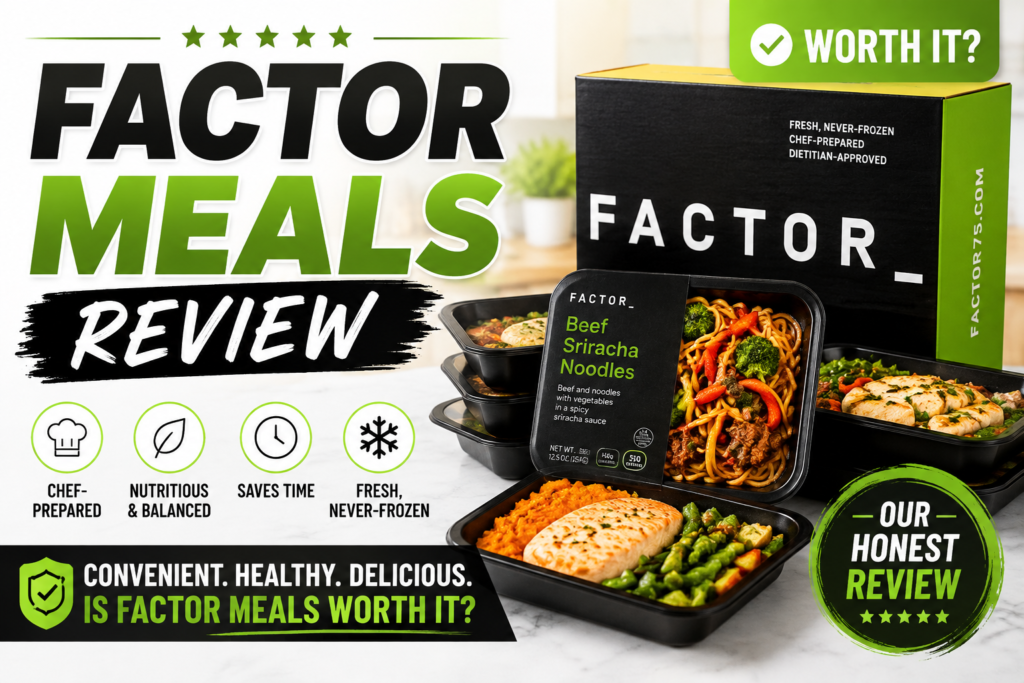
My Practical Strategy for Trying Factor
If you’re curious but don’t want to commit emotionally—or financially—to a long-term subscription, approach your first order like a test.
Step 1: Study the menu first
Choose meals you genuinely want to eat, not meals that merely look nutritious.
Step 2: Mix familiar and unfamiliar dishes
Try a few obvious favorites alongside something outside your normal routine.
This gives you a better sense of the kitchen’s range.
Step 3: Record what you actually like
After eating each meal, rate it from 1 to 5 for:
- Taste
- Portion satisfaction
- Texture
- Convenience
- Likelihood of ordering again
Do this for the first several meals.
Your memory is surprisingly unreliable when comparing meals eaten days apart.
Step 4: Calculate your real cost
Don’t just look at the advertised price.
Include delivery charges, taxes, extras, and meals you don’t end up eating.
Then compare that figure with what you normally spend on comparable weekday lunches or dinners.
Step 5: Decide whether it changed your behavior
This is the most important test.
Did you cook less?
Did you order less takeout?
Did you waste less food?
Did dinner become easier?
Did you actually enjoy eating the meals?
If the answer is yes to most of these questions, the service may be providing genuine value.
Factor Meals Review: The Verdict
After looking past the marketing, Factor makes the most sense when you view it as a time-saving food system, not as a replacement for everything you love about cooking.
Its strongest selling point isn’t that every meal will taste restaurant-perfect. It won’t. Nor should anyone expect refrigerated prepared food to behave exactly like something served five minutes after leaving a pan.
The real appeal is consistency.
There is food waiting in the refrigerator. The nutritional information is available. Preparation takes very little effort. And when you’re exhausted after a long day, those advantages can matter more than culinary perfection.
The biggest mistake would be expecting Factor to solve every nutritional or lifestyle problem for you. It can’t. What it can do is reduce friction around meals, and reducing friction is often how sustainable routines are built.
Ultimately, this factor meals review comes down to a simple question: would having ready-to-eat meals make your week noticeably easier without creating a cost or food-quality compromise you dislike?
If yes, Factor is worth investigating.
If you’re already comfortable cooking, meal prepping, and shopping efficiently, the economics may be less convincing.
Either way, don’t judge a meal service by its prettiest photograph. Judge it by what happens on the Wednesday night when you’re tired, hungry, and tempted to order takeout. That’s where convenience earns its keep—or doesn’t.
Final Takeaways
Before signing up, remember these points:
- Taste matters as much as nutrition. A meal you won’t eat isn’t a useful healthy option.
- Check the actual menu. Variety only matters if the choices appeal to you.
- Consider your appetite. A standard portion may be perfect for one person and inadequate for another.
- Read the nutritional information. Pay attention to the numbers that matter for your personal goals.
- Compare the true cost. Include delivery, food waste, takeout habits, and the value of your time.
- Treat the first order as an experiment. Track which meals you genuinely want to reorder.
- Don’t confuse convenience with perfection. Prepared food involves trade-offs, particularly around texture and packaging.
- Judge the service by behavior. If it helps you eat more consistently and order less impulsively, that convenience has real value.
The best meal service isn’t necessarily the one with the most impressive menu or the loudest health claims. It’s the one that quietly makes your ordinary week work better.