I still remember the late night last year when I was knee-deep in rewriting a 5,000-word client proposal. The deadline was breathing down my neck, my coffee had gone cold, and I was fed up with generic fluff. I pasted the brief into ChatGPT first — solid structure, quick turnaround. Then I tried the same prompt in Claude. What came back felt like it had actually read between the lines of what my client really wanted. That moment crystallized something I’d been sensing for months: these two AIs aren’t interchangeable. They’re different tools for different parts of your brain.
If you’ve been bouncing between Claude AI vs ChatGPT debates in forums or Reddit threads, you’re not alone. In 2026, the conversation has matured beyond “which one is smarter” into something far more practical: which one helps you do better work, faster, without losing your own voice in the process. After testing both extensively across writing projects, coding sessions, research marathons, and everyday tasks, here’s my unfiltered take as someone who makes a living creating and shipping digital work.
The Personalities Behind the Models
At their core, ChatGPT (powered by OpenAI’s latest GPT iterations like GPT-5 series) and Claude (from Anthropic’s family, including Sonnet, Opus, and newer variants) reflect the philosophies of their creators.
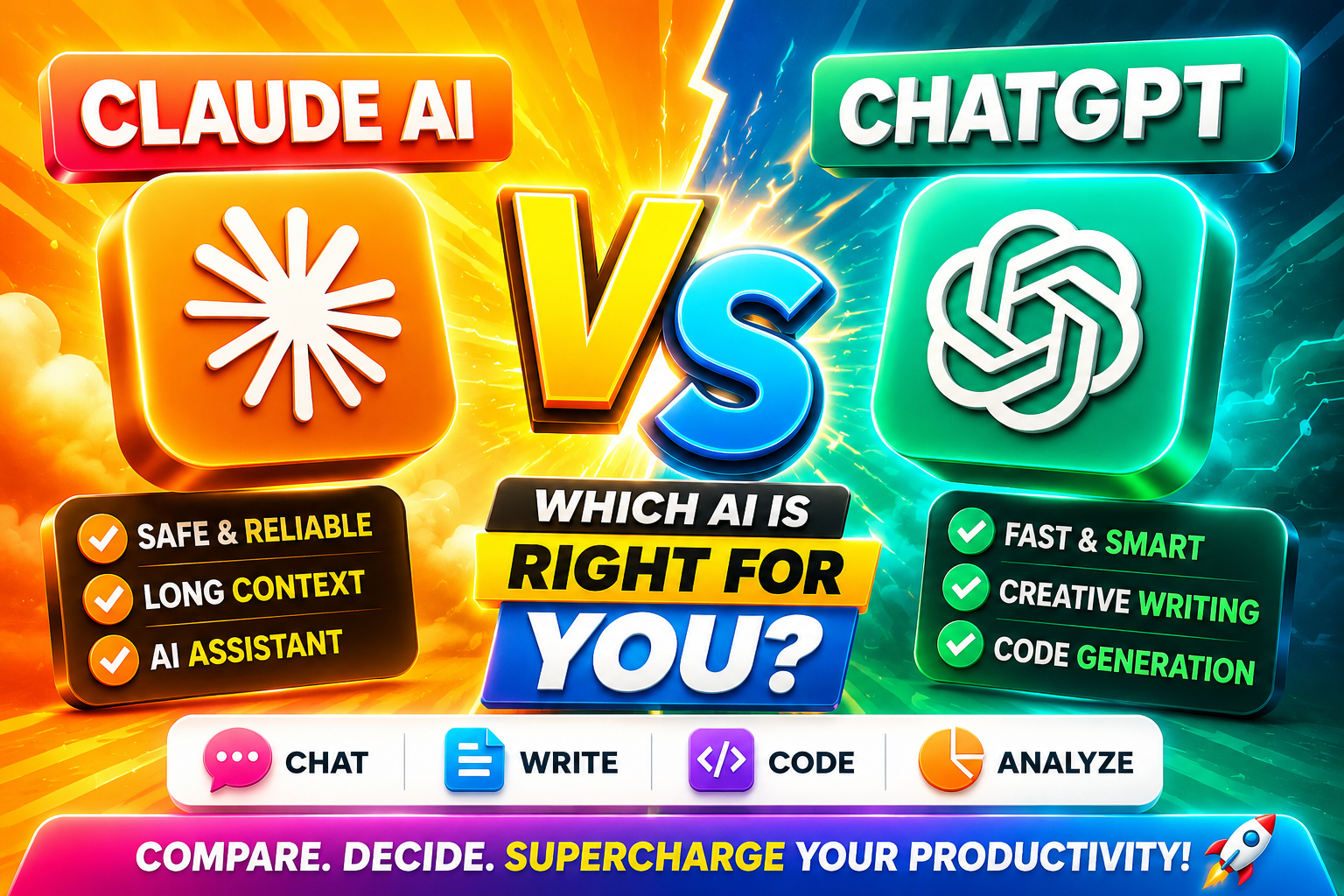
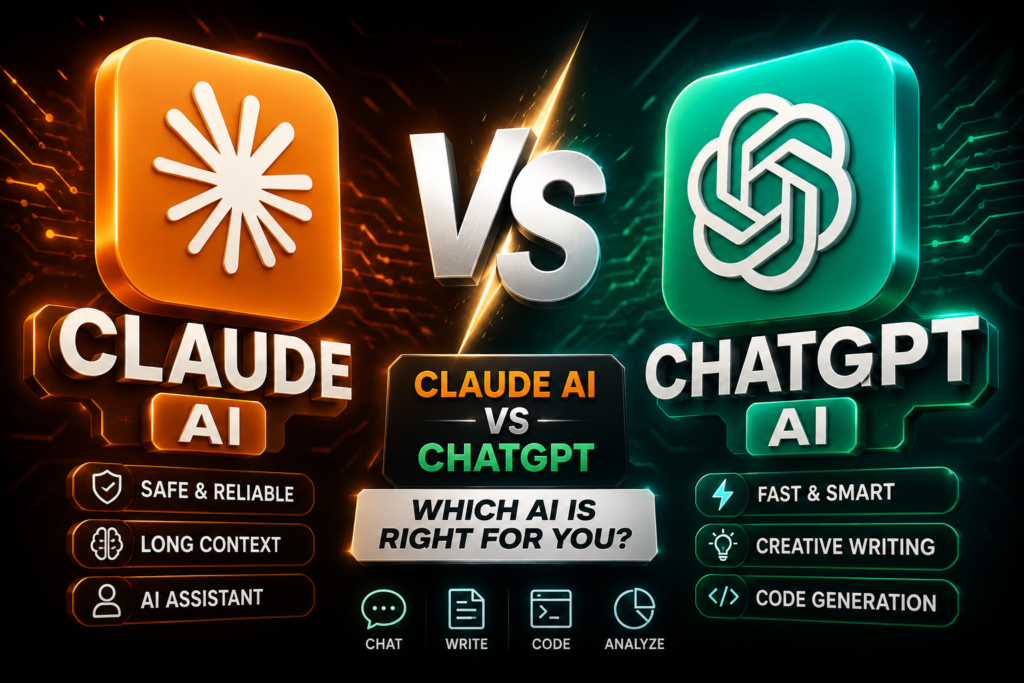
OpenAI built ChatGPT as the ultimate Swiss Army knife — versatile, fast, and eager to please. It thrives on breadth: image generation with DALL·E, voice conversations that feel eerily natural, web browsing, custom GPTs, and a massive ecosystem of integrations. It’s the friend who shows up with ideas for everything and keeps the energy high.
Claude, on the other hand, feels more like the thoughtful colleague who listens carefully before speaking. Anthropic’s emphasis on “Constitutional AI” and safety shines through in its cautious, principled responses. It’s less likely to hallucinate wildly or sugarcoat, and it excels at deep, nuanced work. Where ChatGPT might dazzle with flair, Claude often delivers precision and structure that feels more human — or at least, more aligned with how experienced professionals actually think.
I’ve caught myself describing them to friends like this: ChatGPT is the charismatic storyteller at the party. Claude is the one in the corner quietly solving the real problems.
Writing: Where the Rubber Meets the Road
For long-form content like this article, Claude AI vs ChatGPT comparisons usually tilt toward Claude. It consistently produces more natural, less “AI-sounding” prose. Its outputs have better flow, fewer repetitive phrases, and a stronger sense of voice.
I once fed both the same outline for a technical explainer. ChatGPT gave me clean sections with bullet points and solid SEO-friendly language. Functional, but it read like a well-trained intern. Claude took the same prompt and wove in subtle insights, varied rhythm, and transitions that felt earned. It even flagged potential reader objections I hadn’t considered.
That said, ChatGPT shines for quick brainstorming, headline variations, or social media copy. Its creative spark is often more playful. If you’re drafting emails, ad copy, or iterating fast, it’s hard to beat the speed and variety.
Actionable tip: Use Claude for final drafts and deep editing. Paste your ChatGPT-generated first draft into Claude and ask it to “refine for warmth and authority while keeping my original voice.” The results are often magical.
Coding and Technical Work: A Closer Race
Developers have been loud about this one. In many 2026 benchmarks and real-world tests, Claude edges ahead for complex coding tasks, especially with large codebases.
Its massive context window (often 200K+ tokens) lets it hold entire projects in memory better than most ChatGPT setups. When refactoring multi-file applications or debugging tricky logic, Claude tends to produce cleaner, more maintainable code with fewer hallucinations. It explains its reasoning step-by-step in a way that actually helps you learn.
ChatGPT (particularly with GPT-5 models) fights back hard on rapid prototyping, algorithmic challenges, and integration with tools like GitHub Copilot. It’s often faster for small scripts and has broader plugin support. For data analysis or quick math-heavy tasks, it can still pull ahead in raw computational reasoning.
My workflow now? I start explorations in ChatGPT for speed, then move heavy lifting to Claude for precision. The combo beats either alone.
Context, Memory, and Long Documents
This is where Claude often dominates Claude AI vs ChatGPT discussions. Upload a massive PDF, research report, or codebase, and Claude handles it with impressive coherence. It synthesizes insights without losing the thread.
ChatGPT has improved dramatically with larger contexts and memory features, but it still feels more “forgetful” on truly epic tasks. For legal reviews, academic synthesis, or turning a 100-page strategy doc into actionable slides, Claude is my go-to.
Features That Tip the Scales
- Multimodal Magic: ChatGPT wins hands-down with image generation, voice mode, and video understanding. If your work involves visuals or spoken interaction, it’s non-negotiable.
- Artifacts and Prototyping: Claude’s Artifacts feature — live previews of code, websites, or diagrams — is a game-changer for designers and developers.
- Safety and Ethics: Claude is noticeably more restrained on sensitive topics. It refuses harmful requests more consistently, which is a feature for enterprise use but can feel limiting for creative edge cases.
- Pricing and Access: Both have similar premium tiers around $20/month, but usage limits and model variants differ. Test the free versions extensively before committing.
Real-World Scenarios: Choosing the Right Tool
Picture this: You’re a solopreneur launching a new product. Use ChatGPT to brainstorm names, generate mock ad copy, create social visuals, and even simulate customer interviews via voice. Then switch to Claude to write the in-depth launch email, build the landing page code, and analyze competitor docs.
Or imagine you’re a student. ChatGPT helps with quick explanations and study aids. Claude excels at outlining essays, critiquing drafts, and breaking down complex papers.
In team settings, many companies now run both. OpenAI’s ecosystem integrates beautifully with Microsoft tools and broader apps. Anthropic appeals to orgs prioritizing safety and reliability.
Common mistake to avoid: Treating them as rivals instead of a toolkit. The pros I respect most maintain accounts on both and route tasks intelligently.
Performance Nuances in 2026
Benchmarks evolve fast, but patterns hold. Claude often leads in coding accuracy (SWE-bench), long-context understanding, and structured reasoning. ChatGPT frequently tops creative tasks, speed, and multimodal benchmarks.
Neither is perfect. Both can hallucinate, both have rate limits that frustrate power users, and both occasionally produce bland output if your prompts are lazy. The real skill is prompt engineering — and learning the quirks of each model.
I’ve developed “personas” for them. For Claude: “You are a meticulous editor with 20 years in tech writing.” For ChatGPT: “Brainstorm wildly, then organize.”
The Human Element
What keeps me coming back isn’t just capability — it’s how they make me feel while working. ChatGPT energizes with possibilities. Claude grounds me with clarity. Together, they reduce the loneliness of the blank page or the stubborn bug.
The industry hype around “one AI to rule them all” misses the point. The winners will be those fluent in multiple models, knowing when to reach for which.
Final Thoughts on Claude AI vs ChatGPT
After hundreds of hours side-by-side, my verdict is refreshingly simple: stop obsessing over Claude AI vs ChatGPT as a binary choice. Master both. Let Claude handle the deep, thoughtful work that demands precision and soul. Let ChatGPT accelerate the creative chaos and multimodal needs. Your output — and sanity — will thank you.
The AI landscape moves at breakneck speed. By the time you read this, new versions will have dropped. But the principle remains: tools serve humans, not the other way around. Experiment relentlessly. Keep your critical thinking sharp. And never let any AI write your story for you — only help tell it better.
Now, if you’ll excuse me, I’ve got a half-finished draft that Claude is waiting to polish. What about you? Which one are you leaning on today, and why? Drop your experiences in the comments — I read every one.