A few years ago, I hit a wall with my usual “eat clean” routine. I was exercising consistently, but the scale wouldn’t budge and I felt hungry all the time. Sound familiar? That frustration led me down a rabbit hole of nutrition research and real-world experiments in my own kitchen. What I discovered—and what actually moved the needle—was the strategic power of high protein low calorie foods.
These aren’t trendy superfoods or expensive powders. They’re everyday ingredients that deliver serious protein while keeping calories in check. In this article, I’m sharing what I’ve learned from both the science and years of trial and error. You’ll walk away with a clear understanding of why high protein low calorie foods work, the best options to stock in your fridge, practical ways to use them, and the mistakes that can quietly sabotage your progress.
Why High Protein Low Calorie Foods Actually Work
Protein is often called the king of macronutrients for good reason. It takes more energy to digest than carbs or fat, boosts satiety hormones, and helps preserve muscle mass when you’re in a calorie deficit. When you pair that with lower calorie density, you get meals that fill you up without blowing your daily budget.
I remember switching from carb-heavy lunches to meals built around high protein low calorie foods. Within two weeks, my afternoon energy crashes disappeared. The constant gnawing hunger that used to hit around 3 p.m. was gone. It wasn’t magic—it was physiology. Studies consistently show that higher protein intake (around 1.6–2.2 grams per kilogram of body weight) improves body composition during weight loss. But the real game-changer is choosing sources that don’t come loaded with hidden calories.
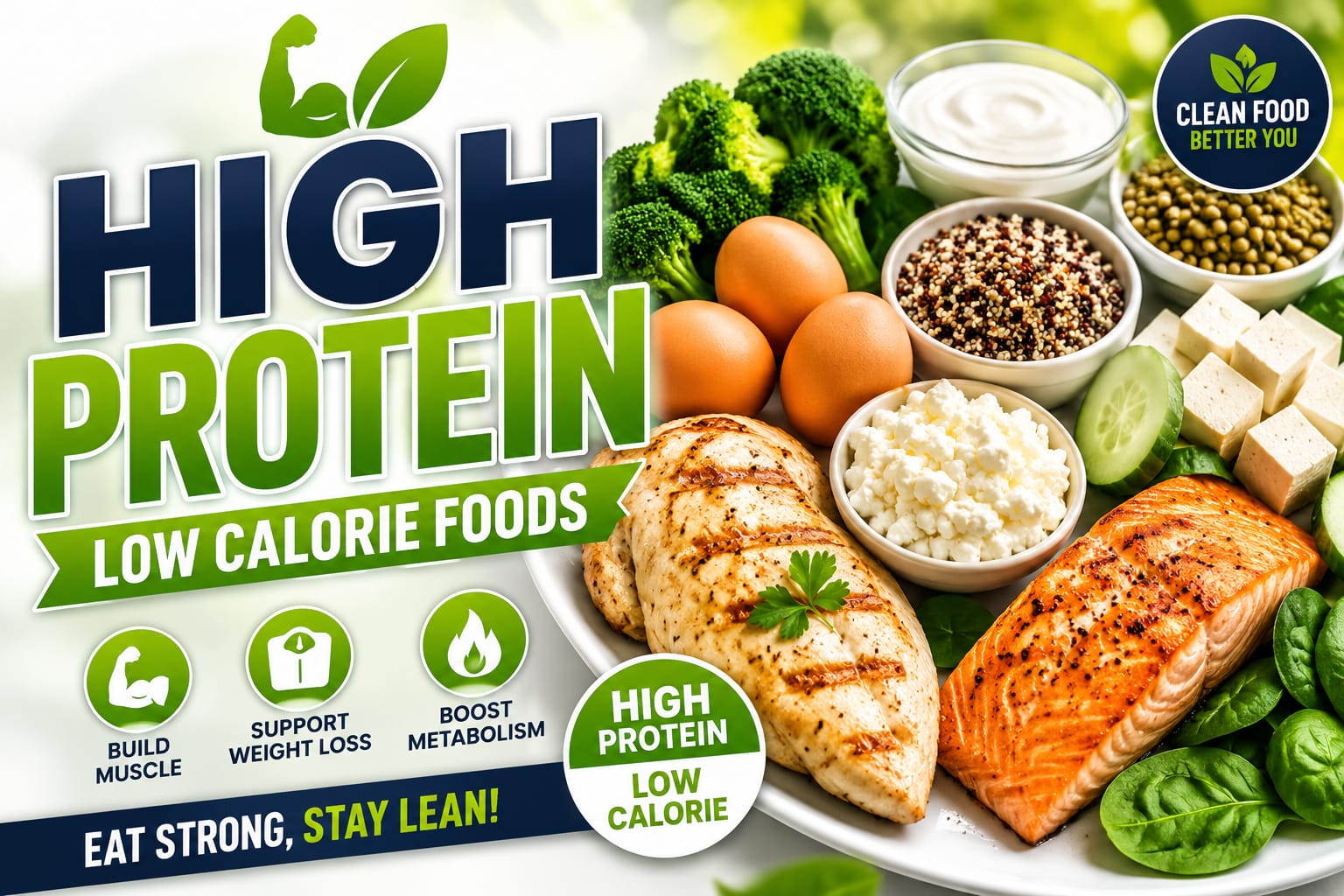
The Best High Protein Low Calorie Foods to Build Your Plate Around
Let’s get practical. Here are the standouts I rely on regularly, with real numbers and context so you can make informed choices.
Lean Poultry and Fish Chicken breast and turkey breast remain classics for a reason. A 4-ounce serving of grilled chicken breast gives you about 25–30 grams of protein for roughly 120–140 calories. That’s an incredible ratio. White fish like cod, tilapia, and haddock are even lower in calories while delivering solid protein. I love baking cod with lemon and herbs—it feels restaurant-quality but clocks in under 150 calories per generous portion.
Don’t sleep on canned tuna or salmon packed in water. They’re pantry staples that make high protein low calorie foods accessible even on busy days. Just watch the sodium if you’re sensitive to it.
Dairy and Dairy Alternatives Non-fat or low-fat Greek yogurt is one of my absolute favorites. A single cup can provide 20+ grams of protein for around 100 calories. I mix it with berries and a sprinkle of cinnamon for breakfast or use it as a base for creamy salad dressings. Cottage cheese (low-fat) follows closely behind—about 25 grams of protein per cup at roughly 160–180 calories.
Egg whites deserve more love too. They’re incredibly versatile. I make mini frittatas loaded with vegetables using mostly egg whites and one whole egg for flavor. The protein punch without the extra fat calories is hard to beat.
Plant-Based Powerhouses High protein low calorie foods aren’t just for meat-eaters. Tofu, tempeh, and seitan offer excellent options. Firm tofu, when pressed and baked, absorbs flavors beautifully and delivers around 10–15 grams of protein per 100 calories depending on preparation. Lentils and chickpeas are slightly higher in calories but their fiber content makes them incredibly satisfying. A big bowl of lentil soup can keep you full for hours.
Don’t overlook edamame. Those young soybeans are delicious steamed with sea salt and provide a perfect protein-fiber combo.
Seafood and Other Lean Proteins Shrimp might be the ultimate high protein low calorie food. A 4-ounce serving has about 25 grams of protein and only 100 calories. I keep a bag in the freezer for quick stir-fries or shrimp cocktails made with Greek yogurt sauce. Scallops and other shellfish follow a similar pattern.
How to Make High Protein Low Calorie Foods Work in Real Life
Knowledge is great, but implementation is everything. Here’s how I structure my days:
Start your morning with protein. Instead of toast and jam, try Greek yogurt with a scoop of protein powder (if needed) or egg white omelets packed with spinach and mushrooms. This sets your hunger hormones on the right track.
For lunch and dinner, use the “protein first” rule. Fill half your plate with one of the high protein low calorie foods above, then add volume with non-starchy vegetables. The combination creates meals that are naturally lower in calories but feel abundant.
Snacks matter too. When I’m training hard, I reach for turkey roll-ups with cucumber or a small portion of cottage cheese with cherry tomatoes. These keep me satisfied without derailing my goals.
One of the best tips I’ve picked up is batch cooking. On Sundays, I grill a big batch of chicken breast, hard-boil eggs (or prepare egg whites), and portion out Greek yogurt parfaits. Having these ready removes decision fatigue when life gets chaotic.
Creative Recipes That Don’t Feel Like Diet Food
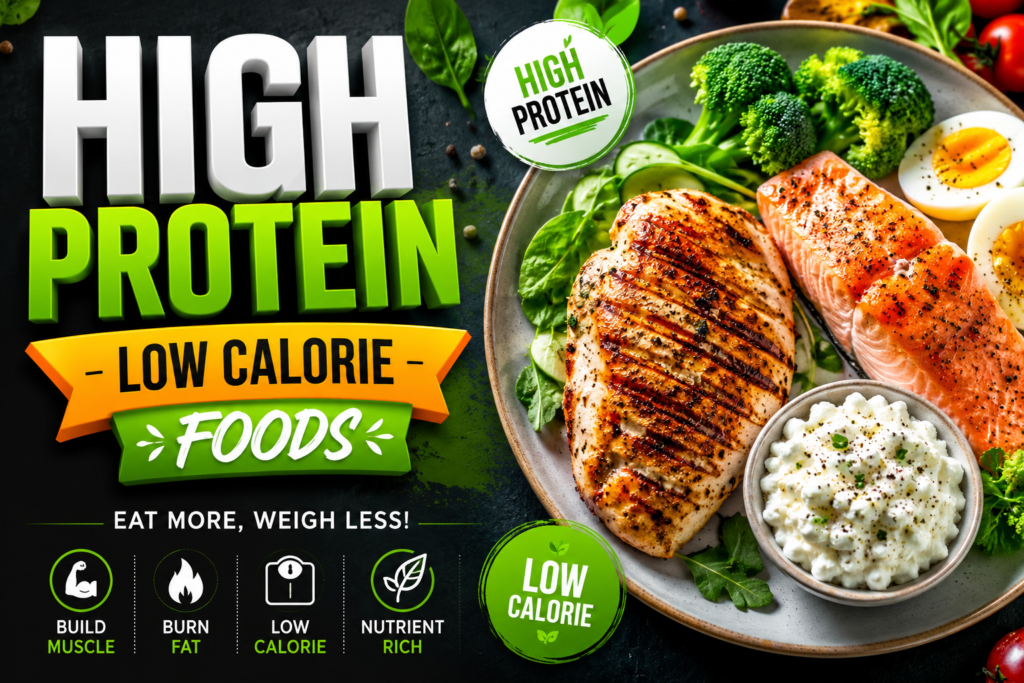
The secret to sticking with high protein low calorie foods long-term is making them taste incredible. Here are a few go-to ideas I actually look forward to:
- Spicy Shrimp Lettuce Wraps: Sauté shrimp with garlic, ginger, and chili flakes. Wrap in large lettuce leaves with shredded carrots and a drizzle of lime. Fresh, satisfying, and ridiculously low calorie.
- Greek Yogurt Chicken Salad: Mix shredded chicken breast with plain Greek yogurt, mustard, celery, and grapes. It tastes rich but stays light.
- Tofu Stir-Fry Bowl: Press and cube extra-firm tofu, bake until crispy, then toss with loads of broccoli, bell peppers, and a light soy-ginger sauce.
- Cottage Cheese Protein Pancakes: Blend low-fat cottage cheese with egg whites, oats, and a banana. Cook like regular pancakes. Top with berries. My kids even ask for these.
These aren’t complicated chef creations. They’re simple upgrades that prove high protein low calorie foods can be genuinely enjoyable.
Common Mistakes That Undermine Your Efforts
Even with the best intentions, people trip over a few hurdles. Here are the ones I see most often—and how to avoid them.
First, relying too heavily on processed protein products. Some protein bars and shakes are surprisingly high in calories or artificial ingredients. Whole foods almost always win for satiety and nutrition.
Second, forgetting about volume. Protein alone isn’t enough if your plate looks sad. Pile on zucchini, cauliflower, asparagus, and leafy greens. These add bulk and micronutrients without many calories.
Third, neglecting strength training. High protein low calorie foods help preserve muscle, but you need to give your body a reason to hold onto it. Even bodyweight workouts make a difference.
Finally, being too restrictive. I’ve learned that including a bit of flexibility prevents burnout. I might have a higher calorie day once a week where I enjoy something I really crave, then get back to focusing on those nutrient-dense, high protein low calorie foods.
The Science in Simple Terms
Research from places like the Journal of the International Society of Sports Nutrition supports higher protein diets for fat loss and muscle retention. One key mechanism is the thermic effect of food—protein requires about 20–30% of its calories just to digest. That adds up.
Protein also influences ghrelin (hunger hormone) and GLP-1 (satiety hormone). This is why people eating sufficient protein often report feeling fuller on fewer calories. It’s not willpower; it’s biology working in your favor.
That said, individual needs vary. Athletes, older adults, and those with certain medical conditions may need personalized guidance. Listening to your body remains important.
Building a Sustainable Approach
The goal isn’t perfection or six-pack abs by next month. It’s creating habits that feel natural over years, not weeks. High protein low calorie foods give you the tools to eat satisfying meals while managing energy balance.
Track your intake for a couple of weeks to get a realistic picture. You don’t need fancy apps forever—just enough awareness to make better choices. Experiment with different foods to find what keeps you energized and happy.
Remember that consistency beats intensity. A moderate approach you can maintain will always outperform an extreme one you abandon after a month.
Wrapping It Up
After years of experimenting, I’m convinced that focusing on high protein low calorie foods is one of the most effective, sustainable strategies for better health and body composition. They’ve helped me feel stronger, stay fuller, and enjoy food without constant guilt or restriction.
Start small. Pick three new high protein low calorie foods to incorporate this week. Notice how you feel. Adjust as needed. The journey is personal, but the principles are universal.
Here’s to eating in a way that nourishes both your body and your life—one delicious, satisfying meal at a time.