I still remember the afternoon a friend called me, voice tight with frustration. He had spent three weeks comparing online brokers for a modest stock portfolio. Spreadsheets, Reddit threads, review sites that contradicted each other, and more than a few late nights. By the time he finally opened an account, the market had already moved against the idea that first excited him. The real cost wasn’t just the time. It was the quiet sense that he might have chosen poorly and would only discover it later.
That experience is common. The financial services world throws more options at people than most can reasonably evaluate. Stock brokers, forex platforms, mortgage specialists, insurance intermediaries, business sale facilitators—each category has dozens of players, each claiming superior speed, lower fees, or better tools. Into that noise steps my fastbroker.com, a platform that positions itself as a matching service rather than a direct broker. The idea is simple on the surface: tell it what you need, and it helps narrow the field. Whether that promise holds up depends on how you use it and how carefully you check the results.
This article walks through what my fastbroker.com actually offers, where it can be useful, the limits you should expect, and practical steps for turning a quick match into a sound decision. You’ll leave with a clearer sense of when a comparison site like this earns its keep and when you still need to do the heavier lifting yourself.
What My Fastbroker.com Is (and Isn’t)
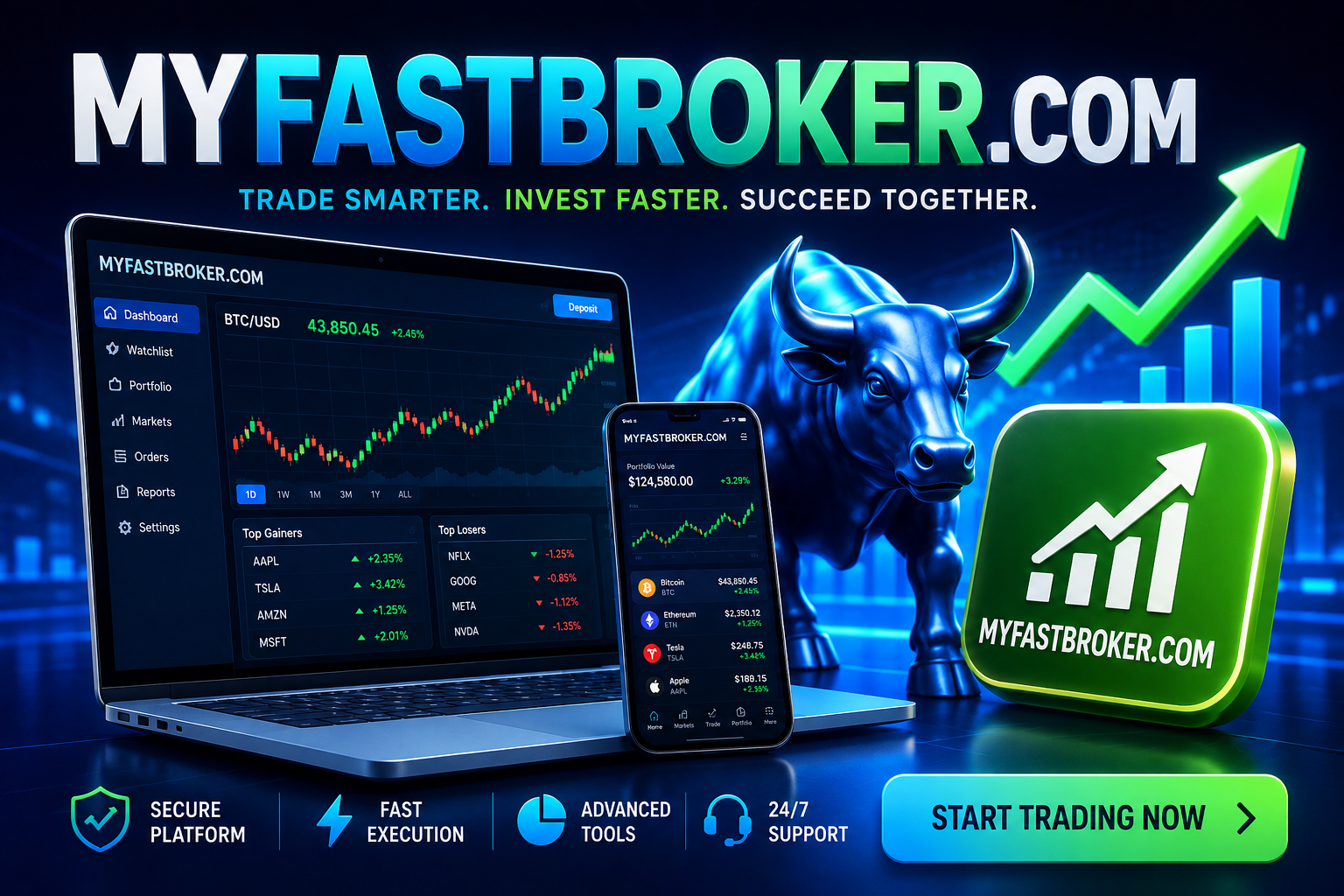
My fastbroker.com functions primarily as a broker-matching and comparison hub. It does not hold client funds, execute trades, or operate as a regulated brokerage under major authorities such as the FCA, SEC, or ASIC. Instead, it collects information about your goals—asset class, risk tolerance, deposit size, preferred services—and surfaces potential matches across several categories: stocks, forex, loans, mortgages, insurance, and business brokerage.
That distinction matters. Many people arrive expecting a trading platform with charts and order buttons. What they find is closer to a referral and review layer. The site claims independent analysis and states it does not accept payment for positive coverage. In practice, users still need to treat any recommendation as a starting point rather than a final endorsement. The actual account, money, and regulatory protection sit with the third-party broker you eventually choose.
The appeal is speed and breadth. Rather than visiting ten different broker websites and piecing together fee schedules yourself, you complete a short preference form and receive tailored suggestions. For someone who simply wants a shortlist of regulated stock brokers with reasonable commissions, or a mortgage intermediary familiar with self-employed applicants, that filtering can cut hours of work.
How the Matching Process Typically Works
The flow on my fastbroker.com is straightforward. You select a category, answer questions about your situation, and the system returns options. Some versions of the platform emphasize AI-driven matching; others lean more on curated lists and filters for fees, location, regulation, and service type.
What you receive is not a binding recommendation. It is a set of candidates. From there the real work begins: opening the linked broker’s own site, verifying licenses, reading the actual fee schedule, testing customer support response times, and checking independent complaint records. My fastbroker.com can accelerate the discovery phase. It cannot replace the verification phase.
I have watched people treat the first match as gospel and deposit funds the same day. That is rarely wise. Even well-intentioned comparison tools can surface brokers whose marketing is stronger than their long-term reliability. The platform’s value is highest when it is used as a research accelerator, not as a decision-maker.
Practical Advantages When Used Correctly
One clear benefit of my fastbroker.com is category coverage. Few single sites attempt to address stock trading, personal loans, home financing, insurance placement, and business sales in one place. Someone preparing both an investment account and a mortgage application can explore both needs without switching mental models or websites repeatedly.
Another advantage is the reduction of decision fatigue. Facing an open browser with thirty tabs of broker marketing pages is exhausting. A structured questionnaire that forces you to articulate priorities—cost versus tools, speed versus regulation, beginner education versus advanced order types—can surface preferences you had not fully articulated. That alone has value.
Educational content sometimes appears alongside the matches. Basic explainers on spreads, leverage risks, or the difference between full-service and discount brokers help newer users avoid obvious traps. These materials are rarely deep, but they can prevent someone from choosing a high-leverage forex account when they only needed a simple stock portfolio.
For freelancers, small business owners, or people with non-standard income, the loan and mortgage sections can be particularly useful. Traditional bank sites often filter such applicants out early. A matching service that includes specialists in those niches can surface options that would otherwise remain invisible.
The Limits and Risks You Should Not Ignore
Transparency around ranking methodology is limited on many comparison platforms, and my fastbroker.com is no exception according to independent reviews. Users rarely see clear disclosure of how much weight is given to affiliate relationships, if any, versus pure suitability. That opacity is a common industry issue, not unique to this site, but it still requires caution.
Because the platform itself is not a regulated broker, it carries no obligation to protect client funds or resolve trading disputes. Any problem with deposits, withdrawals, or execution falls entirely on the third-party firm. If that firm later proves difficult, my fastbroker.com has limited ability to intervene.
Some external reviews have raised concerns about inconsistent claims across promotional materials—speed benchmarks, minimum deposits, or regulatory status that vary depending on which third-party article you read. This is a red flag for any financial service. When marketing language drifts, treat every specific claim as provisional until confirmed on the actual broker’s regulated website and in official regulator databases.
Geographic suitability also varies. A broker suitable for a U.S. resident may be restricted or poorly regulated for a user in the UK, Australia, or elsewhere. Always cross-check the recommended firm’s licensing against your own jurisdiction’s regulator register before funding an account.

A Realistic Workflow for Using My Fastbroker.com
Start with clarity about your own needs. Write down the primary goal (long-term stock investing, short-term forex, home purchase financing, business sale, etc.), the amount you can risk or deposit, your experience level, and any non-negotiables such as segregated accounts or specific platforms like MetaTrader.
Visit my fastbroker.com and complete the matching form honestly. Resist the urge to inflate your experience or risk appetite just to see “better” options. The system can only work with accurate inputs.
Review the shortlist. For each candidate, open a new tab to the broker’s official site. Confirm the legal entity name, registration number, and the regulator that authorizes it. Search that number on the regulator’s public register. Look for any enforcement actions or warnings.
Compare actual costs. Marketing pages often highlight “from” spreads or “commission-free” stock trades while burying inactivity fees, withdrawal charges, or currency conversion costs. Request a full fee schedule or calculate the cost of a typical trade you expect to make.
Test support. Send a simple question through the contact form or chat. Note response time and quality. Poor support before you are a client is rarely better afterward.
Check independent sources. Search the broker name plus “withdrawal problems,” “complaint,” or the regulator’s own warnings list. Forums and review aggregators are imperfect, but patterns of unresolved issues should give pause.
Only after these steps should you consider funding a small test amount. Treat the first deposit as an experiment in process, not a commitment of significant capital.
Common Mistakes People Make with Matching Platforms
The most frequent error is treating the match as validation. A platform can surface a broker that fits your stated criteria and still be a poor long-term partner if the criteria themselves were incomplete. Many users under-weight regulation and over-weight low minimum deposits or flashy interfaces.
Another mistake is ignoring the fine print on data sharing. Comparison sites necessarily collect personal and financial preference data. Understand what is retained, how long it is kept, and whether it is shared with the matched brokers beyond the initial introduction.
Some users bounce between multiple matching sites and end up with conflicting shortlists, then freeze. Limit yourself to one or two reputable comparison tools, then move quickly into primary-source verification. Analysis paralysis is expensive in markets that move daily.
Finally, people sometimes use these platforms for highly specialized needs—complex options strategies, exotic currency pairs, or institutional-level execution—where the matching logic is simply too generic. In those cases, direct conversations with specialist desks or established full-service firms remain more reliable.
When My Fastbroker.com Adds Genuine Value
The platform earns its place for people who are early in their research, those managing multiple financial needs at once, or anyone who finds the sheer volume of options overwhelming. It is less useful for experienced traders who already know the major players in their niche and simply need the latest fee or platform updates.
I have seen it work well for a first-time investor who needed both a low-cost stock broker and basic life insurance. The matching process produced shortlists in both categories that the person could then verify independently. The time saved was real. The final choices still required the same due diligence any responsible adult should perform.
It also helps when you are exploring an unfamiliar category. Someone comfortable with stocks who suddenly needs a business broker for a small company sale can use my fastbroker.com to identify specialists rather than relying solely on local referrals or generic search results.
Building Your Own Evaluation Checklist Beyond Any Platform
Regardless of whether you start at my fastbroker.com or elsewhere, keep a simple checklist:
- Regulatory status confirmed on the official register
- Client money segregation and compensation scheme coverage
- Transparent, complete fee schedule for the products you will use
- Reasonable withdrawal and deposit processing times with documented methods
- Functional customer support with verifiable response quality
- Platform stability and order execution that match your style
- Clear ownership and contact information for the firm
Any broker that fails multiple items on this list should be discarded, no matter how attractive the initial match appeared.
Final Thoughts on Navigating Broker Choice
The financial industry rewards those who treat selection as a deliberate process rather than a hurried click. Tools like my fastbroker.com can shorten the discovery phase and surface options you might otherwise miss. They cannot outsource judgment, regulatory verification, or ongoing monitoring of the firm you ultimately choose.
Use the platform for what it is good at—rapid filtering across categories—and then apply the slower, more careful work of primary-source checking. That combination tends to produce better outcomes than either pure manual research or pure reliance on any single matching service.
Markets will keep offering new products and new intermediaries. The people who fare best are those who develop a repeatable method for evaluating them. Starting with a structured tool and finishing with independent verification is one such method. Applied consistently, it turns an overwhelming landscape into a manageable set of informed choices.