
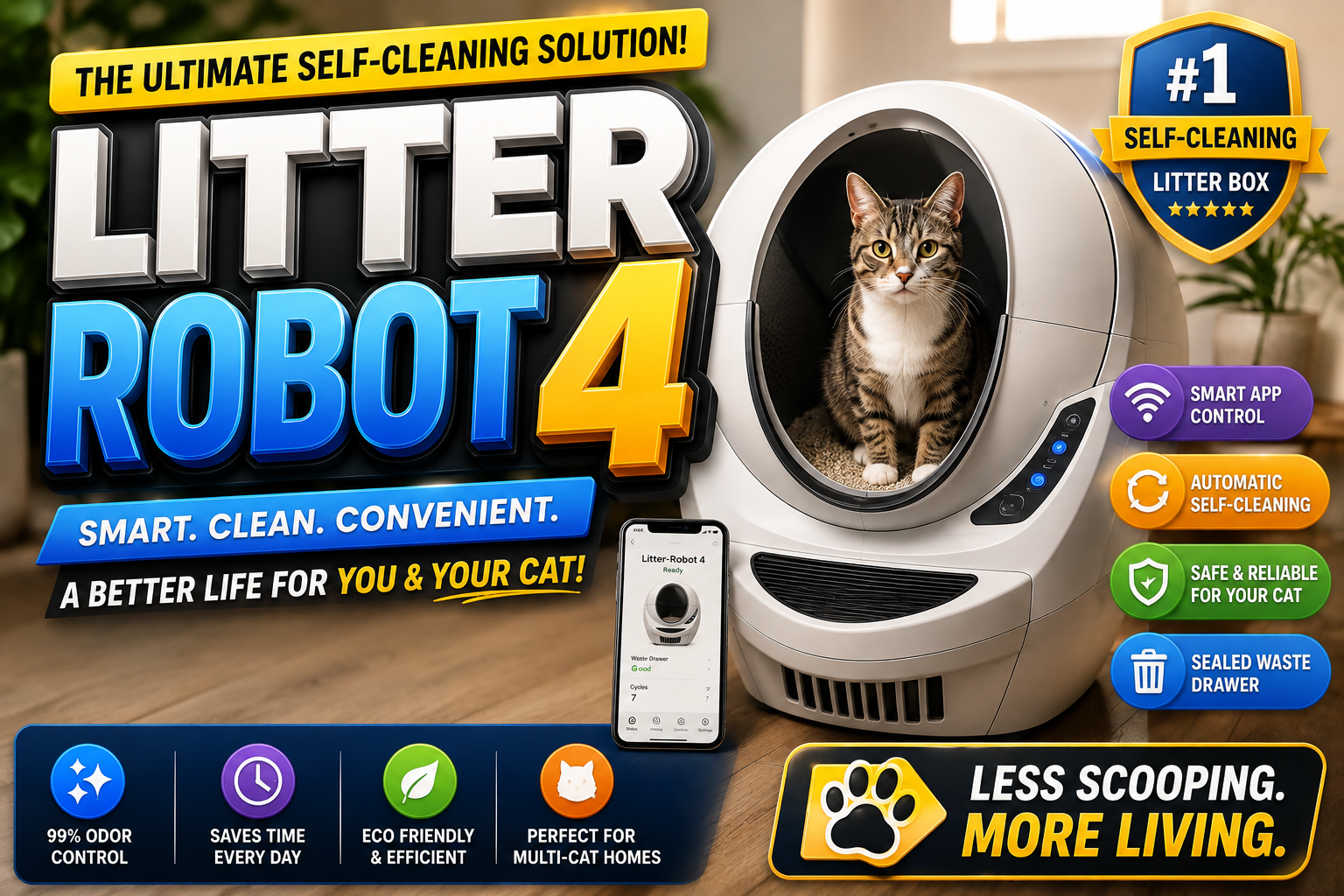
I still remember the exact moment the old way of dealing with the litter box stopped working for me. It was a Tuesday night, late, after a long day. One of my cats had decided the partially scooped box was optional, and the other had tracked enough litter into the hallway that it looked like a small beach had washed up outside the bathroom. I stood there holding a plastic scoop, breathing through my mouth, and thought: there has to be a better system than this. That was the night I finally ordered a Litter Robot 4.
If you live with cats, you already know the routine. Daily scooping. The smell that somehow escapes even the best covered boxes. The guilt when you skip a day. The tracking. The argument with yourself about whether four boxes for three cats is really necessary. The Litter Robot 4 is Whisker’s attempt to end most of that. It is not a perfect machine, and it is not cheap, but after months of living with it I can say it is one of the few products that genuinely changed a daily chore into something I barely think about. This piece walks through what the unit actually does, how it feels to use day after day, where it shines, where it frustrates, and whether the price makes sense for different kinds of households.
What the Litter Robot 4 Is and How the Cleaning Cycle Works
At its core the Litter Robot 4 is a large, open-front globe that sits on a base containing a sealed waste drawer. Your cat steps into the globe through a wide, roughly 15.75-inch opening, does its business in the clumping litter, and leaves. After a delay (default is seven minutes, adjustable from three to thirty), the globe slowly rotates. Clean litter falls through a patented sifting screen while the clumps stay on the screen and drop into the drawer below. The globe then returns to the home position with a fresh layer of litter ready for the next visit.
The motion is quiet—around 33 decibels according to independent tests, noticeably quieter than the previous generation. Sensors (a combination of weight and laser-based OmniSense technology) detect when a cat enters and exits. They also monitor litter level and how full the waste drawer is. The system is designed to pause or reverse if a cat re-enters mid-cycle, which is an important safety feature for multi-cat homes or curious kittens.
You still empty the waste drawer, of course. In a single-cat household that might happen once a week. With two or three cats it is more often, but you are dealing with a sealed, carbon-filtered drawer rather than open clumps. The unit comes mostly assembled. You unbox it, place it on a firm, level surface near an outlet (it does not like soft carpet or being pushed against a wall), add clumping litter to the fill line, plug it in, and connect it to the Whisker app over 2.4 GHz Wi-Fi. Most people are up and running in under ten minutes.
Getting Cats to Accept the New Setup
This is the part many reviews gloss over. Cats are creatures of habit. A large plastic sphere that occasionally moves can look suspicious. Some cats walk in the first day. Others take a week or two of patience. A few never fully trust it and prefer a traditional box left nearby as a backup during the transition.
Practical steps that helped in my house: leave the old box out for several days while the Litter Robot 4 sits nearby with the same litter. Sprinkle a little used litter from the old box into the globe so the scent is familiar. Keep the automatic cycle off at first and trigger cleanings manually so the cats see the motion only after they have already accepted the space. Offer high-value treats near the unit. Avoid forcing the issue. Most cats eventually prefer the consistently clean litter surface, but rushing the process creates unnecessary stress for everyone.
Once they accept it, the daily experience changes. You stop scooping. You stop smelling the box from across the room. You check the app occasionally to see who used it and whether the drawer needs attention. The mental load drops more than I expected.
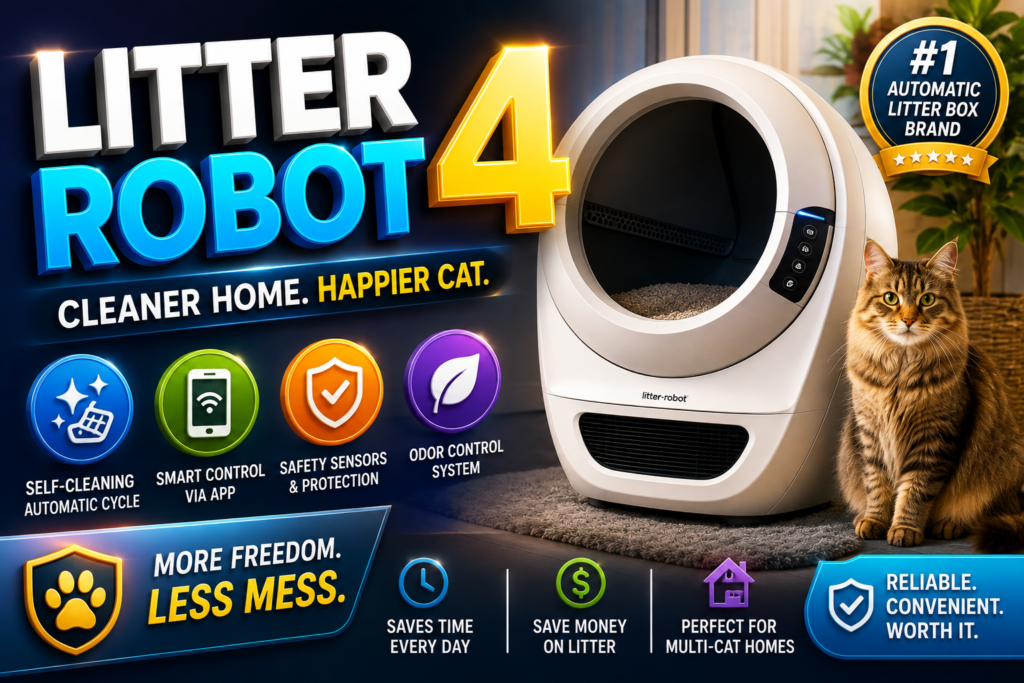
Daily Life With the Litter Robot 4
The biggest practical win is odor control. The waste drawer seals tightly and uses a carbon filter. Even when the drawer is approaching full, the smell stays mostly contained. That alone justified the purchase for me. Litter tracking is reduced because the sifting process keeps the bed cleaner and the optional fence attachment (highly recommended) catches most of the kicked litter. Dust is lower than with the previous model thanks to the LowDust screen design.
The Whisker app is genuinely useful rather than gimmicky. It shows recent visits, approximate individual cat weights (helpful for multi-cat households trying to monitor health trends), litter level, and drawer fullness. You can adjust cycle delay, set sleep or do-not-disturb hours, and receive alerts when the drawer needs emptying or sensors need a quick wipe. Firmware updates arrive through the app. For households with more than one cat, the weight tracking, while not laboratory-precise, is good enough to notice when one cat’s habits change.
Maintenance is straightforward but not zero. Empty the drawer when the app or indicator light tells you. Wipe the laser sensors in the bezel periodically with a dry cotton swab or cloth—dust is the most common cause of false alerts. Every one to three months, depending on the number of cats, remove the globe and give it a more thorough wash with an enzymatic cleaner, then dry completely before reassembling. Replacement carbon filters and waste liners are ongoing costs, though many people use regular trash bags successfully.
Multi-Cat Households and Size Considerations
Whisker rates the Litter Robot 4 for up to four cats. In practice, two or three is more comfortable for most people because the waste drawer fills faster and the unit sees more traffic. The interior is roomy enough for larger cats; the wider entry compared with the Litter-Robot 3 helps bigger or older cats feel less confined. Minimum recommended weight for automatic mode is three pounds. Smaller kittens can use it in manual mode until they grow.
Space is the other real constraint. The unit measures roughly 22 by 27 by 29.5 inches and weighs about 24 pounds empty. It needs clearance around it and access to power. It will not disappear into a corner the way a traditional box can. If your living situation is tight, measure carefully and consider whether the odor and labor savings outweigh the footprint.
Where the Litter Robot 4 Falls Short
No product is perfect. The price—typically $699 before any promotions or bundles—is steep. You are paying for the mechanical reliability, the app ecosystem, the quiet operation, and the odor sealing. Cheaper automatic boxes exist, but most reviewers who have tested both categories note that the Litter Robot 4 still leads on consistency and smell control.
Sensors can be overly sensitive to dust. Occasional false “clean sensors” alerts are common and usually fixed with a quick wipe. The scale is useful for trends but not perfectly accurate day to day. Some litters work better than others; lightweight or non-clumping formulas can cause problems. The unit needs a firm, level surface. And while the cleaning cycle is quiet, a cat that is mid-cycle and decides to re-enter can still create a temporary mess if the sensors do not catch it instantly.
Warranty is one year standard, with an option to extend. Customer support has a mixed reputation online—some people report excellent remote diagnostics and parts availability, others report longer wait times. Replacement parts are available, which is better than many competing systems that treat the whole unit as disposable.
Practical Tips From Extended Use
Use a good medium-weight clumping clay litter. Keep the litter level at the marked line—too much increases the chance of over-torque errors. Place a litter mat in front of the opening. Empty the drawer before it is completely full to avoid compaction issues. Clean the sensors on a schedule rather than waiting for alerts. If you travel, the app still lets you monitor from afar, and a trusted neighbor or pet sitter only needs to empty the drawer and check the litter level.
Accessories worth considering: the fence or mega fence to cut tracking, the LitterHopper if you want automatic litter top-offs (compatible with this model), and extra carbon filters. Bundles sometimes bring the effective price down and include starter supplies.
Is the Litter Robot 4 Worth the Money?
For a single-cat household that is already happy scooping every day, maybe not. For anyone who finds the daily chore genuinely draining, has mobility issues, is pregnant and advised to avoid litter dust, lives with multiple cats, or simply values a cleaner-smelling home, the answer leans yes. The combination of reliable sifting, strong odor sealing, quiet operation, and useful app data is hard to match at the moment. Many long-term owners report the unit lasting several years with basic care, which spreads the cost out.
Compare it with the older Litter-Robot 3 and the upgrades are clear: quieter cycle, better sensors that work with smaller cats, improved waste drawer capacity and sealing, wider entry, and tighter integration with the app. Newer models in the lineup add features, but the Litter Robot 4 remains a strong, field-tested choice that many testers still recommend as the practical sweet spot.
Final Thoughts
Living with cats means accepting a certain amount of mess. The Litter Robot 4 does not eliminate every bit of maintenance, but it removes the most unpleasant and frequent part of it. The house smells better. The cats have a consistently clean place to go. You reclaim the time and mental energy that used to go into scooping. That is the real value.
If you are on the fence, the 90-day trial Whisker offers is worth using. Bring the unit home, introduce it carefully, and decide after living with it whether the change is meaningful for your specific household. For many people, including me, it has been one of the more practical upgrades in daily cat care.