
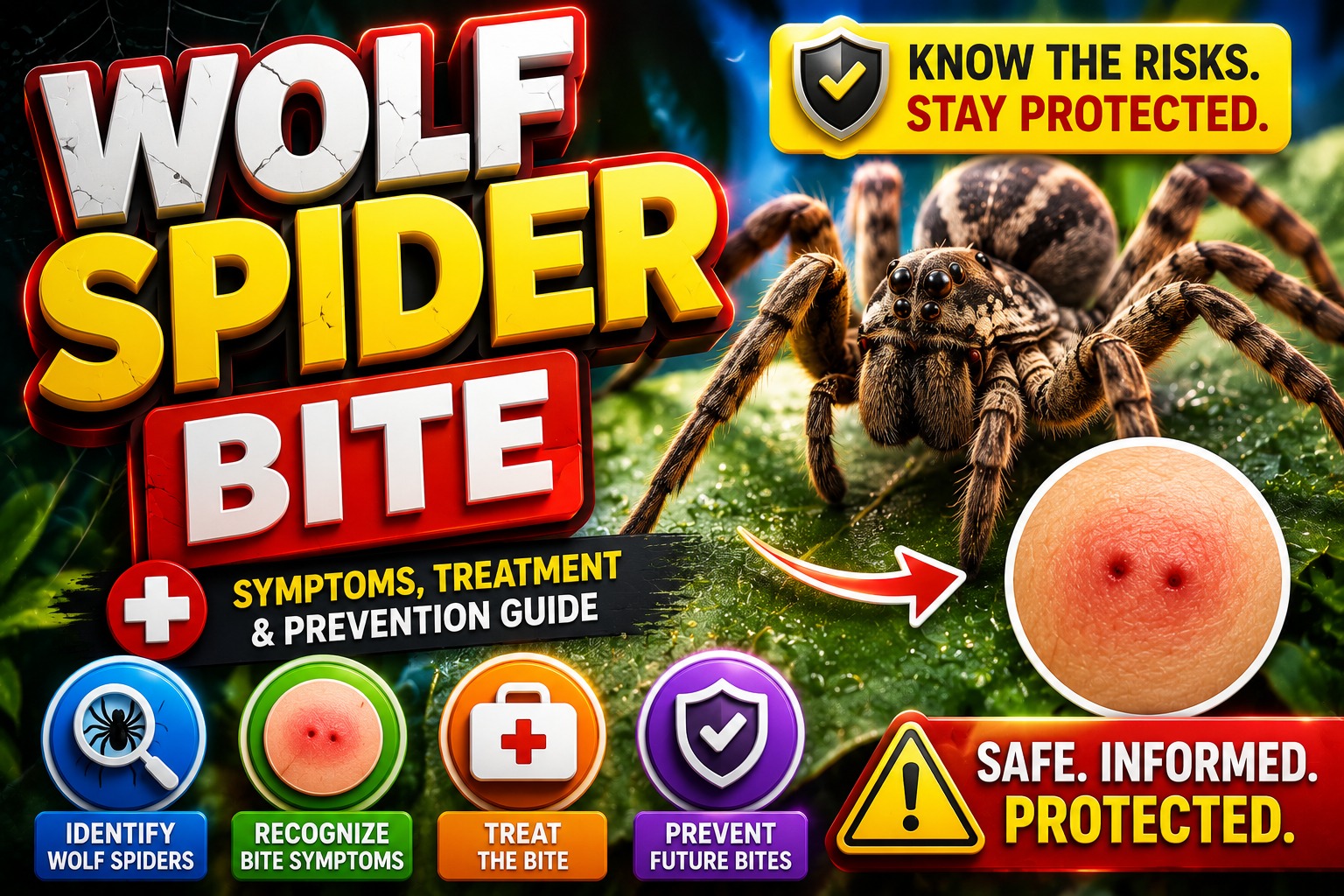
A wolf spider bite can cause concern for outdoor enthusiasts, homeowners, and anyone who encounters these common arachnids. People frequently search for information about wolf spider bite symptoms, treatment, and identification because these spiders look intimidating with their large, hairy bodies and glowing eyes at night. Understanding the difference between a wolf spider bite and other insect or spider bites is important to avoid unnecessary panic and ensure proper care. Most wolf spider bites are mild, but knowing what to expect helps you respond correctly and stay safe during outdoor activities.
What Is a Wolf Spider Bite?
A wolf spider bite occurs when one of these ground-hunting spiders punctures the skin with its fangs, usually in self-defense. The bite itself is typically a defensive reaction rather than an aggressive attack.
What is a wolf spider?
Wolf spiders belong to the family Lycosidae. They are robust, hairy hunters that do not spin webs to catch prey. Instead, they actively chase insects on the ground. Adults range from about half an inch to two inches in body length. Their coloration is usually mottled brown, gray, or black with various stripes and patterns that provide excellent camouflage. They have eight eyes arranged in three rows, with two large middle eyes that reflect light and create a distinctive eyeshine at night.
Where wolf spiders are commonly found
These spiders live on every continent except Antarctica. In North America and elsewhere they thrive in gardens, lawns, under rocks and logs, leaf litter, firewood piles, basements, garages, sheds, and around doors and windows. Some species dig silk-lined burrows while others wander freely. They prefer ground-level habitats and become more active at night or on overcast days.
Why wolf spiders bite
Wolf spiders are not aggressive toward humans. A wolf spider bite almost always happens when the spider feels trapped or threatened—for example, when someone reaches into a woodpile, puts on a shoe that has been left outside, or accidentally presses the spider against the skin. Females carrying egg sacs can be especially defensive.
How common wolf spider bites are
True confirmed wolf spider bites are relatively uncommon because the spiders prefer to flee. Many suspected cases turn out to be other insect bites or skin conditions. When bites do occur, they are usually mild.
Who is most likely to encounter wolf spiders
Gardeners, hikers, campers, people who work outdoors, and anyone living in rural or suburban areas with yards, woodpiles, or basements are most likely to meet them. Children playing outside and homeowners cleaning storage areas also have higher encounter rates.
Key Features of a Wolf Spider Bite
Recognizing the typical features of a wolf spider bite helps distinguish it from more serious spider bites.
Common symptoms
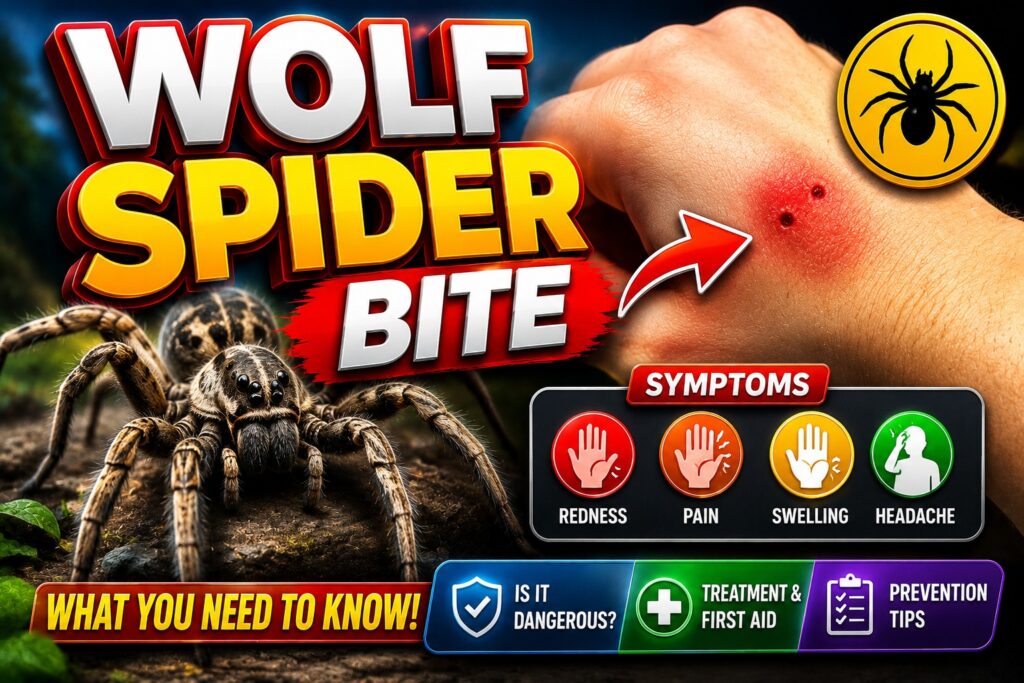
Most people experience mild to moderate pain at the moment of the bite, followed by redness, mild swelling, and itching. The sensation is often compared to a bee sting. Some notice two small puncture marks from the fangs.
Appearance of the bite
A wolf spider bite usually looks like a red, raised bump similar to other insect bites. Fang marks may be visible as two tiny dots. In rare cases minor blistering can appear, but necrosis (tissue death) does not occur.
Pain level
Pain is generally sharp at first but fades within minutes to a few hours. It is rarely severe or long-lasting.
Swelling and redness
Localized swelling and redness develop quickly and typically peak within the first day. They usually subside within 24–48 hours.
Itching and irritation
Itching is common and can last a few days as the area heals. Scratching should be avoided to prevent secondary infection.
Healing timeline
Most wolf spider bite healing stages progress smoothly. Initial pain and redness improve within hours to a day. Residual itching and mild tenderness may linger for several days. Full resolution typically occurs within a week without complications.
How a wolf spider bite differs from bites by other spiders
A key comparison is wolf spider bite vs brown recluse. Brown recluse bites can sometimes lead to necrotic lesions and systemic symptoms, while a wolf spider bite remains localized and mild. Black widow bites cause intense muscle pain and systemic effects. Wolf spider venom is not medically significant for healthy people and does not produce the severe tissue damage associated with recluse spiders.
How a Wolf Spider Bite Affects the Body
Step-by-step explanation
When fangs penetrate the skin, a small amount of venom is injected. The mechanical puncture causes immediate pain. Venom components may produce mild local inflammation.
What happens immediately after the bite
Sharp stinging or pinprick pain occurs. Redness and slight swelling begin within minutes. Some people feel a brief numbness.
The body’s natural response
The immune system responds with localized inflammation. Histamine release can cause itching. White blood cells work to clear any foreign material and prevent infection.
Typical healing process
The wound closes quickly. Inflammation decreases over 24–72 hours. Skin returns to normal appearance within days to a week in uncomplicated cases.
Simple overview of the venom and its effects
Wolf spider venom is primarily cytotoxic and designed for small prey. In humans it produces only mild local effects. It is not neurotoxic or necrotic in the way that some other spider venoms are. Systemic symptoms such as nausea or headache are rare and usually mild.
When symptoms usually improve
Most symptoms of a wolf spider bite improve significantly within 24 hours. Complete resolution is common within a few days. Monitoring is still advised.
Benefits of Understanding Wolf Spider Bite Symptoms
Knowing the typical pattern of a wolf spider bite offers several practical advantages.
- Helps identify bites correctly and reduces misdiagnosis.
- Reduces unnecessary panic when a red bump appears after outdoor activity.
- Encourages proper first aid instead of overreaction or neglect.
- Helps determine when medical care is truly needed versus simple home care.
- Improves awareness and prevention habits around potential spider habitats.
- Supports safer outdoor activities by teaching recognition and avoidance.
People who understand wolf spider bite symptoms are better prepared and less likely to confuse a mild reaction with a more serious medical issue.
Common Wolf Spider Bite Symptoms
Typical wolf spider bite symptoms include:
- Mild pain similar to a bee sting that often fades quickly.
- Redness around the puncture site.
- Mild to moderate swelling that stays localized.
- Itching that may persist for a few days.
- Localized tenderness to the touch.
- Rare allergic reactions such as hives, facial swelling, or breathing difficulty (seek emergency care if these appear).
- A straightforward healing process with progressive improvement over several days.
Severe symptoms are uncommon. If redness spreads rapidly, fever develops, or the area shows signs of infection, professional evaluation is necessary.
How to Treat a Wolf Spider Bite
Wolf spider bite treatment focuses on basic wound care and symptom relief. Most cases respond well to home measures.
- Clean the bite with soap and water as soon as possible to reduce infection risk.
- Apply a cold compress or ice pack wrapped in a cloth for 10–15 minutes at a time to limit swelling.
- Elevate the affected area if it is on an arm or leg to help reduce swelling.
- Avoid scratching the area; keep nails short and consider a light bandage.
- Use over-the-counter pain relievers such as ibuprofen or acetaminophen if needed, and antihistamines for itching if appropriate for you.
- Monitor symptoms closely for the first 24–48 hours.
- Seek medical attention if symptoms worsen, signs of infection appear (increasing redness, warmth, pus, fever), or if allergic symptoms develop.
- Tips for first-time treatment: stay calm, photograph the area for reference, and note the time of the bite. Keep the area clean and dry.
These steps constitute effective wolf spider bite first aid for the vast majority of cases.
Pros and Cons of Home Care for a Wolf Spider Bite
Pros
- Most bites improve with basic first aid and require no professional intervention.
- Easy home care for mild symptoms using items most people already have.
- Usually heals without complications when kept clean.
- Simple and inexpensive treatment compared with unnecessary emergency visits.
Cons
- Symptoms can be mistaken for other conditions such as infection, allergic dermatitis, or bites from different spiders.
- Allergic reactions, while uncommon, can occur and may escalate quickly.
- Infection is possible if the bite is not properly cleaned or is repeatedly scratched.
- Some bites require professional medical evaluation, especially in children, the elderly, or people with compromised immune systems.
Common Issues and Troubleshooting
Is it really a wolf spider bite?
Without seeing the spider, definitive identification is difficult. Many “spider bites” are actually from other insects, ticks, or skin infections. Look for the combination of two puncture marks, mild localized reaction, and a history of possible contact. When in doubt, treat the wound and consult a healthcare provider.
Bite becoming more painful
Mild pain should decrease. Increasing pain after the first day may signal infection or a different cause. Seek care if pain intensifies.
Persistent swelling
Swelling that does not improve after 48 hours or that spreads warrants medical review.
Signs of infection
Watch for expanding redness, warmth, red streaks, pus, fever, or swollen lymph nodes. These require prompt evaluation and possible antibiotics.
Allergic reactions
Rare but serious. Difficulty breathing, facial or throat swelling, hives, rapid heartbeat, dizziness, or fainting are emergencies—call emergency services immediately.
When to visit a healthcare provider
Contact a doctor if symptoms worsen after 24–48 hours, if you have underlying health conditions, if the bite is on the face or near a joint, or if you are simply uncertain. Are wolf spider bites dangerous? For healthy individuals the answer is almost always no, but individual reactions vary.
Provide practical, evidence-based guidance and emphasize that severe symptoms require prompt medical attention. Never rely solely on online information for diagnosis.
Future of Wolf Spider Bite Research
Research and public health efforts continue to improve understanding and response.
Improved public education campaigns help people distinguish harmless wolf spiders from medically important species. Advances in spider identification, including better field guides, apps, and DNA tools, reduce misidentification. Better first-aid awareness through community programs lowers unnecessary healthcare visits. Ongoing venom research examines the exact composition of Lycosidae venom and potential medical applications. Public health resources increasingly provide clear, evidence-based guidance on common bites. Future trends in bite diagnosis and treatment include more accurate clinical algorithms, rapid point-of-care tests for infection, and refined recommendations that reduce overtreatment of mild cases such as a typical wolf spider bite.
Conclusion
A wolf spider bite is usually a mild event characterized by short-lived pain, localized redness, mild swelling, and itching that resolves with basic care. Understanding wolf spider bite symptoms, proper wolf spider bite treatment, and the difference between a wolf spider bite and more serious bites such as those from a brown recluse empowers people to respond calmly and correctly. Most wolf spider bites improve with simple first aid—cleaning, cold compress, and over-the-counter relief—while persistent or severe symptoms should be evaluated by a healthcare professional. Are wolf spider bites dangerous? In the overwhelming majority of cases they are not.
Learn how to identify wolf spider bite symptoms, practice safe spider prevention outdoors, and seek medical advice whenever you are uncertain about a bite. Awareness and simple precautions keep outdoor activities enjoyable and safe.