
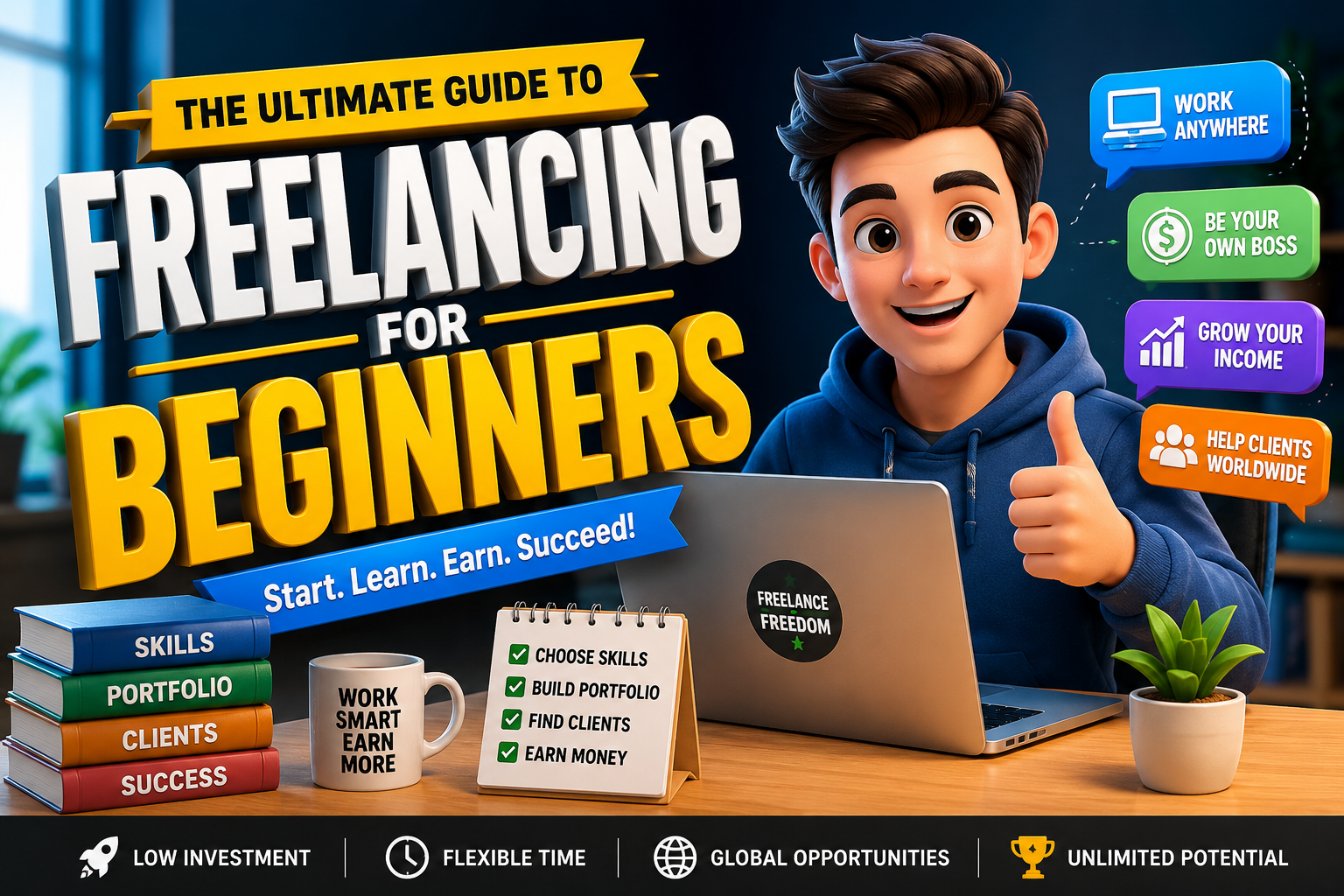
I still remember the exact moment I decided to try freelancing. It was a rainy Tuesday evening, I was staring at my laptop after another soul-crushing day at a job that paid the bills but slowly killed my spirit. My friend had just casually mentioned how she was making decent money writing blog posts for small businesses—on her own schedule, from her couch, in pajamas. It sounded too good to be true. But that spark of curiosity led me down a path I’ve now walked for over a decade.
If you’re sitting there wondering whether freelancing for beginners is realistic or just another online pipe dream, you’re in the right place. This isn’t a glossy “make money while you sleep” fantasy. It’s the real, messy, rewarding journey of turning skills you already have (or can build) into sustainable income and genuine freedom. By the end of this article, you’ll have a practical roadmap, honest warnings, and the confidence to take your first real steps without falling flat on your face.
Why Freelancing Appeals to So Many Beginners Right Now
The traditional career ladder feels broken for a lot of people. Promotions are slow, office politics are exhausting, and remote work showed us that location doesn’t have to tie us down. Freelancing for beginners offers something different: control. You choose your projects, your clients, and—most importantly—your hours.
But let’s be honest. The appeal also comes with serious friction. Irregular income, no built-in benefits, and the constant need to hunt for work can feel terrifying at first. I’ve had months where I earned more than my old salary and others where I questioned every decision. That rollercoaster is normal. What matters is learning to build systems that smooth out the ride.
Getting Your Mindset Right Before You Start
The biggest mistake most beginners make isn’t technical—it’s mental. They treat freelancing like a side hustle forever instead of a real business. If you approach freelancing for beginners with the seriousness of launching a company (because that’s exactly what it is), you’ll progress much faster.
Start by auditing your strengths. What are you naturally good at that other people struggle with or don’t enjoy? Copywriting, graphic design, virtual assistance, web development, social media management, video editing—there are dozens of viable paths. The key is picking something with market demand.
I began with writing because I’d always been the person friends asked to proofread their emails and cover letters. It wasn’t glamorous, but it was a skill I could monetize quickly.
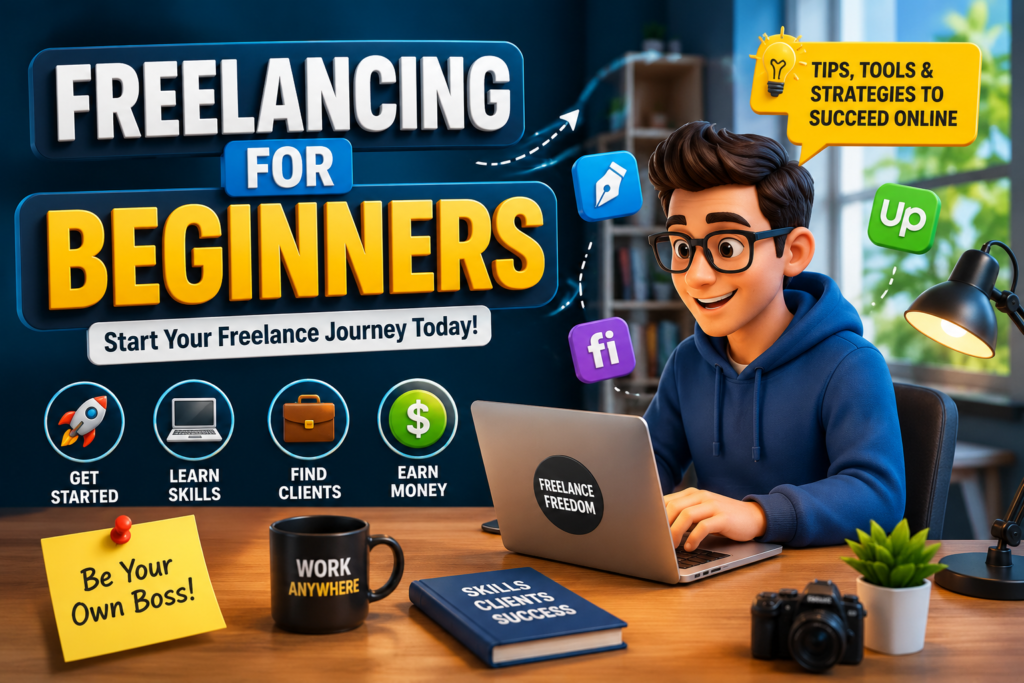
Actionable tip: Spend one focused afternoon listing every skill you have, even seemingly small ones. Then research what people actually pay for those skills on platforms like Upwork, Fiverr, and LinkedIn. You might be surprised how quickly “basic” abilities translate into paid work.
Essential Skills and Tools for Freelancing Newcomers
You don’t need to be an expert on day one, but you do need to be competent enough to deliver results.
For most freelancing for beginners, focus on:
- Core service delivery: Whatever you offer, practice until you can produce solid work consistently.
- Communication: Clients hire people they trust. Clear, proactive updates win repeat business.
- Basic business operations: Invoicing, contracts, time tracking, and simple accounting.
Tools that genuinely help without overwhelming you:
- A professional email address (not Gmail if possible)
- Free or low-cost project management (Trello, Notion, or even Google Docs)
- Payment processors like PayPal or Wise
- A simple portfolio site (Carrd or WordPress work wonders)
I wasted months using scattered tools before realizing a central system changed everything. Now, everything lives in one Notion workspace. It sounds boring, but it saves hours every week.
Finding Your First Clients (Without Burning Out)
This is where most beginners get stuck. They create a profile on freelance sites and wait for magic. It rarely works that way.
Instead, start with your existing network. Tell friends, former colleagues, and family what you’re offering and how you can help them or people they know. One of my earliest clients came from a cousin who needed help updating her small business website. That project led to referrals that kept me busy for months.
Online, focus on niches rather than general services. “I help coaches with email marketing” performs better than “I’m a writer for hire.” Specificity builds trust.
Realistic timeline: Expect your first paid gig within 4-8 weeks if you’re consistent with outreach. Some people land something in days; others take longer. The key is daily action—sending messages, improving your profile, creating sample work.
Pricing Yourself Without Selling Yourself Short
Pricing is one of the hardest parts of freelancing for beginners. New freelancers often undervalue themselves out of fear of losing opportunities.
My rule of thumb: Start at a rate that feels slightly uncomfortable but justifiable. For writing, I began around $30-40 per hour. Within a year, I was charging $80-100+ as my portfolio and confidence grew.
Alternatives to hourly:
- Project-based pricing (great for defined scopes)
- Retainers (steady monthly income)
- Value-based pricing (once you understand client ROI)
Always have a contract. Even a simple one-page agreement outlining scope, payment terms, revisions, and timelines protects both sides. I learned this the hard way after a client disappeared owing me $800.
Building Systems That Let You Scale
The transition from chaotic beginner to sustainable freelancer happens when you create repeatable processes.
Track your time religiously for the first few months. You’ll discover which tasks eat your day and which actually move the needle. I use Toggl and was shocked to see how much time I spent on non-billable admin work.
Batch similar tasks—content creation on Mondays, client calls on Tuesdays, marketing on Wednesdays. This single change dramatically improved my output and reduced burnout.
Also, build in buffers. Life happens. Clients ghost. Projects expand. Having financial and time cushions makes freelancing for beginners sustainable long-term.
Common Pitfalls That Derail New Freelancers
Let me save you some pain by sharing mistakes I’ve made and seen repeatedly:
- Saying yes to every project (scope creep is real)
- Neglecting your own marketing while busy with client work
- Comparing your Chapter 1 to someone else’s Chapter 20 on social media
- Ignoring taxes and setting aside nothing for self-employment obligations
The isolation can also hit hard. Without office colleagues, it’s easy to feel disconnected. Combat this by joining communities—freelance Facebook groups, Slack channels, or local meetups. Having peers who understand the unique challenges is invaluable.
Growing Beyond the Beginner Stage
Once you’ve landed consistent work, the game changes. You start raising rates, specializing further, and perhaps even hiring subcontractors.
Many successful freelancers eventually create digital products, courses, or agencies. The foundation you build in those early freelancing for beginners months determines how high you can climb.
I now spend more time on strategy and high-level work than execution. That evolution didn’t happen overnight. It came from treating every project as a learning opportunity and consistently delivering more than expected.
Real Talk: Is Freelancing Right for You?
Not everyone thrives in this model. If you need structure, steady paychecks, and clear boundaries between work and life, a traditional job might serve you better. But if you crave variety, autonomy, and the potential for uncapped earnings, freelancing could be transformative.
The beauty is you don’t have to go all-in immediately. Many people start part-time while keeping their day job. That safety net reduces pressure and lets you experiment.
Your Next Steps Today
Don’t overthink this. Pick one small action:
- Define your core service and ideal client
- Create or update your online profiles
- Reach out to five people in your network
- Set up basic business tools
- Commit to learning one new skill this month
Freelancing for beginners isn’t about being perfect from day one. It’s about starting messy, learning quickly, and building momentum through consistent effort.
The freedom, the variety, the ability to work from anywhere—these aren’t just marketing slogans. They’re real possibilities when you treat this seriously and approach it with patience and grit.
I won’t pretend it’s easy. Some days you’ll question everything. But on the good days, when a client raves about your work or you finish a project that truly helped someone’s business, you’ll feel something most traditional jobs never deliver: genuine ownership of your time and talent.
So if you’ve been dreaming about this path, stop waiting for the perfect moment. The imperfect one you’re in right now is good enough to begin.