
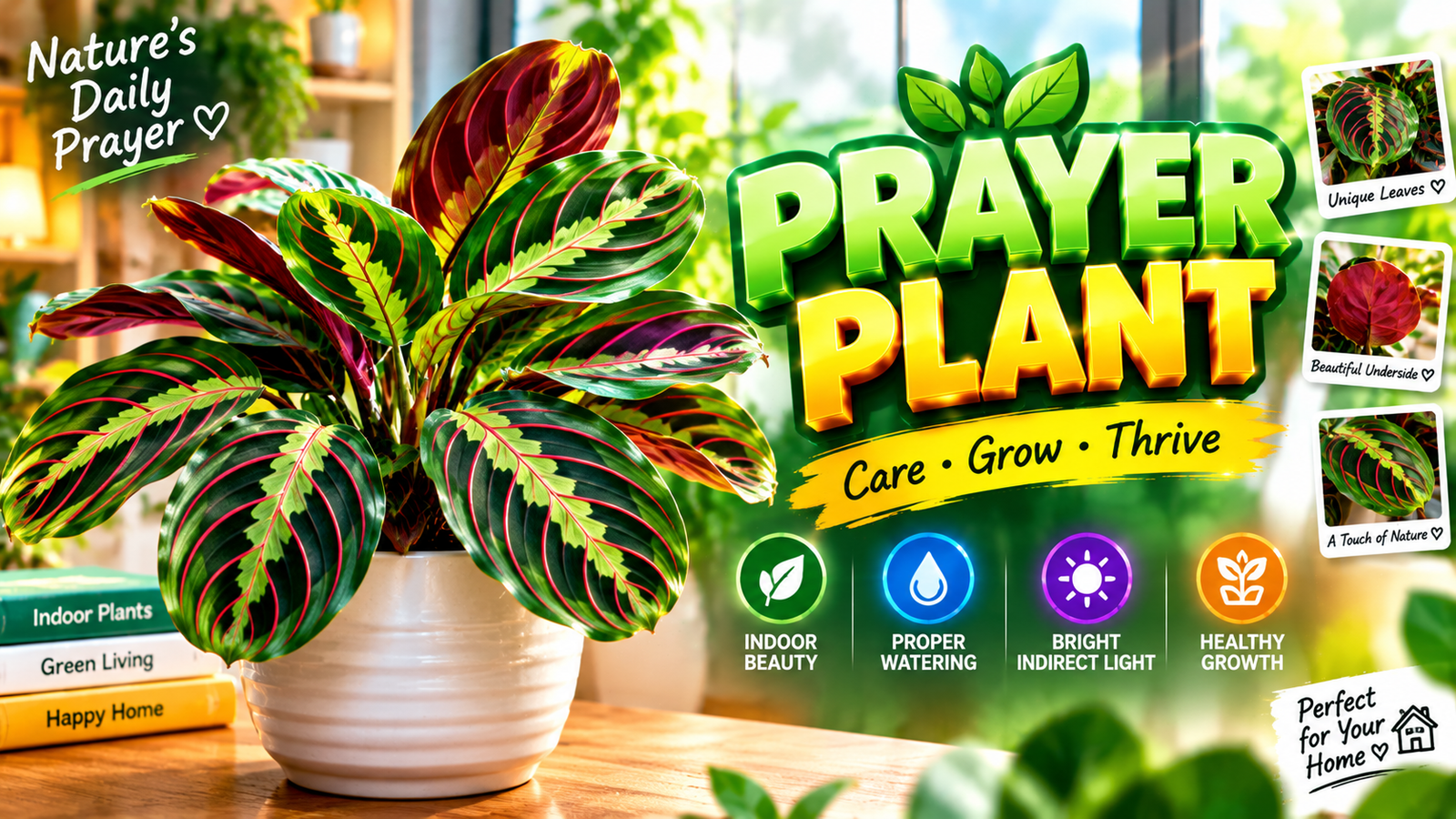
You’ve brought home a prayer plant because of those striking leaves—deep green with bold veins or spots that somehow look painted on. Then night falls, and the leaves slowly lift upward like hands pressed together. By morning they’re flat again. That daily movement is the main reason people fall for Maranta leuconeura. It’s also the first clue that this plant is telling you something about its needs.
This guide focuses on what actually keeps a prayer plant looking good in a typical home, not a greenhouse. You’ll get clear answers on light, water, humidity, soil, and the most common problems (yellow leaves, brown tips, stalled movement) so you can fix issues before they become permanent.
What a Prayer Plant Really Is
The prayer plant is Maranta leuconeura, a member of the Marantaceae family native to the understory of Brazilian tropical forests. It stays relatively compact indoors—usually 6–15 inches tall and wide—with oval leaves that show dramatic patterns depending on the variety.
Popular forms include:
- Maranta leuconeura ‘Erythroneura’ (red vein or herringbone) – bright red veins against dark green
- Maranta leuconeura var. kerchoveana (rabbit’s foot or rabbit tracks) – green leaves with dark blotches that look like footprints
- Other cultivars with silver, lime, or more subtle markings
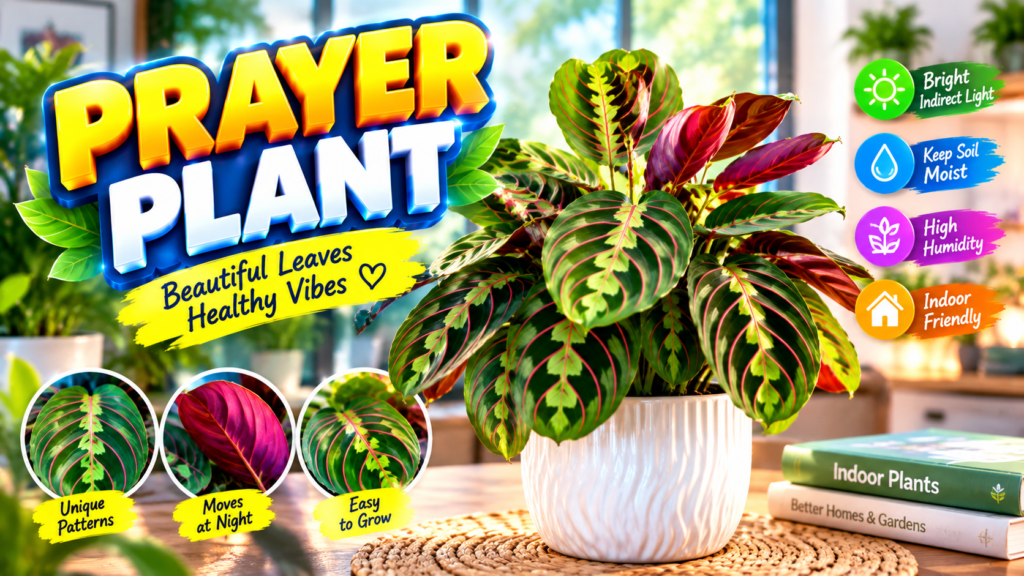
The leaves fold upward at night (nyctinasty) and open during the day. This movement is a response to light and is controlled by specialized joints at the base of each leaf. A plant that stops “praying” is usually stressed—most often by low light, temperature swings, or inconsistent moisture.
Most sources list prayer plants as non-toxic to cats and dogs, making them a safer choice for pet households than many other tropicals.
Light: Bright Indirect Is Non-Negotiable
Prayer plants evolved under a forest canopy. They need bright, filtered light but burn quickly in direct sun.
Best spots: East-facing window, or a few feet back from a south- or west-facing window with a sheer curtain. North windows can work if the room is otherwise bright.
Too little light causes faded patterns, leggy growth, and reduced leaf movement. Too much light bleaches the colors and scorches the edges. Rotate the pot a quarter turn every few weeks so growth stays even
Watering: Moist, Never Soggy or Bone-Dry
This is where most prayer plants fail. The roots want consistent moisture but hate sitting in water.
- Check the top inch of soil. Water thoroughly when it feels just dry to the touch.
- Use room-temperature, filtered, distilled, or rainwater when possible. Tap water high in fluoride or chlorine often causes brown tips.
- Empty the saucer after watering so the pot never sits in standing water.
- In winter, when growth slows, let the soil dry a bit more between waterings.
Overwatering leads to yellow leaves and root rot. Underwatering produces crispy edges and curled leaves. The goal is even moisture, not a strict calendar schedule.
Humidity and Temperature
These plants prefer 50–70% humidity. Most homes, especially with heating or air conditioning running, sit lower. Brown, crispy leaf edges are the classic sign of dry air.
Practical ways to raise humidity without constant misting:
- Group plants together
- Use a pebble tray with water (keep the pot above the water line)
- Run a small humidifier nearby
- Place the plant in a naturally humid room such as a bathroom with good light
Ideal temperature range is 65–80°F (18–27°C). Avoid cold drafts, heating vents, and temperatures below about 60°F. Sudden drops or cold windowsills stress the plant and can stop the praying movement.
Soil, Pot, and Fertilizer
Use a well-draining, slightly acidic mix that holds some moisture but does not compact. A standard houseplant potting mix amended with perlite or orchid bark works well. Some growers prefer a blend of peat or coco coir, perlite, and a bit of bark for better aeration.
Choose a pot only 1–2 inches larger than the current root ball. Prayer plants prefer being slightly root-bound; oversized pots hold too much water and encourage rot. Terracotta helps excess moisture evaporate.
Fertilize lightly during the growing season (spring through early fall) with a balanced liquid houseplant fertilizer diluted to half or quarter strength every 2–4 weeks. Skip fertilizer in winter. Over-fertilizing causes salt buildup and burned tips.
Common Problems and Fixes
Yellow leaves
Most often overwatering or poor drainage. Check roots if the soil stays wet. Other causes include cold temperatures, low light, or natural aging of older leaves. Remove yellow leaves at the base.
Brown tips or edges
Usually low humidity, fluoride in tap water, or inconsistent watering. Switch to filtered water and increase humidity.
Leaves not folding at night
Often insufficient light, temperature stress, or overall weak health. Improve conditions and the movement usually returns.
Pests
Spider mites and mealybugs appear in dry conditions. Wipe leaves regularly and treat with insecticidal soap if needed. Good humidity and airflow help prevent them.
Root rot
Soft, mushy stems and a sour smell from the soil. Remove the plant, trim black or soft roots, and repot in fresh, well-draining mix. Water less frequently afterward.
FAQ
Why do prayer plant leaves fold up at night?
It is a natural response to light cycles called nyctinasty. The leaves raise at dusk and lower at dawn. Consistent light and healthy conditions keep the movement strong.
Are prayer plants hard to care for?
They are intermediate. The main challenges are consistent moisture and humidity. Once you dial in watering and avoid dry air or direct sun, they are relatively straightforward.
Can I put my prayer plant in low light?
It tolerates lower light better than many tropicals, but patterns fade and growth slows. Bright indirect light produces the best color and movement.
How often should I water a prayer plant?
When the top inch of soil feels dry. Frequency depends on light, temperature, humidity, and pot size—often once a week in active growth, less in winter.
Is the prayer plant toxic to pets?
Most reliable sources list Maranta leuconeura as non-toxic to cats and dogs. Still, discourage chewing, as any plant material can cause mild stomach upset.
Propagation and Repotting
Prayer plants are easy to propagate by division or stem cuttings in spring or summer. Division is simplest: carefully separate the rhizomes when repotting and pot each section on its own. Stem cuttings with a node can root in water or moist soil.
Repot every 1–2 years in spring when roots fill the pot or growth slows. Always use a pot with drainage holes.