I still remember the first time a client in her mid-fifties slid a small blue bottle across my desk and asked, almost sheepishly, if copper peptides were “actually worth the hype or just another fancy water.” She had tried retinoids, vitamin C serums, even a few rounds of laser, and still felt her skin looked tired in a way that no amount of sleep fixed. That conversation happened years ago. Since then I’ve watched GHK Cu peptide move from niche research circles into the routines of people who read ingredient lists the way others read menus.
If you’re here, you’re probably wondering the same thing she did: what this molecule actually does, why it seems different from other peptides, and whether it belongs in your routine. By the time you finish this piece you’ll understand the science without the jargon overload, know the realistic expectations, and have practical ways to use it—or decide it’s not for you.
What Exactly Is GHK Cu Peptide?
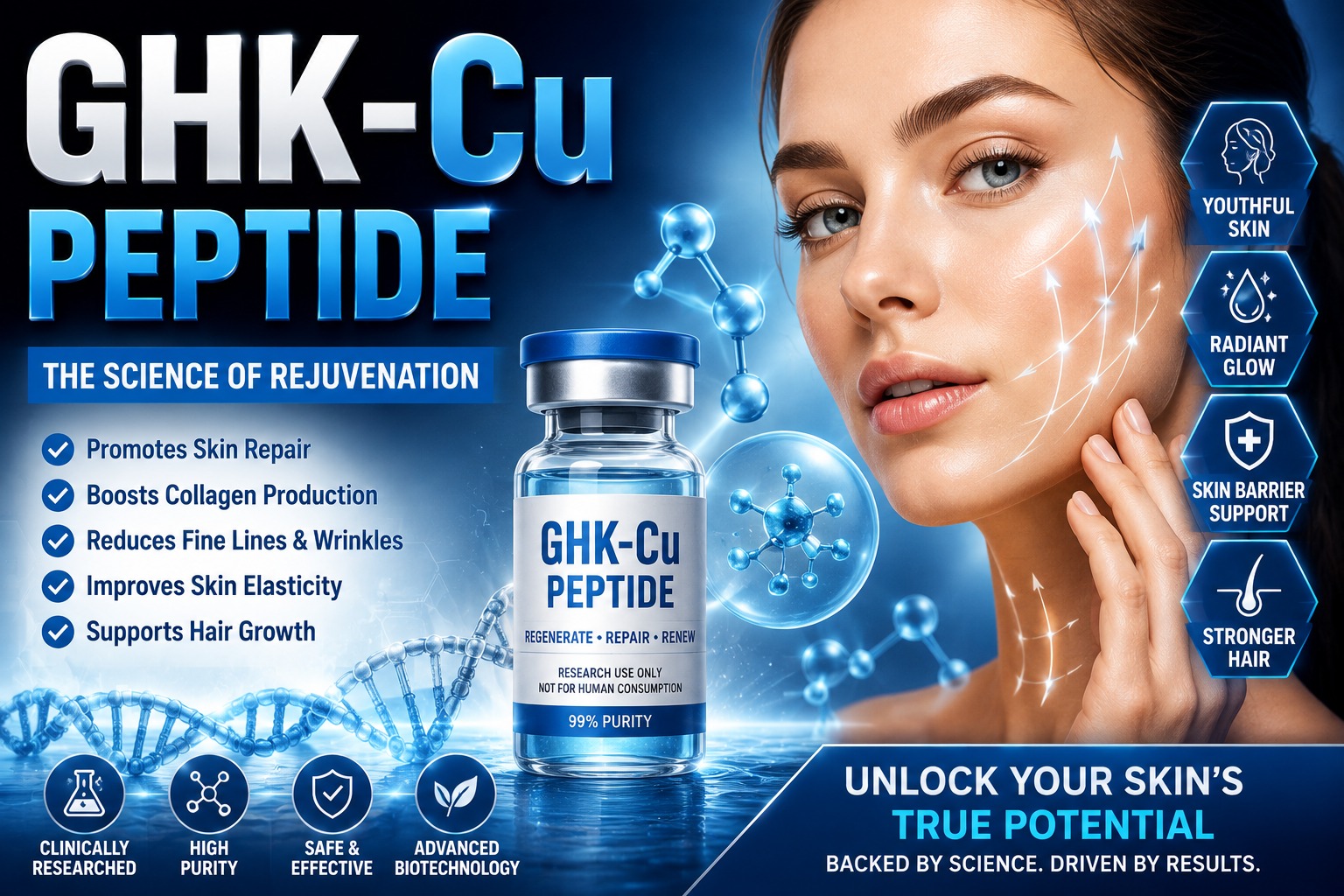
GHK Cu peptide is the copper complex of the tripeptide glycyl-L-histidyl-L-lysine. It exists naturally in human plasma, saliva, and urine. In young adults the plasma concentration sits around 200 ng/mL. By age sixty it often drops to roughly 80 ng/mL. That decline tracks closely with the visible slowing of tissue repair most of us notice in our skin, joints, and even healing speed after minor injuries.
Loren Pickart isolated it in 1973 while studying factors that seemed to rejuvenate aged liver tissue. The copper binding turned out to be central. The peptide doesn’t just carry copper; it delivers it in a form cells can use for specific enzymes while keeping the metal from running wild and generating excess free radicals. That dual role—carrier and signal—is why researchers keep returning to it.
How GHK Cu Peptide Talks to Skin Cells
Think of fibroblasts as the construction crews of the dermis. They build collagen, elastin, and the glycosaminoglycans that keep skin plump. With age those crews get slower and more easily distracted by inflammation. GHK Cu peptide appears to wake them up and give clearer instructions.
Laboratory work shows it stimulates production of collagen types I and III, elastin, and the proteoglycan decorin that helps organize collagen fibers properly. At the same time it influences matrix metalloproteinases—the enzymes that break down old matrix—so the remodeling stays balanced rather than chaotic. Angiogenesis, the growth of new tiny blood vessels, also gets a quiet boost. Better blood flow means better nutrient delivery and waste removal, which matters more than most people realize when skin starts looking dull.
The gene-expression data is the part that still surprises me. Analyses suggest GHK Cu peptide can shift the activity of more than four thousand human genes—roughly a third of the genome in some datasets. The pattern isn’t random. Repair, antioxidant defense, and DNA maintenance genes tend to rise. Inflammatory and tissue-degrading pathways often quiet down. Researchers describe it as nudging gene expression toward a more youthful baseline. That language can sound promotional, yet the breadth of the shifts is documented in peer-reviewed work.
Real-World Skin Benefits People Notice
Most of the human data comes from topical use. In controlled trials lasting eight to twelve weeks, creams and gels containing GHK Cu peptide have improved measured skin density and thickness, reduced the appearance of fine lines, and increased firmness and elasticity compared with vehicle controls. One study in women with photoaged skin reported clearer, more even-looking skin and higher patient satisfaction even when some objective scores were modest.
Collagen production measured by biopsy has increased in a majority of participants in smaller studies, sometimes matching or exceeding the response seen with standard retinoid concentrations in the same trial design. The texture changes often feel different from the smoother-but-thinner effect some people get with aggressive retinoids. Skin can feel denser, almost more “filled from within.”
Wound healing remains one of the strongest research threads. Animal models show faster closure, more organized collagen, and reduced scarring. Human cosmetic studies after procedures like laser resurfacing have noted better patient-reported recovery, though large objective differences are harder to prove in small samples. The ongoing interest in acute wound gels suggests researchers still see practical potential there.
Hair is another area where anecdotal reports outpace formal trials. Some users applying GHK Cu peptide topically or via microneedling notice less shedding and finer “baby hairs” along the hairline. The mechanism likely involves improved follicle environment and reduced local inflammation rather than any direct DHT blockade. Evidence remains limited, so expectations should stay measured.
Practical Ways to Use GHK Cu Peptide
Topical products remain the most accessible and best-supported route. Look for concentrations typically ranging from 0.1 % to a few percent in serums or creams. Stability matters. Copper peptides can be sensitive to pH and certain other actives. Many formulators keep the product slightly acidic and advise applying it after water-based serums but before heavier occlusives.
A simple evening routine that works for many people:
- Cleanse gently.
- Apply any water-based antioxidants or hydrators.
- Follow with the GHK Cu peptide product.
- Seal with a moisturizer if the formula is lightweight.
- In the morning, sunscreen is non-negotiable. New collagen is still vulnerable to UV damage.
Layering with retinoids requires care. Some people alternate nights. Others use copper peptide in the morning and retinoid at night. Direct mixing can reduce the activity of both in certain formulations, so separate application is safer until you know how your skin responds.
Injectable use exists in research and compounding circles, yet published human safety and dosing data are essentially absent. Community protocols often float 1–2 mg subcutaneous daily for short cycles, but these numbers come from convention rather than controlled trials. Anyone considering that route should understand they are operating outside the evidence base that supports topical products. Copper metabolism disorders such as Wilson’s disease are clear contraindications for any systemic approach.
Safety, Side Effects, and Realistic Limits
Topical GHK Cu peptide has a long cosmetic track record and is generally well tolerated. Mild redness, stinging, or itching can occur, especially when barrier function is already compromised. These reactions usually settle with reduced frequency or a buffered formula.
Systemic copper delivery raises different questions. Copper is essential, yet excess free copper participates in oxidative stress and has been linked in broader literature to neurodegenerative processes. The chelated form in GHK Cu peptide is far less reactive than free ions, and the copper contribution from typical research doses is modest relative to dietary intake. Still, the absence of robust pharmacokinetic and long-term safety studies in humans for injectable use is a real gap. People with known copper-handling issues should stay away. Anyone with active malignancy should discuss copper’s role in angiogenesis with their oncologist before experimenting.
One practical tip I give clients: start low and track how your skin feels over four to six weeks. Visible changes in density and texture often take that long. If irritation appears, back off rather than pushing through. Skin that is chronically inflamed rarely responds well to any remodeling signal.
Where GHK Cu Peptide Fits Among Other Actives
Compared with classic retinoids, GHK Cu peptide tends to produce less irritation and a different quality of improvement—more about matrix quality than pure epidermal turnover. Versus vitamin C, it offers complementary rather than overlapping antioxidant support and stronger collagen signaling in some models. Versus newer signal peptides, it brings the copper cofactor advantage that many pure peptides lack.
It is not a miracle. Results vary with age, baseline skin quality, sun history, and consistency of use. People in their thirties with mild photoaging may notice subtler shifts than someone in their fifties with thinner, less resilient skin. The molecule seems most interesting when the goal is genuine tissue support rather than quick surface polish.
A Few Insider Observations From Years of Watching People Use It
Formulation quality is uneven. Some products list copper peptide high on the ingredient deck yet deliver little active because of poor stability or insufficient concentration. Others pair it with ingredients that fight for the same space or alter pH unfavorably. Reading the full list and, when possible, checking for independent testing data helps.
Storage matters more than most people realize. Heat and light degrade many peptide complexes. Keeping the bottle in a cool, dark place extends usable life.
Patience is non-negotiable. The gene and matrix changes are gradual. Expecting overnight transformation sets people up for disappointment and product-hopping. The clients who see the most consistent benefit treat GHK Cu peptide as a long-term remodeling tool, not a quick fix.
Closing Thoughts
GHK Cu peptide sits at an interesting intersection of natural biology and modern cosmetic science. It is a molecule our bodies already make, one that declines with age, and one that laboratory and clinical work suggest can gently push skin cells toward better repair and organization. The topical evidence is solid enough for thoughtful use. The systemic story is still being written and currently rests on thinner data.
If your skin has started to feel less resilient, if fine lines are settling in faster than you’d like, or if you’re simply curious about supporting the matrix rather than only turning over the surface, GHK Cu peptide is worth a careful look. Start with a well-formulated topical product, give it real time, and pay attention to how your skin actually responds. That combination of science and personal observation still beats any marketing claim.
The conversation that started with a single blue bottle years ago continues every time someone asks whether copper peptides live up to the quiet reputation they’ve built. For many, the answer has been a measured yes—provided expectations stay grounded and the product is chosen with care.